Articles20 min read

Book Folding Art for Beginners: Step-by-Step Guide (2026)

Everything you need to start book folding art for beginners — from choosing your first book and understanding patterns to completing a heart design and displaying it with style.

Book Folding Art for Beginners Guide (placeholder)

Book Folding Art for Beginners: Step-by-Step Guide

Old books deserve better than gathering dust in a charity shop bin. Book folding turns a forgotten hardback into a sculptural piece of art — no scissors, no glue, no special tools beyond a ruler and a pencil. You fold pages. That's it.
Craft workspace with paper art tools and templates
Layered paper art displayed in shadow box frame
Paper folding technique showing precise creases

I discovered book folding during a late-night YouTube scroll three years ago. My first attempt was a disaster — crooked folds, wrong page count, a pattern designed for a hardback applied to a floppy paperback. But the second attempt, a simple heart on a battered cookbook, actually looked like something. That hooked me. Since then I've folded dozens of pieces, sold a handful at craft fairs, and helped more than a hundred beginners get past the same mistakes I made.

This guide covers everything: what book folding is, which books work (and which don't), the three main techniques, how to read a pattern, a complete walk-through for your first heart project, display tips, and a realistic look at selling your work. By the end, you'll have the knowledge to fold your first piece with confidence — and the awareness of what can go wrong so it doesn't.

What Is Book Folding Art?

Book folding is the craft of folding individual pages in a book at specific angles and positions so that the combined folds create an image, word, or pattern visible on the book's spine edge. The book stays intact — no pages are removed, cut, or glued.

Why book folding appeals to crafters

Three reasons keep people coming back to book folding:

  • Low cost. The raw material is an old hardback book, often free from charity shops, library sales, or your own shelf. Patterns range from free downloads to a few dollars. Beyond that, you need a ruler and a pencil.
  • Sustainability. You're repurposing something destined for landfill. In a world of fast consumer goods, turning a damaged or outdated book into wall art feels genuinely worthwhile.
  • Accessibility. No cutting machines, no software, no power tools. If you can measure to a millimetre and fold a crisp crease, you can do this. The barrier to entry is essentially zero.

What you can create

The range of designs is broader than most beginners expect:

  • Words and initials — names, wedding dates, motivational words
  • Animals and birds — sitting cats, owls, butterflies, elephants
  • Geometric patterns — hearts, stars, diamonds, abstract waves
  • Custom portraits — advanced folders can create photo-realistic designs from any image
  • Seasonal pieces — Christmas trees, pumpkins, Easter eggs

The complexity runs from "first-attempt friendly" patterns using 30-40 folds to intricate multi-column designs requiring precise measurement across 400+ pages.

Choosing the Right Book for Book Folding

Not every book works. The book is your canvas, and getting it right saves hours of frustration.

Hardback vs paperback

Always use a hardback. This is the single most common beginner mistake. Paperbacks have flexible spines that shift as you fold, making it impossible to maintain consistent measurements. Hardbacks hold their shape and give you a stable, rigid surface to work against.

The spine should be tight — when you stand the book on its edge, it shouldn't flop open. Give it a gentle push; resistance is good.

Size and page count

Most patterns specify a book size. If you're just starting, here's what to look for:

Pattern TypeRecommended Book SizePages Needed
Small motif (heart, star)20-22 cm tall80-150 folds (160-300 pages)
Medium design (cat, word)22-25 cm tall150-250 folds (300-500 pages)
Large detailed design25+ cm tall250+ folds (500+ pages)

A "fold" uses two pages (one leaf). When a pattern says "80 folds," it needs 160 numbered pages.

Check the page count before buying. The total page count printed on the back of most books includes blank pages, publisher pages, and front matter. Flip through and count the actual numbered pages to be sure.

Paper quality

You want paper that holds a crease without cracking. Most mass-market hardbacks from the last 20 years use paper that folds beautifully — slightly coated, not too thick, not too thin.

Avoid:

  • Very old books with brittle, yellowed paper (it cracks)
  • glossy coffee-table books (paper is too thick, folds get bulky)
  • Books with very thin tissue-like pages (creases don't hold)

Ideal: Standard fiction hardbacks, older textbooks, encyclopedia volumes, cookbooks with standard paper.

Where to find books

  • Charity shops / thrift stores — $1-3 each, best variety
  • Library book sales — often $0.50-1 per book, bulk deals available
  • Car boot sales / yard sales — cheapest option, haggling welcome
  • Your own shelf — damaged books with intact pages work perfectly

The condition of the cover doesn't matter — you can remove the dust jacket, paint the cover, or wrap it in decorative paper. What matters is the spine condition and the page quality inside.

Three Core Book Folding Techniques

Every book folding pattern uses one of three techniques (or occasionally a combination). Understanding these is essential before you pick up a pattern.

1. Measure, Mark, and Fold (MMF)

This is the technique most beginners start with, and for good reason — it's straightforward and produces clean results.

How it works: You measure from the top edge of the page to a specific point, make a small pencil mark, then fold the page corner to that mark. Every fold is either a top-down fold (measuring from the top of the page) or a bottom-up fold (measuring from the bottom).

Pros: Most pattern options available, easy to learn, very precise when done carefully.
Cons: Time-consuming for large patterns (each fold requires two measurements).

When to use it: Your first project, detailed designs, and any pattern with many data points per page.

The basic fold:

  1. Measure the distance from the top of the page to the point specified in your pattern
  2. Mark lightly with pencil
  3. Fold the top outer corner of the page down to meet that mark, creating a diagonal crease
  4. Press firmly along the crease with your fingernail or a bone folder
  5. Fold the bottom outer corner up to the same mark, creating a second diagonal crease that meets the first

The result is a page with two neat triangular folds pointing toward the spine. When hundreds of these folds stack together at the right positions, they form the image.

2. Cut and Fold

Cut and Fold adds a cutting step before folding. Instead of folding the entire page, you cut along a line and fold only the portion that creates the design, leaving a clean uncut section visible in the background.

How it works: Each page has two measurements — one for the fold position and one for the cut line. You cut from the outer edge of the page to the cut-line measurement, then fold the resulting strip to the fold-line measurement.

Pros: Produces sharper, more detailed images; works well for intricate designs like animals and portraits.
Cons: Requires a craft knife; one wrong cut can ruin the page; more time per fold.

When to use it: Detailed animal designs, portrait patterns, and any pattern specifically designed for the cut-and-fold method.

Important: Use a sharp craft knife and a self-healing cutting mat. Dull blades tear the paper instead of cutting cleanly. Replace the blade after every 30-40 cuts.

3. Shadow Fold

Shadow folding is the newest technique and creates a three-dimensional effect where the design appears to float in relief against the folded background.

How it works: You fold pages to create a shadow background (typically uniform folds at a consistent depth), then fold additional pages at varying depths to create the design. The contrast between the background depth and the design depth creates the "shadow" effect.

Pros: Stunning 3D appearance, very popular at craft fairs, commands higher prices.
Cons: More complex patterns, requires precise measurement consistency, fewer free patterns available.

When to use it: Showcase pieces, gifts, items for sale, and any pattern labelled "shadow fold."

Which technique should beginners start with?

Start with Measure, Mark, and Fold (MMF). It's the foundation. Once you can consistently produce clean MMF folds, Cut and Fold and Shadow Fold become natural extensions of the same skills. Don't skip ahead — the time spent perfecting MMF folds pays off in every future project.

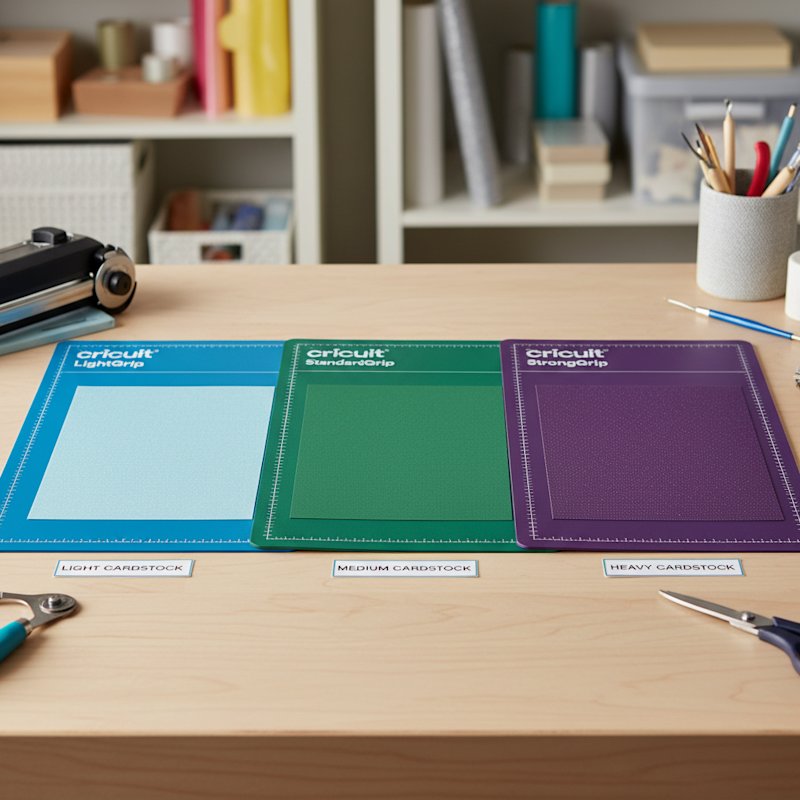
From Folded Books to Layered Shadow Boxes
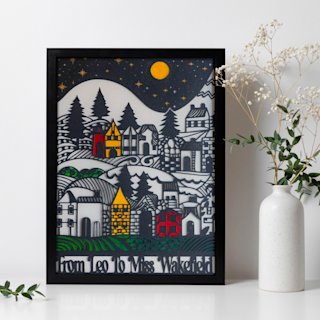
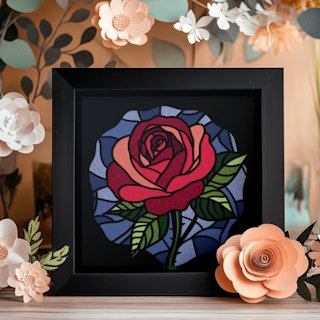
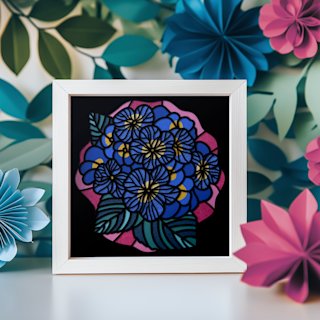
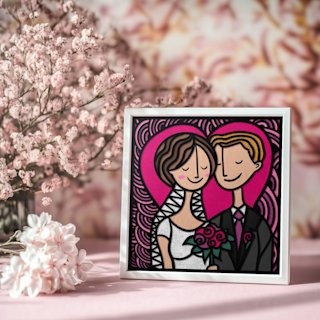
Book folding and shadow box papercutting share the same creative DNA — patience, precision, and dimensional art. These templates build on your paper-handling skills.

How to Read Book Folding Patterns

A book folding pattern is a table of measurements — usually a spreadsheet or PDF. Each row tells you exactly where to fold a specific page. Here's how to read one.

Pattern columns explained

A typical MMF pattern has these columns:

ColumnMeaning
Page / FoldThe page number you're working on
Top FoldDistance from the top of the page to the fold point (in mm)
Bottom FoldDistance from the bottom of the page to the fold point (in mm)

Some patterns also include:

ColumnMeaning
Type"MMF" or "Cut" or "Shadow" — which technique to use
DepthHow deep to fold (for shadow patterns)
Cut LineWhere to cut (for cut-and-fold patterns)

Reading example

Here's a simplified example of a heart pattern:

FoldTop (mm)Bottom (mm)
17070
25555
34040
43030
52525
63030
74040
85555
97070

Notice how the measurements get smaller (folds get closer together) toward the centre, then spread back out. That's the curve of the heart shape. When you fold these pages and view the book edge-on, you'll see the heart.

Key rules for pattern reading

  1. Always work in millimetres. Don't convert to inches — the precision loss will show in your finished piece. Buy a ruler marked in millimetres.
  2. Start from fold 1, not page 1. The pattern tells you which fold number you're on. If the pattern starts at fold 10, count 10 pages into the book and begin there.
  3. Mark lightly. Use a soft pencil (2B or softer). Heavy marks show through and can't be erased.
  4. Double-check before folding. Measure once, mark, then measure again. A 2mm error on a single fold won't ruin the piece, but accumulated errors across 100 folds will blur the design.

Where to find patterns

  • Free patterns: Search "free book folding patterns" on Etsy, Pinterest, and dedicated book folding Facebook groups. Many sellers offer a free sample pattern to try before buying.
  • Paid patterns ($2-8): Etsy has thousands of patterns at reasonable prices. Look for patterns marked "beginner" or "easy."
  • Pattern software: Programs like Bookami or Pattern Maker let you create custom designs from any image — worth the investment if you plan to fold regularly.

Step-by-Step: Your First Book Folding Project (Heart Pattern)

Time to fold. This section walks you through a complete beginner heart project from start to finish. You'll need about 60-90 minutes.

What you need

  • A hardback book, 20-22 cm tall, with at least 200 numbered pages
  • A ruler marked in millimetres
  • A soft pencil (2B)
  • A bone folder or a credit card for pressing creases
  • A printed copy of the heart pattern (or the pattern open on a screen beside you)

Step 1: Prepare the book

Remove the dust jacket. Stand the book on its spine in front of you with the spine facing you and the pages fanning out to the left and right.

Open the front cover. Count 10 pages in from the front — this is where you'll place your first fold. Why not start at page 1? Because a few blank pages at the beginning give the design breathing room and hide any imperfect first folds.

Mark your starting page with a sticky note so you don't lose your place.

Step 2: Make the first fold

Using the heart pattern below, go to fold 1:

FoldTop (mm)Bottom (mm)
17070
26060
35050
44242
53636
63232
73030
83030
93232
103636
114242
125050
136060
147070

Fold 1 (70mm top, 70mm bottom):

  1. Measure 70mm down from the top edge of the page. Mark lightly with pencil.
  2. Take the top outer corner of the page and fold it diagonally down to meet your mark. Press the crease firmly.
  3. Now measure 70mm up from the bottom edge of the same page. Mark.
  4. Take the bottom outer corner and fold it diagonally up to meet the bottom mark. Press firmly.
  5. The page should now have two triangular folds meeting at the centre, pointing toward the spine.

Don't worry if it's not perfect. Your first fold won't be your best — and that's fine.

Step 3: Continue through the pattern

Move to fold 2 (60mm top and bottom). Use the same process on the next page. Notice that the measurement is smaller — the folds are getting closer together, forming the top curve of the heart.

Work through folds 3-7. As you progress, you'll see the folds getting tighter at the centre (the widest part of the heart), then spreading back out through folds 8-14.

Tips as you go:

  • Keep the book propped at a consistent angle. If you move it around between folds, your measurements will drift.
  • Press each crease with your bone folder or credit card. A crisp crease makes a visible difference in the final piece.
  • If you make a wrong fold, unfold the page carefully. Paper can handle one refold before the crease becomes too weak. After that, skip the page and adjust the next fold slightly to compensate.
  • Take a break after every 20-30 folds. Eye fatigue leads to measurement errors.

Step 4: Shape and admire

Once all 14 folds are complete, stand the book on its spine and gently fan the pages open. You should see a heart shape formed by the folded edges.

Gently adjust any folds that look misaligned — a light press with the bone folder can sharpen a soft crease, and slightly repositioning a fold by a millimetre or two can smooth out bumps in the design.

Step back and look at it from arm's length. The slight imperfections that bother you up close disappear at viewing distance. That's the magic of book folding — the overall shape reads clean even when individual folds aren't perfect.

Congratulations — you've completed your first book folding project.

Display and Lighting Tips for Book Folding Art

A folded book is a three-dimensional object. How you display it determines how well the design reads. Here's what works.

Positioning

The best viewing angle is straight-on to the spine edge — that's where the design lives. Place folded books on a shelf with the spine facing outward (not the front cover), or stand them on a table with the spine edge facing the room.

Shelf display: Stand the book upright between bookends with an inch of space on either side. Cramming folded books between regular books crushes the folds.

Tabletop display: Use a plate stand or small easel to angle the book at roughly 15-20 degrees. This lets viewers see the design without having to crouch.

Wall mounting: Attach a small bracket or floating shelf to the wall and stand the book on it with the spine facing out. This turns book art into genuine wall décor — for more display ideas, see our guide on how to display and frame 3D layered paper art.

Lighting

Light makes or breaks book folding art. The folded pages create shadows, and those shadows are what define the design. Bad lighting flattens the image; good lighting gives it depth.

  • Best: Side lighting from above at a 45-degree angle. A desk lamp or spot light positioned to one side casts shadows into the folds, making the design pop.
  • Good: Natural window light from the side. Avoid direct sunlight — it fades the paper over time.
  • Avoid: Flat overhead lighting. It fills in the shadows and makes the design look washed out.

LED strip lights placed behind or underneath a displayed folded book create a striking backlight effect, especially with darker book covers.

Grouping multiple pieces

If you've folded several books, group them by theme or size rather than scattering them around the room. Three or five folded books on a shelf, varying in height, create a cohesive gallery effect. Odd numbers tend to look more natural than even numbers.

Mix folded books with other paper art forms — a folded book next to a framed paper-cut shadow box creates visual variety while maintaining a consistent craft aesthetic.

Selling Book Folding Art: A Realistic Guide

Can you make money from book folding? Yes, but manage your expectations. Here's what the market actually looks like.

Pricing your work

A simple heart or star fold takes 1-2 hours. An intricate multi-column design can take 8-15 hours. Your pricing needs to account for materials, time, and the perceived value of the finished piece.

ItemMaterial CostTimeSuggested Price Range
Simple fold (heart, star, initial)$1-31-2 hours$15-30
Medium design (animal, word)$2-43-5 hours$30-50
Complex design (portrait, large custom)$3-58-15 hours$60-120
Custom name/date (wedding, anniversary)$2-44-8 hours$40-80

Custom pieces command the highest prices. Wedding couples buying a folded book with their names and date will happily pay $50-100 for something unique. The key is targeting gift buyers, not art collectors — for a deeper pricing breakdown, see our guide on how to price paper crafts to sell.

Where to sell

  • Etsy: The biggest marketplace for handmade book art. Competition is real, but so is the demand. Focus on custom orders (names, dates, pet breeds) to stand out.
  • Craft fairs and markets: Book art draws attention at in-person events because people haven't seen it before. Bring a display stand and good lighting.
  • Social media: Short videos showing the folding process perform well on Instagram and TikTok. The "satisfying" nature of crisp paper folds is genuinely watchable content.
  • Local gift shops: Consignment arrangements with independent gift shops can move inventory without the hassle of shipping.

What sells best

In my experience selling at craft fairs and online, these categories move fastest:

  1. Custom initials and names — always the top seller
  2. Wedding and anniversary pieces — strong year-round demand
  3. Animal designs — cats, dogs, and owls are reliable
  4. Seasonal pieces — Christmas trees in November, pumpkins in October
  5. Inspirational words — "Love," "Hope," "Family" in upright fonts

Honest cautions

Don't quit your day job. Book folding is a viable side income, not a full-time living for most crafters. The hourly rate works out to $10-20 per hour at typical selling prices — decent for a hobby income, but hard to scale. The real financial upside is in teaching workshops and selling patterns, not just finished pieces.

Shipping is also tricky. Folded books are fragile — the creases can get crushed in transit. Wrap each book in tissue paper, then bubble wrap, and ship in a snug box with no room for movement.

Common Beginner Mistakes (And How to Avoid Them)

I made every one of these mistakes when I started. Save yourself the frustration.

Using a paperback

I covered this above, but it bears repeating because it's the number-one beginner error. Paperbacks don't work. The spine flexes, measurements drift, and the finished piece sags under its own weight. Hardback only. Every time.

Measuring from the wrong edge

Always measure from the top edge for top folds and the bottom edge for bottom folds. Not from the spine, not from the previous fold mark. This sounds obvious until you're 40 folds deep and on autopilot.

Rushing

Book folding is a patience craft. Each fold takes 30-60 seconds to measure, mark, fold, and press. A 100-fold pattern takes 50-100 minutes. Rushing leads to skipped measurements, and skipped measurements lead to a distorted design. Set aside uninterrupted time.

Not checking the page count

Imagine finishing 80 perfect folds, turning the page, and realising you've run out of book. Count your pages before you start. Add up the total folds in the pattern and make sure your book has at least that many pages, plus 10-20 extra at the front and back for breathing room.

Ignoring pattern orientation

Some patterns are designed for the book standing on its bottom edge; others for the book standing on its spine. The pattern should specify which orientation to use. If you fold in the wrong orientation, the design will be rotated 90 degrees. Ask me how I know.

Using a dull creasing tool

Crisp folds are the difference between "looks like art" and "looks like you crumpled a book." Use a bone folder, the edge of a credit card, or even a butter knife to press each crease firmly. Your thumbnail works in a pinch but gets painful after 50 folds.

Frequently Asked Questions

How do I start book folding art for beginners?

Start with a hardback book (20-22 cm tall), a millimetre ruler, a soft pencil, and a free beginner heart pattern. Use the Measure, Mark, and Fold technique — measure from the page edge to the point on your pattern, mark it, and fold the page corner to that mark. Your first project takes about an hour. The heart pattern in this guide is designed specifically for first-timers.

Do I need to cut pages to do book folding?

No. The Measure, Mark, and Fold technique involves no cutting at all — you only fold pages. Cut and Fold is a separate, more advanced technique that does involve cutting with a craft knife before folding. Most beginners should start with pure folding (MMF) before trying cut-based methods.

What kind of book works best for book folding?

A hardback book with a tight spine, 20-25 cm tall, using standard-weight paper (not glossy, not tissue-thin). Old fiction hardbacks, textbooks, and encyclopaedias are ideal. Avoid paperbacks, glossy coffee-table books, and very old books with brittle paper. The book's cover condition doesn't matter — only the spine and pages do.

Can I fold any design into any book?

Not exactly. The pattern must match the book's height and page count. A pattern designed for a 22 cm book will look distorted on a 25 cm book unless you resize it. Similarly, a pattern requiring 200 folds won't fit in a 150-page book. Always check the pattern's specifications against your book before starting.

How long does a book folding project take?

A simple beginner pattern (heart, star, 14-30 folds) takes 30-90 minutes. Medium designs (animals, words, 100-200 folds) take 2-5 hours. Complex multi-column designs can take 8-15 hours across multiple sessions. The time per fold is fairly consistent at 30-60 seconds — it's the number of folds that determines total time.

Is book folding bad for books?

It transforms books that would otherwise be discarded. Charity shops routinely bin damaged, outdated, or unsellable books. Book folding gives those books a second life as decorative art. If you're concerned, use books that are already damaged, have missing pages, or are otherwise unreadable. Many book folders specifically seek out books with water damage or broken spines — the folds hide the defects.

Can I undo a book fold?

You can carefully unfold a page, but the crease line will remain visible. Paper can handle one fold and one unfold before the fibre weakens noticeably. If you need to redo a fold, do it gently and only once. If a fold is badly wrong, it's better to skip that page and slightly adjust surrounding folds than to repeatedly refold it.

Display Your Paper Art in Style — Framed Shadow Box Templates
Book-folded pieces look stunning next to illuminated shadow boxes. Mix both art forms on one shelf for a gallery wall that tells your creative story.

Start Folding Today

Book folding is one of the most accessible crafts you can pick up. The materials cost next to nothing, the tools fit in a desk drawer, and the results look genuinely impressive — especially when lit well and displayed properly.

Start with the heart pattern in this guide. Use a hardback from a charity shop, take your time with the measurements, and don't stress over imperfect folds. Your second piece will be noticeably better than your first. By your fifth, you'll be reaching for more complex patterns with real confidence.

Once you've built your skills, explore display options that show off the three-dimensional nature of folded book art — good lighting and a thoughtful arrangement make all the difference. If you enjoy the process and want to take it further, there's a growing market for custom book art pieces, especially personalised gifts for weddings and anniversaries.

For more creative paper craft ideas, explore our guides on how to display and frame 3D layered paper art and how to price paper crafts to sell.