Articles 8 min read

Humidity Impact on Cricut Cutting: Weather Solutions

Your comprehensive guide to humidity affecting cricut cuts.

Humidity Impact on Cricut Cutting: Weather Solutions

Humidity and Paper Cutting: Weather Impact on Cricut Performance

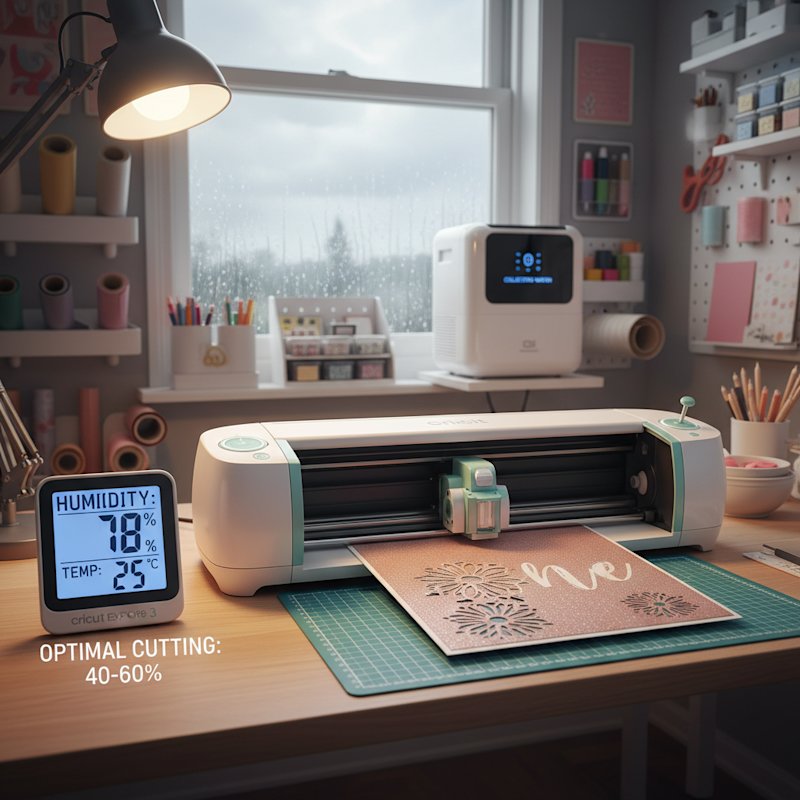
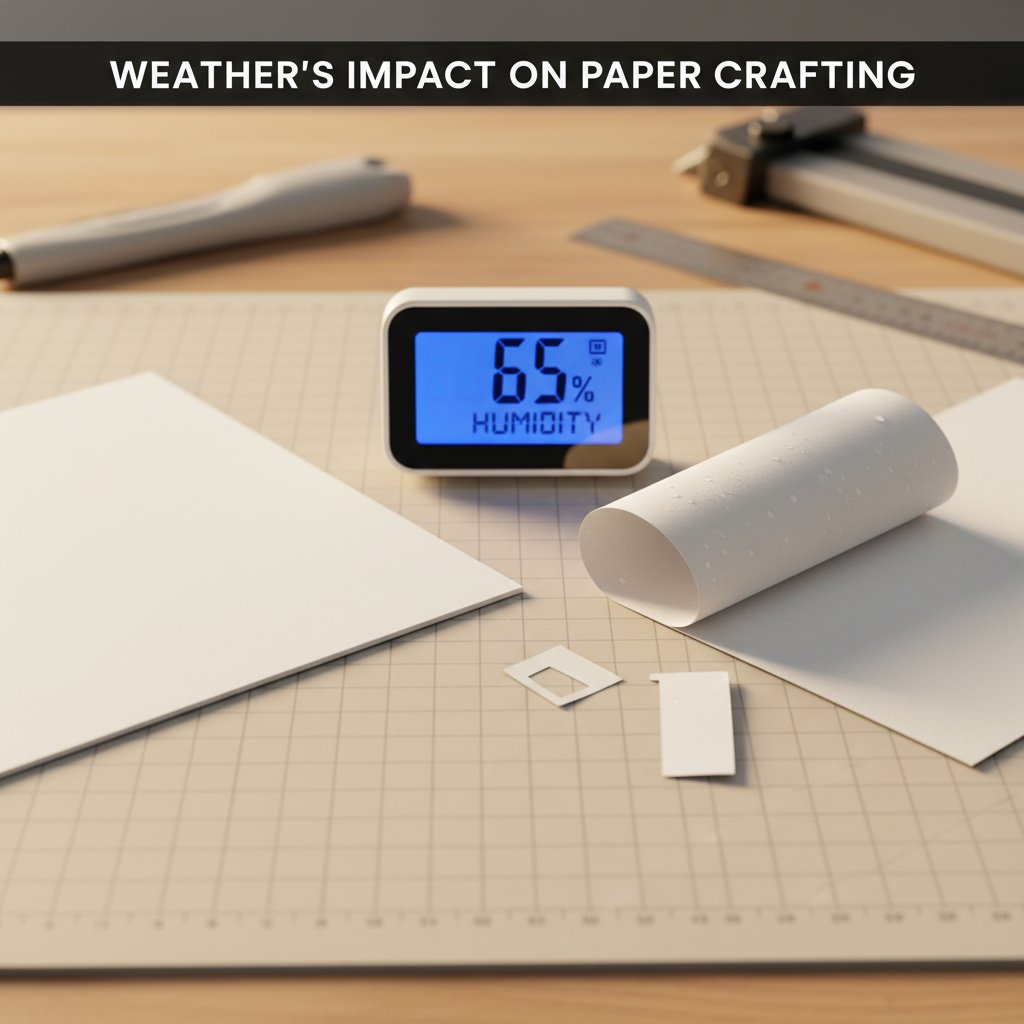
You've double-checked your settings, replaced your blade, and cleaned your mat. But your Cricut still isn't cutting cardstock cleanly. The culprit might be hiding in plain sight: your local weather. Humidity levels dramatically affect how paper behaves during cutting, and understanding this connection is essential for consistent shadow box results.

This guide reveals exactly how weather impacts your Cricut performance and provides actionable solutions for any climate.

How Humidity Affects Paper and Cardstock

Paper is hygroscopic, meaning it actively absorbs and releases moisture from the air. When humidity rises above 60%, cardstock can absorb up to 10% more moisture, fundamentally changing its cutting properties.

High humidity effects:

  • Paper fibers swell and soften, creating mushy cuts instead of clean edges
  • Cardstock becomes more pliable, causing it to shift during cutting
  • Mat adhesive weakens as moisture accumulates on both mat and paper
  • Intricate shadow box layers stick together instead of separating cleanly

Low humidity effects:

  • Paper becomes brittle and prone to tearing rather than cutting
  • Static electricity causes paper to lift off the mat mid-cut
  • Dry paper curls at the edges, creating uneven cutting depth
  • Blade drag increases as friction builds between dry surfaces

The ideal range for precision cutting sits between 40-50% relative humidity. Outside this range, you'll need specific adjustments to maintain cutting quality.

Not all cutting issues stem from humidity, but certain patterns reveal weather as the root cause. Watch for these telltale signs:

Seasonal consistency: Problems that appear or worsen during specific seasons (summer humidity or winter dryness) point directly to moisture issues.

Daily fluctuation: Cuts that work perfectly in the morning but fail by afternoon suggest rising humidity throughout the day.

Geographic patterns: Moving to a new climate and suddenly experiencing cutting problems indicates environmental factors at play.

Mat performance changes: Your mat that worked flawlessly last month now won't hold paper, despite regular cleaning, signals humidity affecting adhesive properties.

Material-specific issues: Some papers cut fine while cardstock fails, revealing moisture sensitivity differences between materials.

If you notice these patterns, weather adjustments should be your first troubleshooting step, not blade replacement or settings changes.

High Humidity Solutions
High humidity effects on cardstock showing curled edges and moisture impact on paper

When humidity climbs above 60%, paper absorbs moisture and becomes difficult to cut cleanly. These strategies counteract moisture-related cutting problems.

Control Your Environment

Run a dehumidifier in your crafting space for at least 30 minutes before cutting. This reduces ambient moisture that paper absorbs. Target 45-50% relative humidity on your hygrometer for optimal results.

Air conditioning serves double duty by cooling and dehumidifying simultaneously. Even if you're comfortable with the temperature, running AC while cutting improves paper stability.

Prepare Your Materials

Store cardstock in sealed plastic bins with silica gel packets between uses. This prevents moisture absorption before cutting begins. For shadow box projects requiring multiple cardstock colors, this protection is essential.

Pre-condition paper by placing it in your climate-controlled craft room for 24 hours before cutting. Paper needs time to equilibrate to room conditions after coming from storage or shipping.

Use a fan to create gentle air circulation across your cutting mat during operation. This evaporates surface moisture without disturbing the paper position.

Adjust Cutting Settings

Increase blade depth by one setting compared to normal conditions. Moisture-softened paper requires deeper blade penetration for complete cuts.

Slow down cutting speed by 20-30%. Humid paper needs more time for the blade to separate fibers cleanly rather than tearing through.

Add a second pass for intricate shadow box designs. The first pass scores through moisture-laden fibers; the second completes the cut.

Mat Management

Replace your mat more frequently during humid months. Moisture accumulation degrades adhesive faster than normal wear. A fresh mat provides the firm hold necessary despite humidity challenges.

Clean mats with isopropyl alcohol before each project during humid weather. This removes moisture buildup along with dust and fiber residue.

Store mats flat in sealed bags when not in use. This prevents environmental moisture from further degrading adhesive between projects.

Low Humidity Solutions

Dry climates below 40% humidity create different challenges requiring opposite strategies from humid conditions.

Add Moisture Strategically

Run a humidifier in your craft space, targeting 45% relative humidity. Small portable units work well for dedicated craft rooms without affecting your entire home.

Place an open container of water near your cutting area. Passive evaporation gradually raises local humidity around your machine.

Use a plant mister to lightly spray the air (not the paper) 15 minutes before cutting. This adds immediate moisture to the environment without soaking materials.

Combat Static Electricity

Wipe papers with dryer sheets before loading onto your mat. This neutralizes static buildup that causes paper to lift during cutting.

Use anti-static spray designed for electronics on your cutting mat surface. Apply lightly and let dry completely before placing paper.

Touch a grounded metal object before handling paper to discharge static from your body that transfers to materials.

Material Preparation

Store paper in slightly humid areas like bathrooms overnight before cutting. The gentle moisture exposure prevents excessive dryness without over-conditioning.

Use a paper crimper or folder along edges before cutting. This creates small breaks in surface tension that reduce curling from dryness.

Choose heavier weight cardstock (80lb or higher) during dry seasons. Thicker papers resist curling and maintain better contact with your mat.

Cutting Adjustments

Decrease blade depth by one setting in very dry conditions. Brittle paper tears easily with too much blade exposure.

Increase cutting speed slightly. Dry paper cuts crisply, and faster movement prevents excessive friction that can cause tearing.

Use extra mat adhesive spray for stubborn curling issues. A slightly tackier surface counteracts paper curl from dryness.

Seasonal Adjustments for Year-Round Success

Understanding seasonal patterns helps you anticipate and prevent cutting problems before they occur.

Summer strategies: Humid summer months require dehumidifier use, increased blade depth, and slower cutting speeds. Store materials in climate-controlled spaces with silica packets.

Winter adjustments: Heated indoor air creates desert-dry conditions. Add humidification, reduce blade depth, and pre-condition paper by leaving it unsealed in your craft room overnight.

Spring and fall transitions: Watch for daily humidity swings during seasonal changes. Keep a hygrometer visible and adjust settings based on current readings rather than calendar assumptions.

Coastal considerations: Ocean proximity creates consistently high humidity. Permanent dehumidifier installation and sealed storage become essential rather than seasonal adjustments.

Desert climates: Year-round dryness requires constant humidification. Consider installing a whole-room humidifier if you craft regularly in arid regions.

Storage Solutions for Different Climates

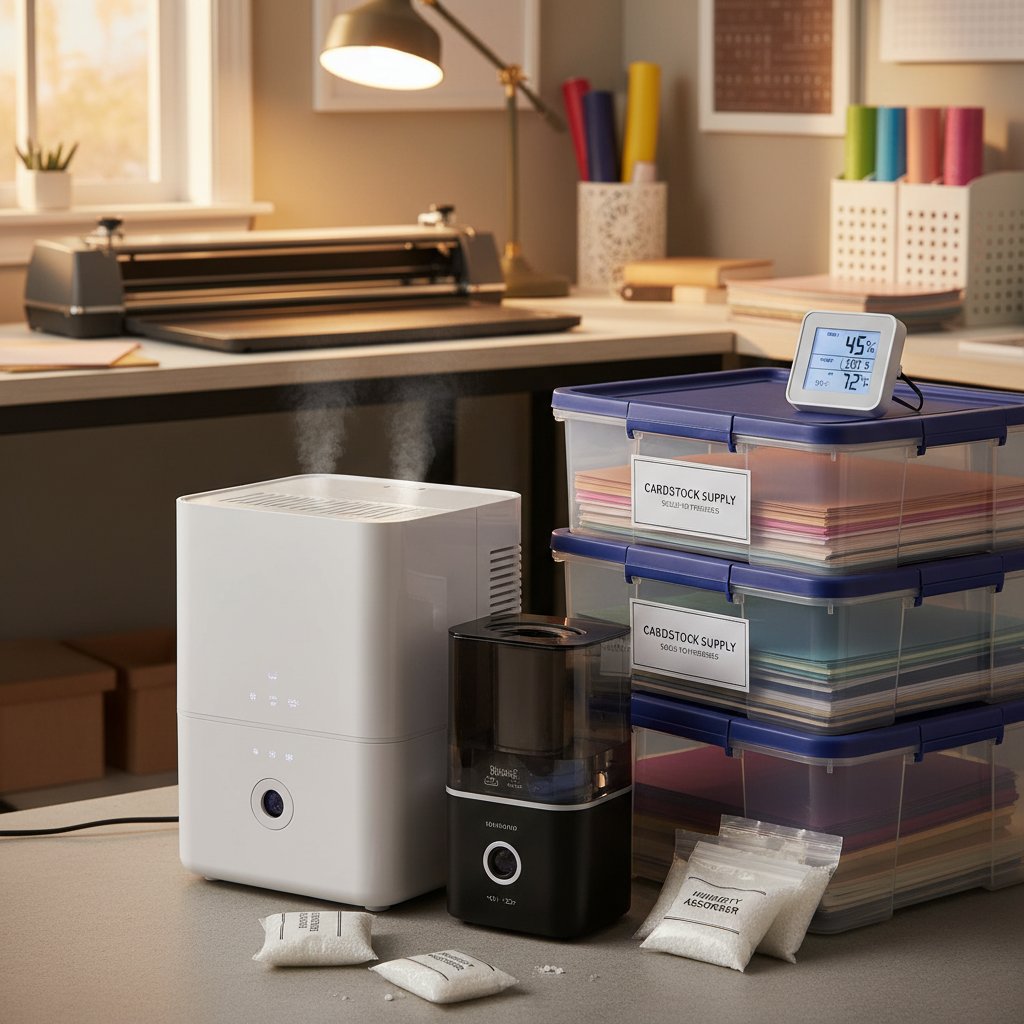
Climate control solutions including dehumidifier, humidifier, silica gel packets, and sealed storage bins

Proper storage prevents humidity problems before they start, protecting your investment in quality cardstock.

Sealed container system: Store all paper in airtight plastic bins with gasket seals. Add fresh silica gel packets every three months in humid climates, or small humidity packs in dry areas.

Climate-controlled storage: Keep materials in rooms with consistent temperature and humidity. Basements, garages, and attics experience wild fluctuations that degrade paper quality.

Vertical organization: Store cardstock vertically rather than stacked horizontally. This prevents weight compression that traps moisture between sheets or causes brittle paper to crack.

Paper rotation: Use older stock first by organizing storage chronologically. Cardstock quality degrades over time, especially in challenging climates.

Packaging preservation: Keep paper in original packaging until needed. Manufacturers package materials in climate-appropriate wrapping that protects better than home storage.

Emergency Fixes When Weather Strikes

Sometimes weather changes catch you mid-project. These quick fixes salvage cutting sessions when conditions aren't ideal.

Immediate humidity spike: Place silica gel packets directly on your cutting mat around (not under) your paper. This creates a micro-environment with lower moisture while you finish cutting.

Sudden dryness: Lay damp (not wet) towels near your workspace. Drape them over chair backs or nearby surfaces for passive humidification during your cutting session.

Mat adhesive failure: Use repositionable spray adhesive on your mat for emergency tackiness. Apply very lightly to avoid residue on cut pieces.

Paper curling crisis: Iron paper on low heat with no steam before cutting. Place a clean cloth between iron and paper to prevent scorching.

Static emergency: Wipe your entire mat with a damp cloth, let it air dry for two minutes, then proceed with cutting. The residual moisture neutralizes static without making paper wet.

Climate-Specific Tips by Region

Different regions face unique humidity challenges requiring tailored approaches.

Pacific Northwest: Consistent dampness requires permanent dehumidification. Expect to replace mats more frequently and store all materials in sealed containers year-round.

Southwest Deserts: Extreme dryness demands constant humidification. Budget for heavier cardstock weights that resist curling, and store paper unsealed in craft rooms to maintain slight moisture.

Humid South: Summer humidity combined with air conditioning creates challenging swings. Time cutting sessions for morning hours when humidity is most stable.

Northern Winters: Indoor heating creates desert conditions. Run humidifiers constantly during heating season and reduce blade depth across all projects.

Coastal Areas: Salt air adds corrosion concerns beyond humidity. Store blades in sealed containers with desiccant, and clean your machine more frequently.

Conclusion

Weather significantly impacts Cricut cutting performance, but understanding humidity's role transforms frustrating failures into consistent success. Monitor your environment with a simple hygrometer, adjust settings based on current conditions, and store materials appropriately for your climate.

The 40-50% humidity sweet spot produces the cleanest cuts, but you can achieve professional shadow box results in any climate with proper adjustments. Start by assessing your current environment, implement storage solutions, and fine-tune cutting parameters based on daily conditions.

Your cardstock cutting problems aren't random frustrations—they're predictable responses to environmental conditions you can control. Master humidity management, and you'll achieve perfect cuts regardless of what weather awaits outside your craft room window.