5 Core Paper Mosaic Techniques
1. Torn Paper Mosaic
Tear paper into irregular pieces by hand. No scissors needed.
How it works: Hold the paper with both hands about 1 inch apart and pull. Cardstock tears with a fuzzy, organic edge. Magazine paper tears more cleanly.
Best for: Landscapes, abstract colour fields, impressionist-style art where the irregular shapes are the point.
My tip: Tear with the grain of the paper for straighter edges, against the grain for rougher, more textured edges. Test on a scrap first — different cardstocks behave very differently.
2. Cut Tile Mosaic
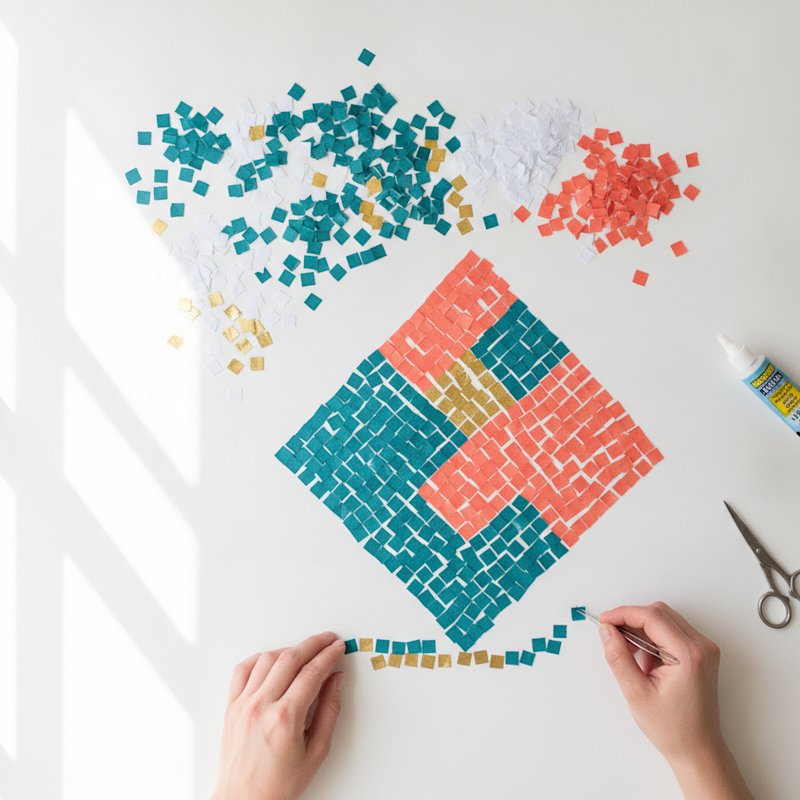
Cut uniform geometric shapes — squares, rectangles, diamonds — with scissors or a paper trimmer.
How it works: Cut paper into strips, then snip strips into consistent tiles. Aim for ¼ to ½ inch tiles.
Best for: Geometric patterns, kitchen backsplash-style art, checkerboard designs, pixel art.
My tip: A paper trimmer gives you perfectly straight strips in seconds. If you're doing a lot of tile cutting, it's worth the £8–12 investment.
3. Gradient Mosaic
Arrange paper pieces in a smooth colour transition, lightest to darkest (or vice versa).
How it works: Sort your paper scraps by colour value. Place the lightest shade on one end, darkest on the other, blending tones in between.
Best for: Sky effects, sunset scenes, ombre wall art, colour studies.
My tip: Magazines are gold for gradient mosaics. A single magazine page contains dozens of slightly different shades in photos and advertisements. I once built a full sky gradient from nothing but the blue tones in a furniture catalogue.
4. 3D Paper Mosaic
Fold, curl, or crumple paper pieces to add dimension before gluing them down.
How it works: Fold small squares into tents, roll magazine strips into tubes, or crumple tissue paper into balls. Glue the shaped pieces standing up.
Best for: Flowers, textured wall art, mixed-media pieces, tactile art for children or sensory projects.
My tip: Work in layers — flat base tiles first, then add 3D elements on top. This creates genuine depth that photograph beautifully.
5. Magazine Collage Mosaic
Use entire magazine images or sections as "tiles" arranged into a larger mosaic composition.
How it works: Cut magazine pages into random shapes. Select pieces with interesting textures, patterns, or colour fields. Assemble them into a cohesive image or abstract composition.
Best for: Mixed-media art, portrait mosaics, themed art (travel, food, nature), eco-art projects.
My tip: Match the content of the magazine piece to your subject. A mosaic of a coffee cup made from magazine food ads? That's a conversation starter.