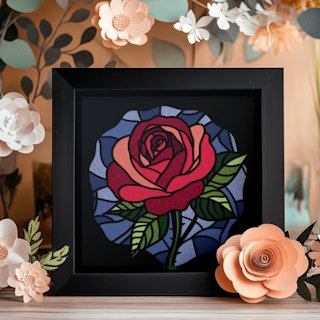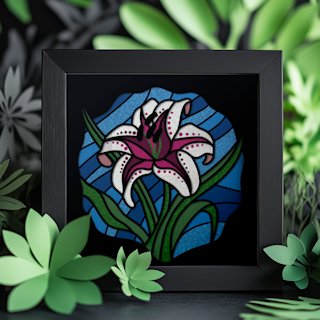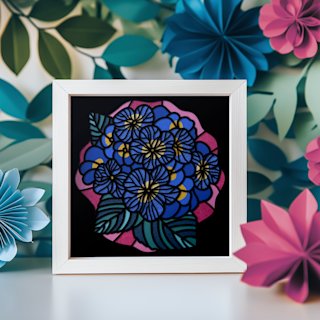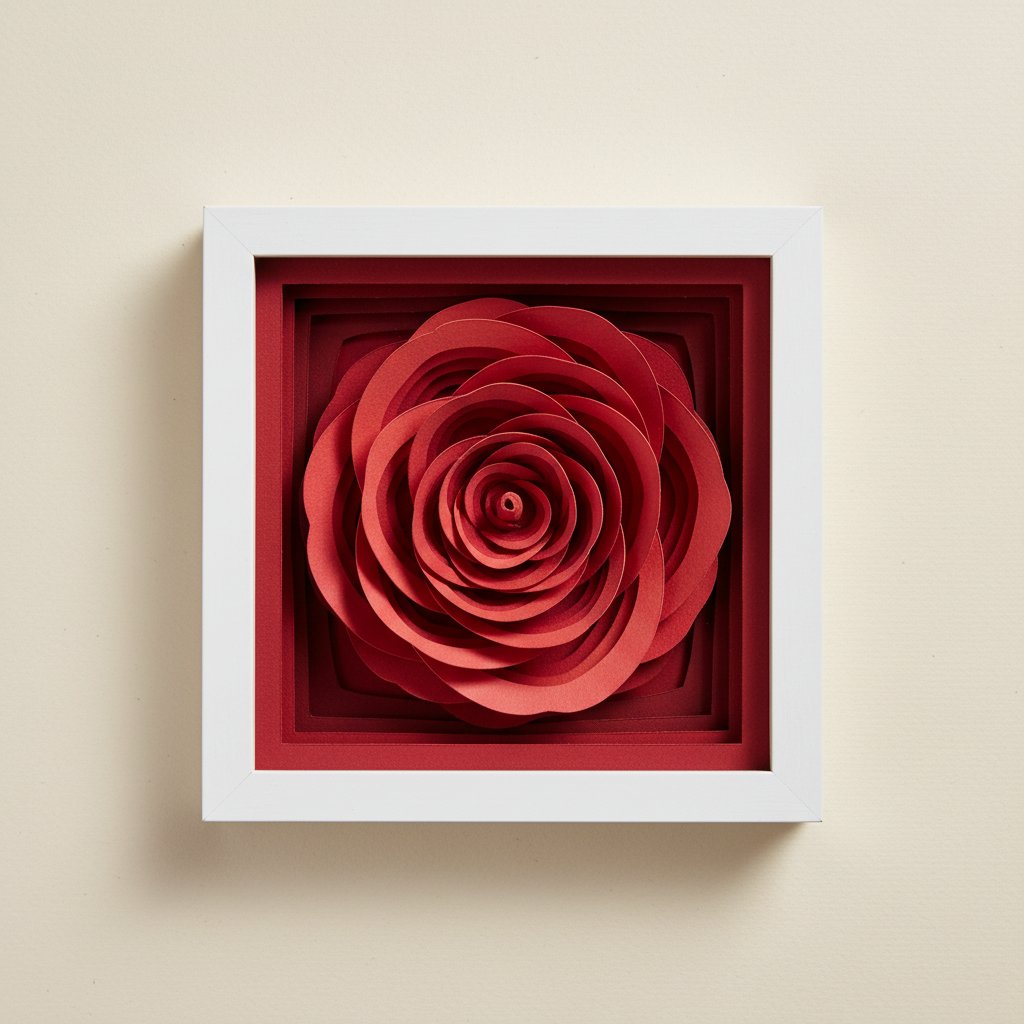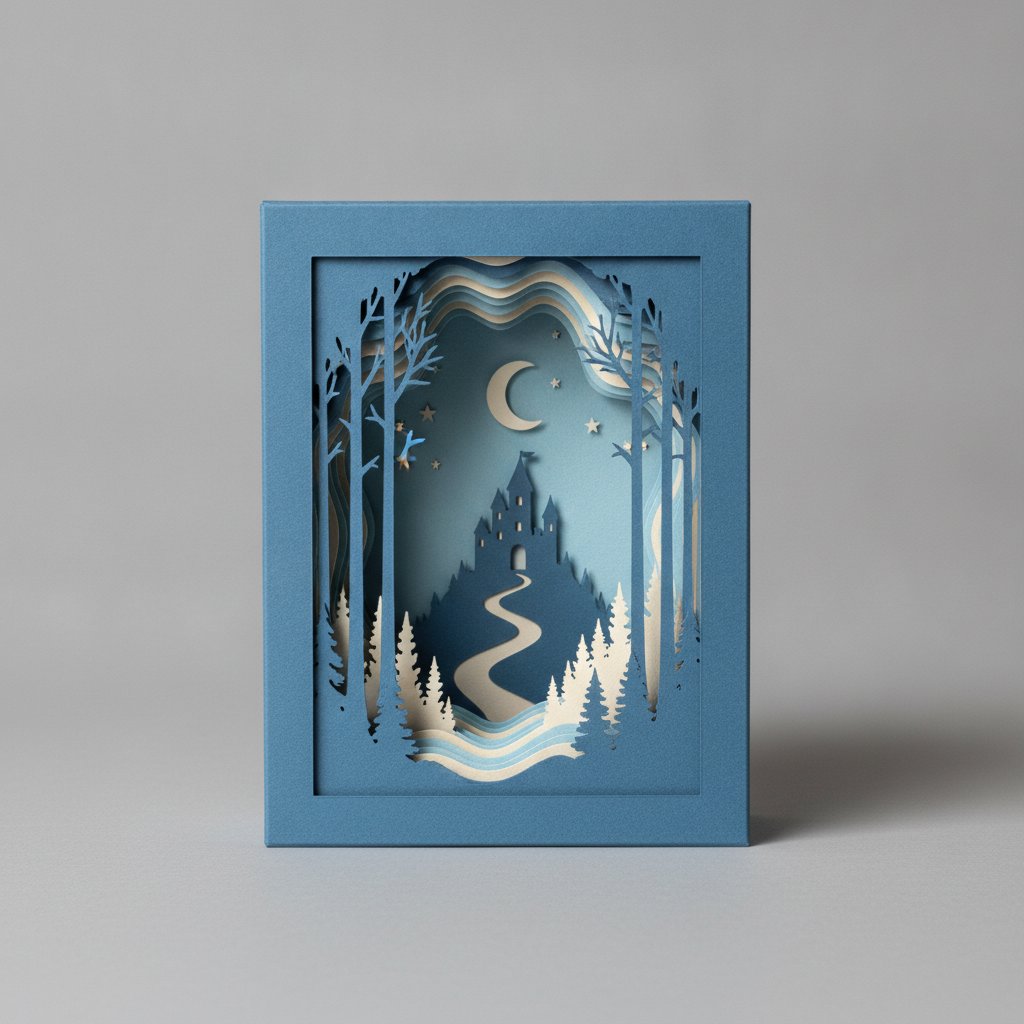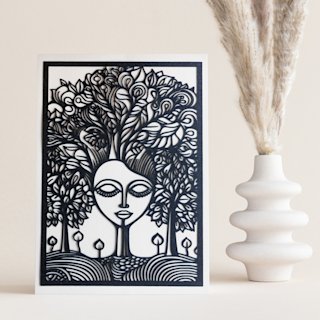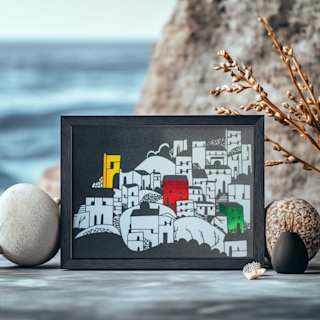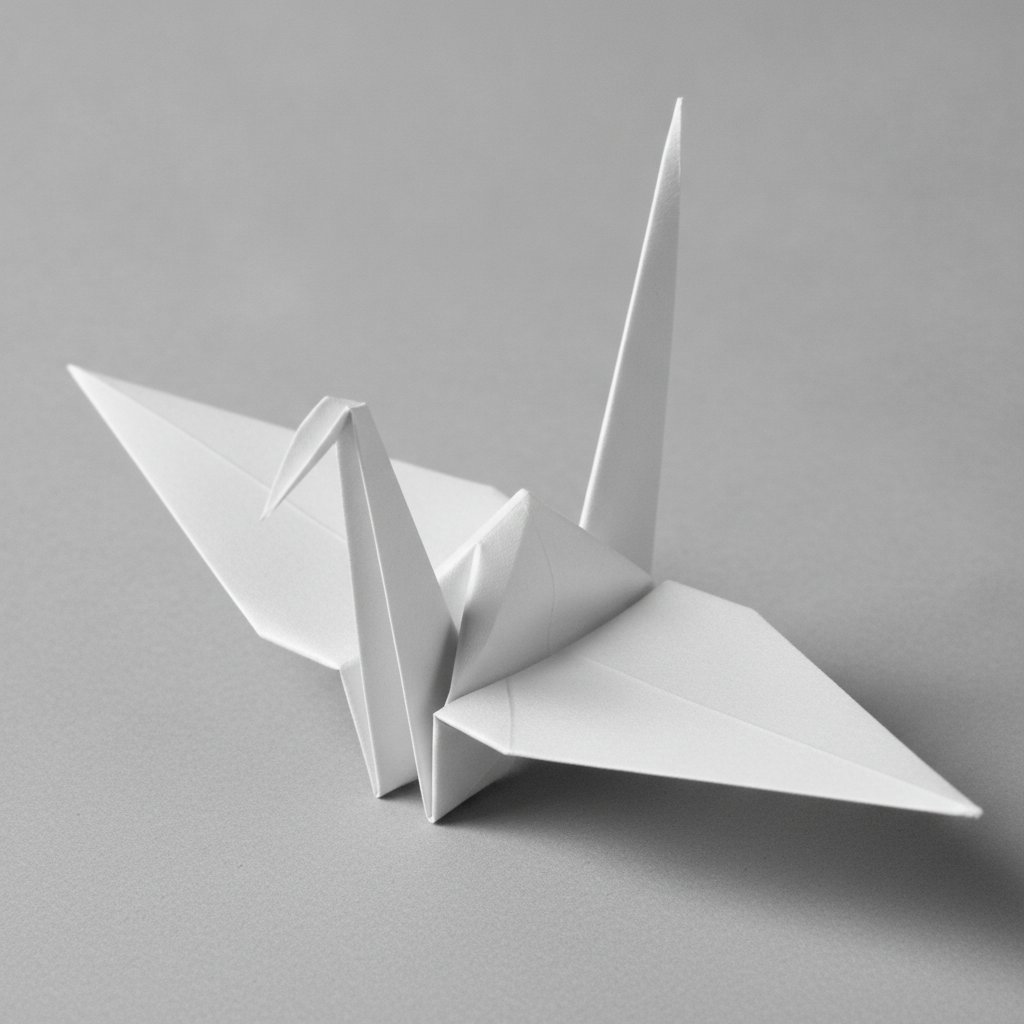
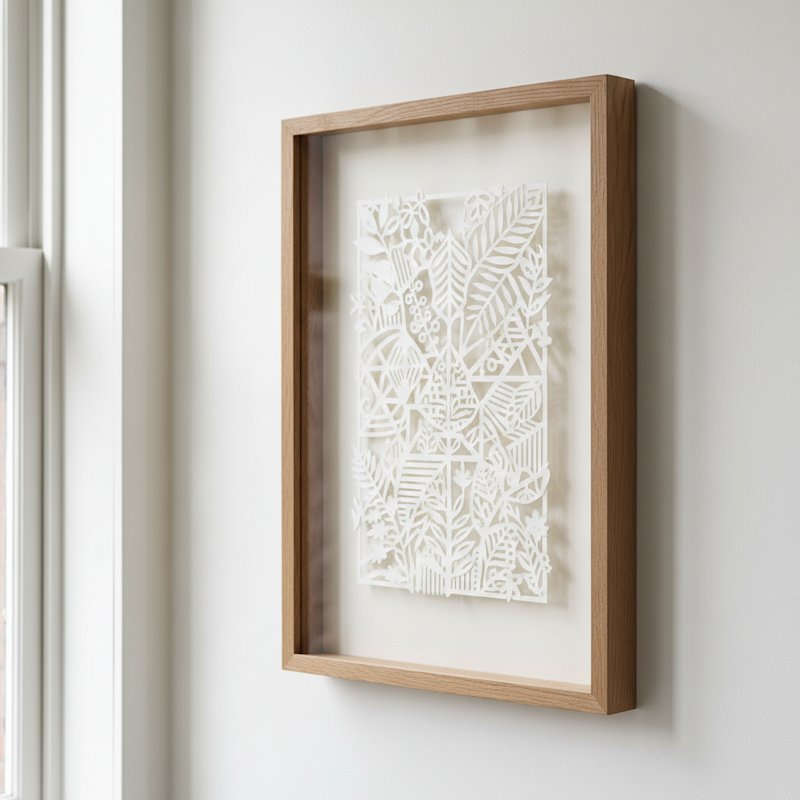
The first paper piece I hung in my living room was an eight-color layered shadow box, packed with detail, glowing with LEDs, and crammed into a chunky black frame. It was technically impressive. It was also loud. On a calm white wall it read as visual noise — every time I walked past, my eye had nowhere to rest. Three weeks later I took it down and hung a single white papercut rose in a float-mounted frame instead. The room finally felt like the modern, quiet space I had been aiming for. That swap taught me everything I know about minimalist paper wall art.
Minimalist paper wall art is not about owning less for its own sake. It is about choosing paper pieces that earn their place on the wall — single subjects, honest materials, restrained palettes, and proportions that respect the room around them. Done well, paper art becomes the calm focal point a modern home needs instead of another thing competing for attention.
This guide distills what I have learned hanging (and removing) paper art in my own home and studio over the past four years. You get the five design principles that separate a restful minimalist wall from a stark or sterile one, six project categories you can actually make or buy, and the framing, palette, scale, and care rules that keep minimalist paper pieces looking intentional rather than unfinished.
If you are newer to cutting paper yourself, our how to make paper cut art beginner's guide covers the basic techniques; this article focuses on the design and display decisions that make minimalism work.