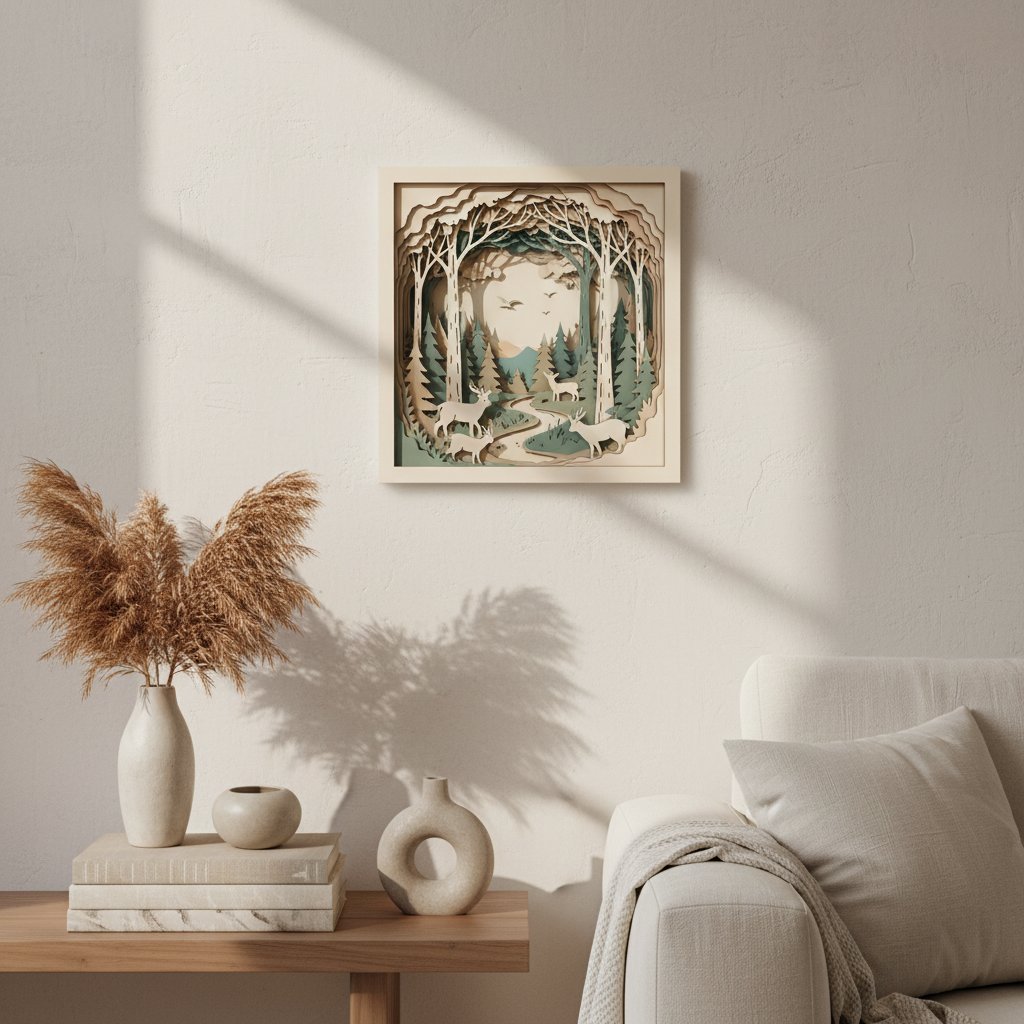
Articles15 min read

How to Frame Paper Art Without Glass

Glass reflects light, traps moisture, and adds weight. Discover five professional methods to frame and display paper art without glass — from floating frames to archival mounting.

How to Frame Paper Art Without Glass: 5 Professional Methods That Actually Work

Glass has been the default framing choice for decades, but it is not always the best option — especially for paper art. Reflections obscure fine details, moisture trapped behind glass warps delicate papers, and the weight of a glass-fronted frame makes hanging risky on drywall. If you have ever tried to photograph a framed piece only to capture your own reflection staring back, you already know the frustration.
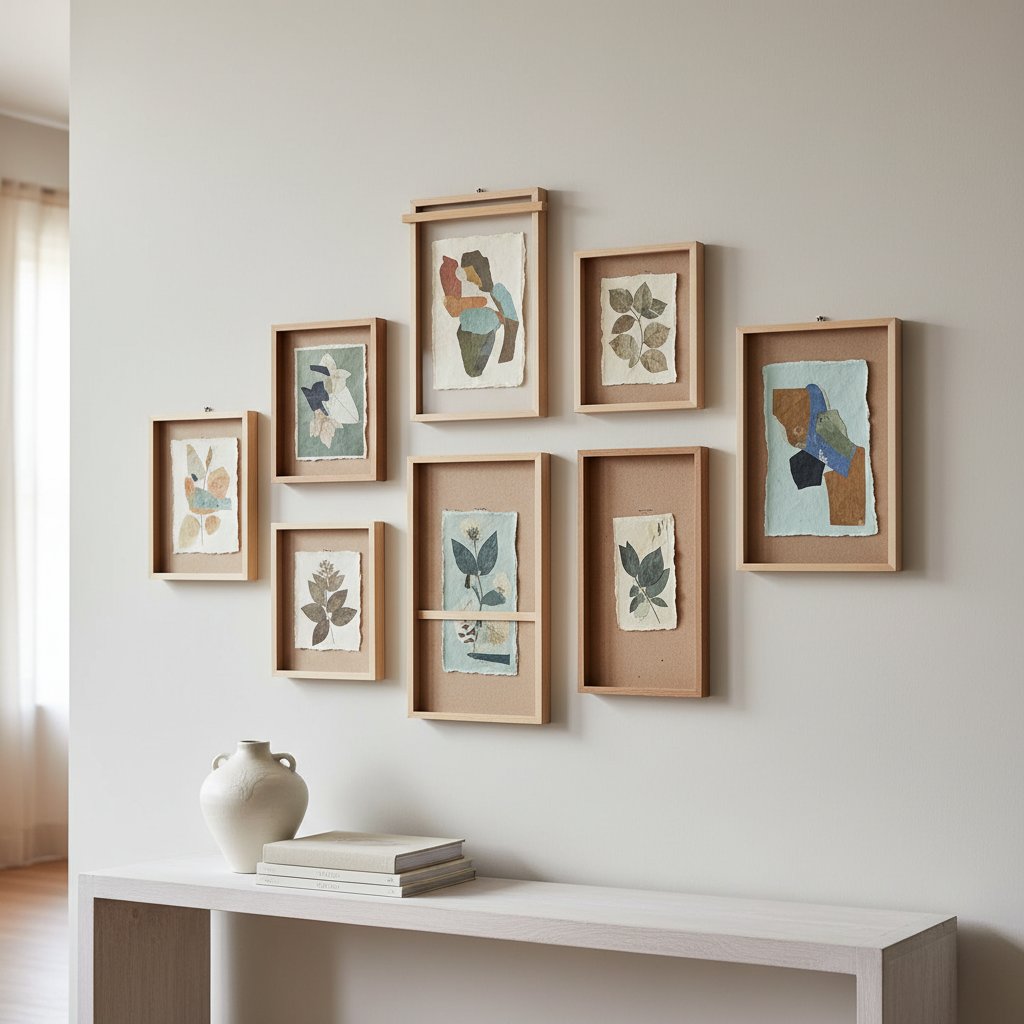
Framing paper art without glass is not just a workaround — it is a legitimate display choice used by galleries, museums, and professional framers. The key is choosing a method that protects your artwork while letting its texture, depth, and color show without distortion. Paper art — whether papercuts, prints, watercolors, or layered shadow box pieces — benefits enormously from glassless display because the subtle shadows and dimensional qualities remain fully visible.

This guide covers five proven methods for framing and displaying paper art without glass, when each method works best, and how to protect your pieces for the long term. Whether you are framing an expensive original or a personal papercut you made over the weekend, these techniques will give your artwork a professional, gallery-worthy presentation.

What you will learn:

  • Why glassless framing can be better than traditional glazing
  • Five specific methods with step-by-step instructions (frequently discussed on Reddit and craft forums)
  • How to protect paper art from dust, humidity, and UV without glass
  • Which methods work best for different types of paper art

For help choosing the right frame size and depth for your pieces, see our guide to choosing frame size and depth for paper cut shadow boxes. For general framing comparisons, read our paper cut shadow box vs. traditional shadow box article.
Why Frame Without Glass?

Before diving into methods, it helps to understand why glassless framing is worth considering in the first place. Glass is not inherently bad — it offers excellent physical protection — but it introduces several problems that specifically affect paper artwork.

Reflections and Glare

Standard glass reflects 8–10% of visible light. Non-glare glass reduces this but slightly softens the image behind it. Museum glass virtually eliminates reflection but costs significantly more. Without glass, you eliminate the reflection problem entirely and your artwork looks exactly as intended from every angle.

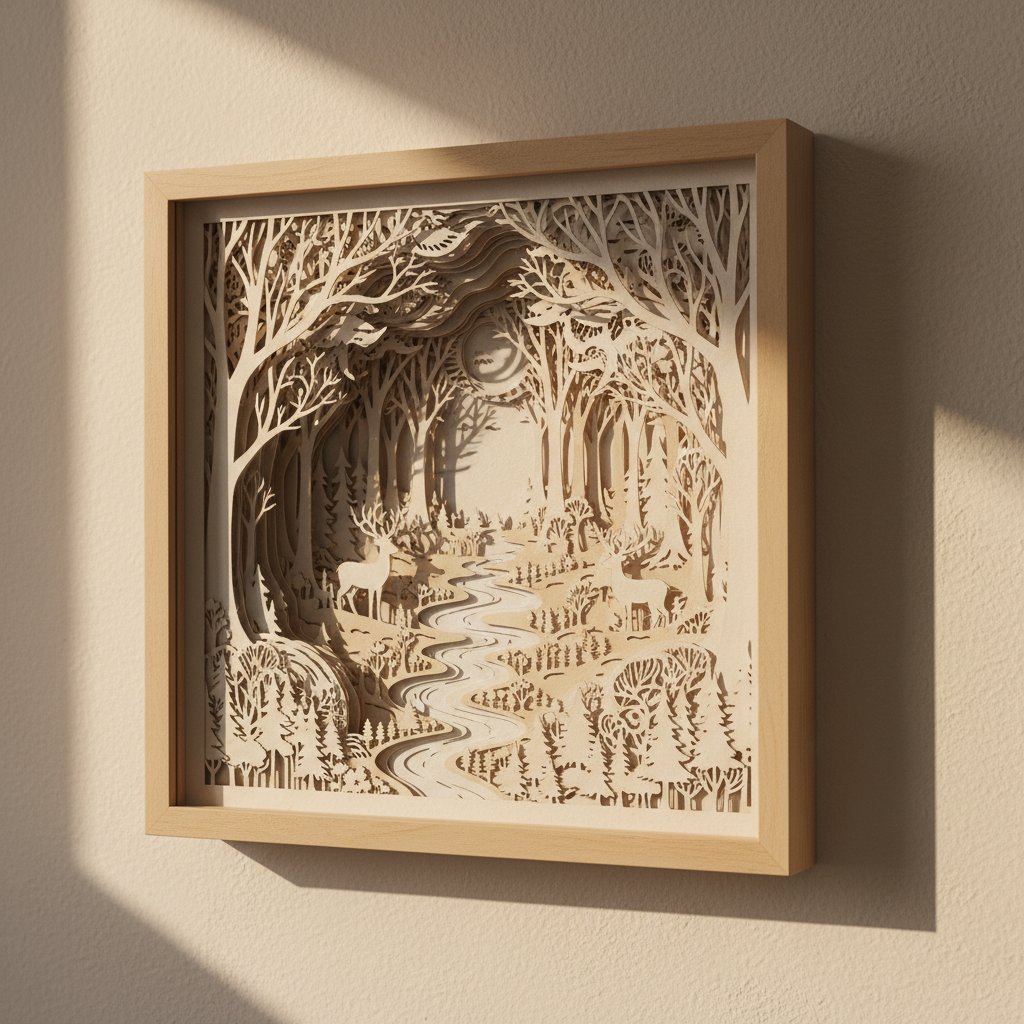
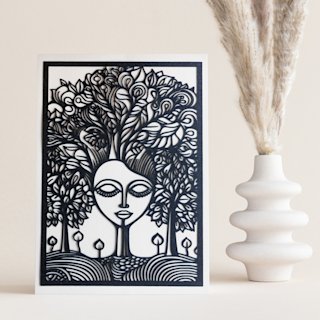
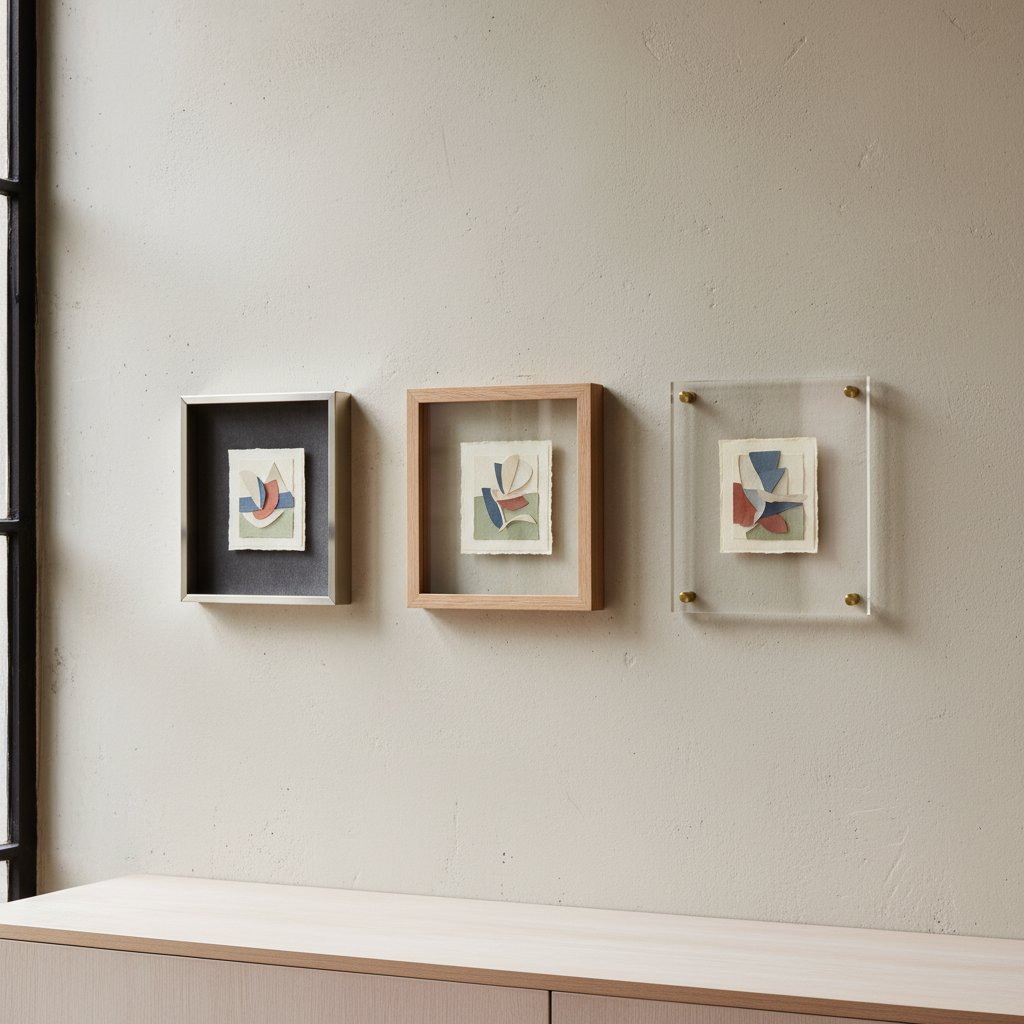
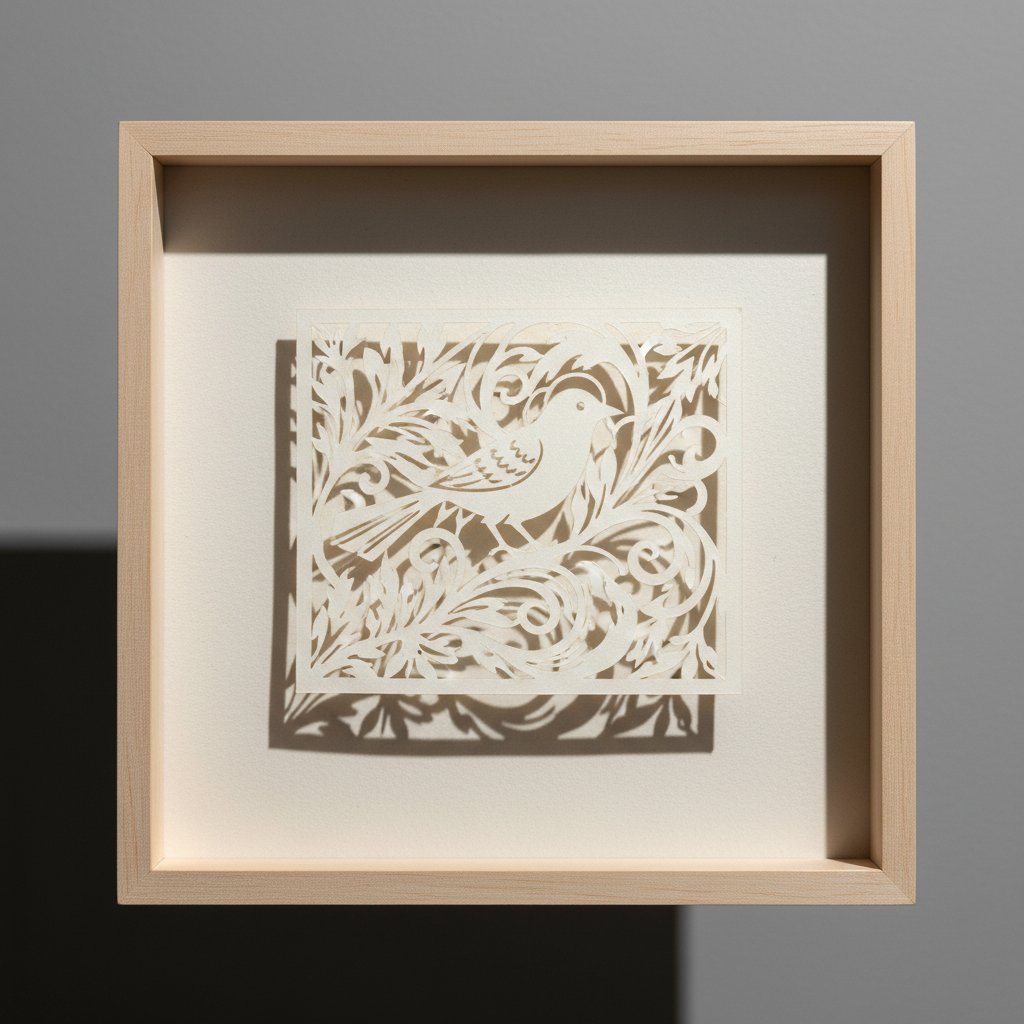
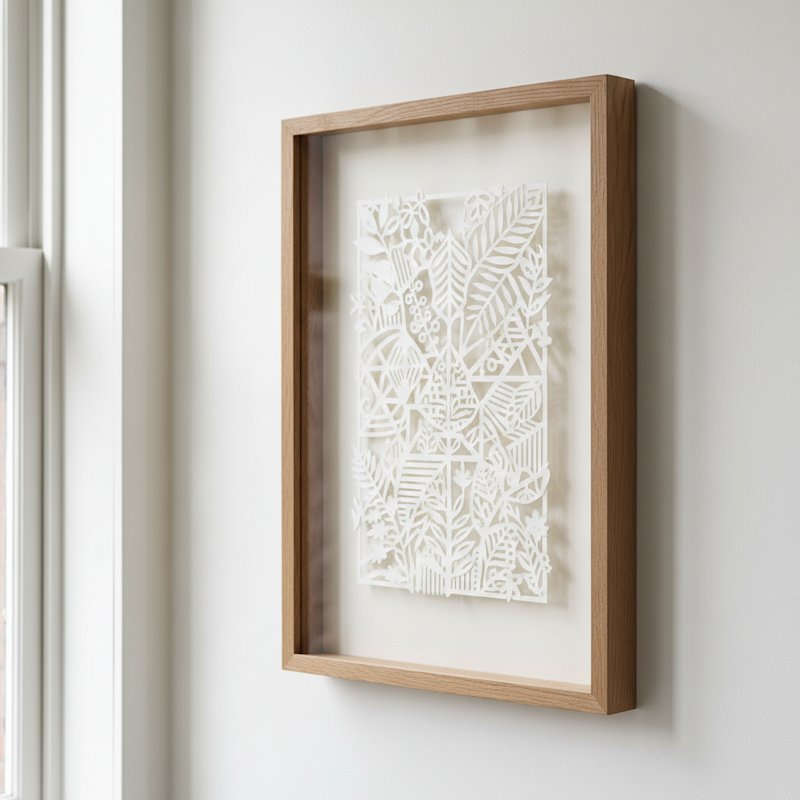
Paper art displayed in floating frame without glass

Moisture Trapping

Paper is hygroscopic — it absorbs and releases moisture in response to its environment. When paper is sealed behind glass, any moisture in the paper or the air pocket behind it has nowhere to go. Over time, this can cause buckling, waviness, mold growth, and foxing (those small brown spots that appear on old paper). Removing glass allows the paper to breathe naturally.

Weight and Safety

A sheet of glass for an 16×20 inch frame weighs roughly 2–3 pounds. Combined with the frame and backing, that is a heavy package to hang on a wall. If it falls, glass shatters and can damage the artwork inside. Glassless frames are lighter, safer, and easier to mount securely.

Texture and Dimension

Paper art — especially papercuts, layered pieces, and anything with embossing or relief — has physical texture that glass flattens visually. Pressing delicate cut paper against glass crushes dimensional details. Without glass, the play of natural light across raised and recessed surfaces becomes part of the viewing experience.

When Glass Is Still the Right Choice

Glassless framing is not for every situation. If your piece will hang in a high-traffic area where it might be bumped, in a kitchen where cooking grease is present, or in a humid bathroom, glass (or acrylic) provides a physical barrier that glassless methods cannot match. The methods below are best for controlled environments — living rooms, bedrooms, offices, and galleries.

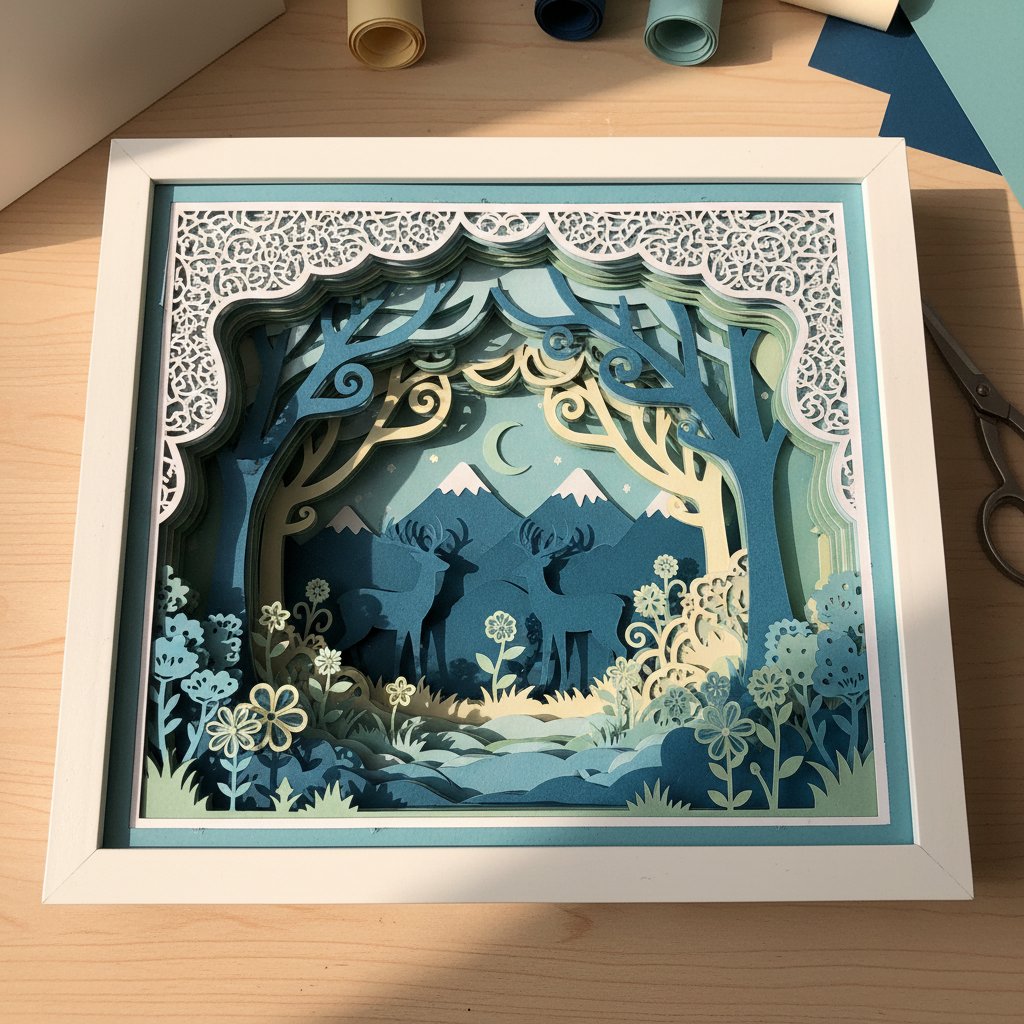
Shadow box frame displaying layered papercut art

Method 1: Floating Frames

A floating frame (also called a float mount or sink mount) displays paper art so it appears to hover within the frame, with visible space between the artwork edges and the frame itself. The paper sits on a raised backing board without any overlay, giving it a clean, contemporary look that works beautifully for papercuts, prints, and photographs.

What You Need

  • A deep frame (shadow box style, 1–2 inches deep) — no glass required
  • Archival foam board or mat board for the backing
  • Acid-free archival tape or mounting corners
  • A ruler and pencil for measuring

Step-by-Step Instructions

  1. Cut the backing board to fit snugly inside your frame. Use archival foam board — it is rigid, acid-free, and provides a clean white or black surface behind your art.

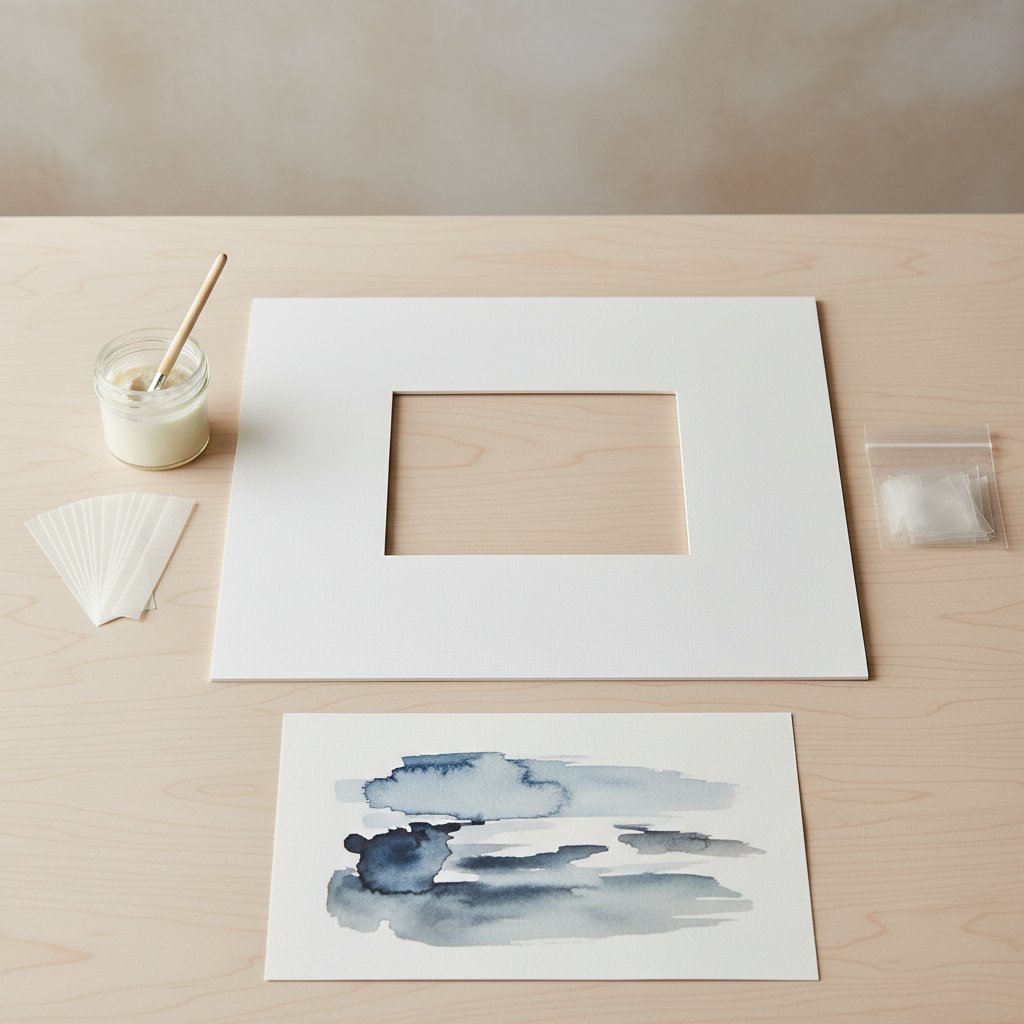
Acid-free mounting materials for paper art preservation

  1. Position your artwork on the backing board. For a true float, center the piece so there is equal space on all sides between the art and the frame edge. A 1/2-inch to 1-inch margin on each side looks clean and intentional.

  2. Attach with archival mounting corners or hinges. Archival mounting corners slide over the bottom corners of your artwork and adhere to the backing board — no adhesive touches the art itself. For larger pieces, use archival linen hinges applied to the top edge with wheat starch paste.

  3. Add spacer strips around the inside edge of the frame to create depth. Cut thin strips of foam board and adhere them to the frame's inner edges so the backing board sits recessed behind the frame face.

  4. Place the mounted artwork into the frame and secure it with the frame's backing clips or points.

Best For

Flat papercuts, single-layer prints, photographs, and any artwork where you want to show the paper edges. Floating frames are the go-to choice for gallery-style display of contemporary paper art.

Pro tip: Use a dark backing board (charcoal or black) for light-colored paper art to create dramatic contrast, or white backing for a clean, minimal look.

Method 2: Shadow Box (Glass Removed)

Shadow boxes are a natural fit for paper art because they are designed to display objects with depth. If you already have a shadow box frame with glass, you can simply remove the glass and use the deep frame to display layered or dimensional paper art.

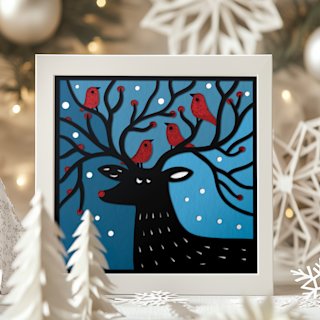
This approach works especially well for papercut shadow box art — the type of layered paper scenes that Mural Moods Art specializes in. The depth of the frame accommodates multiple stacked layers, and without glass pressing against the front layer, the dimensional quality of the piece is fully visible.

Step-by-Step Instructions

  1. Remove the glass or acrylic from an existing shadow box frame. Most shadow box frames have a removable glass panel held in place by flexible tabs or clips. Gently bend the tabs and lift the glass out.

  2. Clean the frame interior to remove any dust or glass shards.

  3. Mount your paper art inside the frame. For layered papercut pieces, attach the assembled stack directly to the frame backing using double-sided archival tape. For single pieces, use mounting corners as described in the floating frame method above.

  4. Secure the backing and reassemble the frame without the glass panel. Bend the retaining tabs back into place to hold the backing securely.

  5. Optional: Add LED backlighting behind the back layer for a luminous glow. LED strip lights or fairy lights create dramatic effects when they shine through layered cut paper. See our guide to adding LED lights safely for detailed instructions.

Best For

Layered paper art, papercut shadow boxes, and any dimensional paper pieces. Shadow box frames are available in depths from 1 to 3 inches, making them versatile for projects of varying complexity. For help selecting the right frame depth, see our frame size and depth guide.

Method 3: Direct Wall Mount

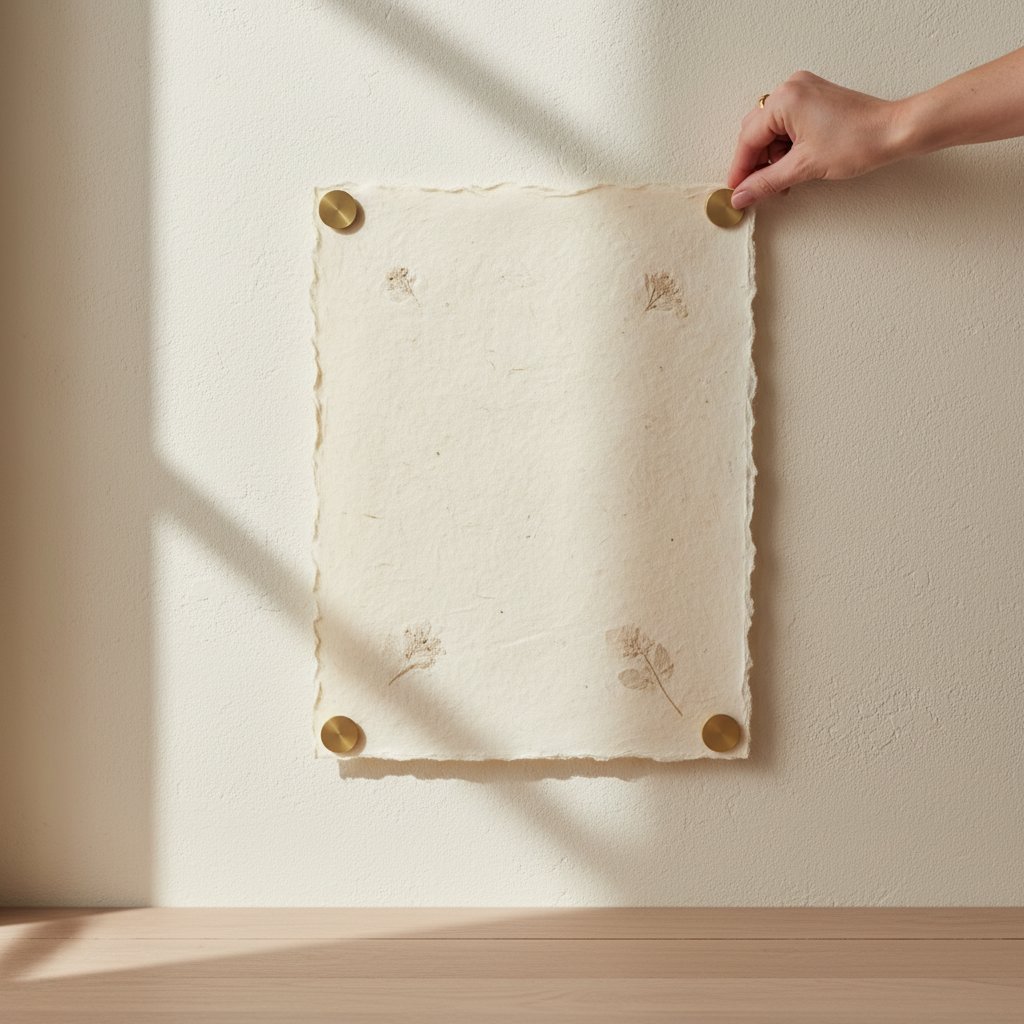
The most minimalist approach to displaying paper art without glass is mounting it directly to the wall — no frame at all. This method strips the presentation down to the essentials and works well for large-format pieces, casual display, and temporary installations.

Wall-Mounting Options

Archival mounting strips: Clear archival strips (sometimes called Mylar corners or top-load strips) hold the top and bottom edges of the artwork against the wall. The art can be slid in and out of the strips, making this a reversible method that does not damage the paper.

Magnetic mounts: Small neodymium magnets can hold paper art against a metal plate mounted to the wall. One magnet goes behind the paper and one in front, creating invisible pressure points at the corners. This works best for medium-weight paper.

Washi tape or painter's tape: For temporary, casual display, archival-quality washi tape or low-tack painter's tape holds paper art directly to the wall. This is not a long-term solution, but it is ideal for rotating displays, studio walls, and art shows where pieces change frequently.

Push pins or map tacks: For a bulletin-board aesthetic, decorative push pins hold paper art at the corners. This punctures the paper, so reserve it for prints or pieces where minor damage is acceptable.

Step-by-Step (Magnetic Mount)

  1. Attach small metal plates to the wall at the top corners of where your art will hang. Use removable adhesive strips (like Command strips) so the plates can be repositioned.

  2. Hold the artwork against the plates and place a magnet on the front of each corner. The magnet clamps the paper against the metal plate, holding it flat against the wall.

  3. Add magnets at the bottom corners if needed to prevent curling. Most paper art hangs flat with just the top two points secured.

Best For

Large prints, posters, casual displays, rotating gallery walls, and temporary exhibitions. Not recommended for valuable originals or pieces that need long-term protection.

For framing alternatives that offer more structure, see our article on DIY shadow box ideas.

Frame-Worthy Designs That Look Amazing Without Glass
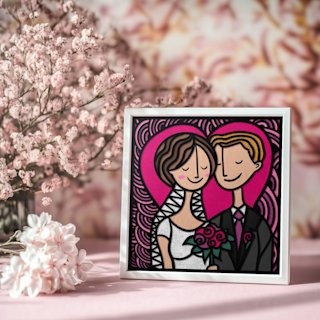
Floating frames, shadow boxes, and matte displays all work beautifully with layered papercut art. Pick a design that matches your room and frame it your way.

Method 4: Acrylic Alternatives

If you want the protection of a transparent barrier but prefer to avoid glass, acrylic (sometimes called Plexiglas) is the standard alternative. While technically still a form of glazing, acrylic offers several advantages over glass that make it worth considering as a middle ground.

Acrylic vs. Glass

FeatureGlassAcrylic
WeightHeavy (2–3 lb for 16×20)Light (0.5–1 lb for 16×20)
Shatter riskBreaks into sharp piecesDoes not shatter
ClarityGoodExcellent (less distortion)
ReflectionHigh with standard glassAvailable in non-glare finishes
StaticNoneCan attract dust
CostLowerHigher
UV protectionOptional coatingBuilt-in in many grades

When to Choose Acrylic

  • Large frames (over 20×24 inches) where glass weight becomes a real concern
  • Homes with children where shattering glass is a safety hazard
  • High-humidity environments where acrylic breathes better than glass
  • Shipping artwork — acrylic survives transport that would shatter glass

Types of Acrylic

  • Standard acrylic: Clear, lightweight, affordable. Good for most uses.
  • Non-glare acrylic: Etched surface that scatters light to reduce reflections. Slightly softens the view.
  • UV-filtering acrylic: Blocks 90–99% of UV light. Essential for preserving colored paper art.
  • Museum acrylic: Combines UV filtering with anti-reflection coatings. The premium option.

Using Acrylic Without a Full Frame

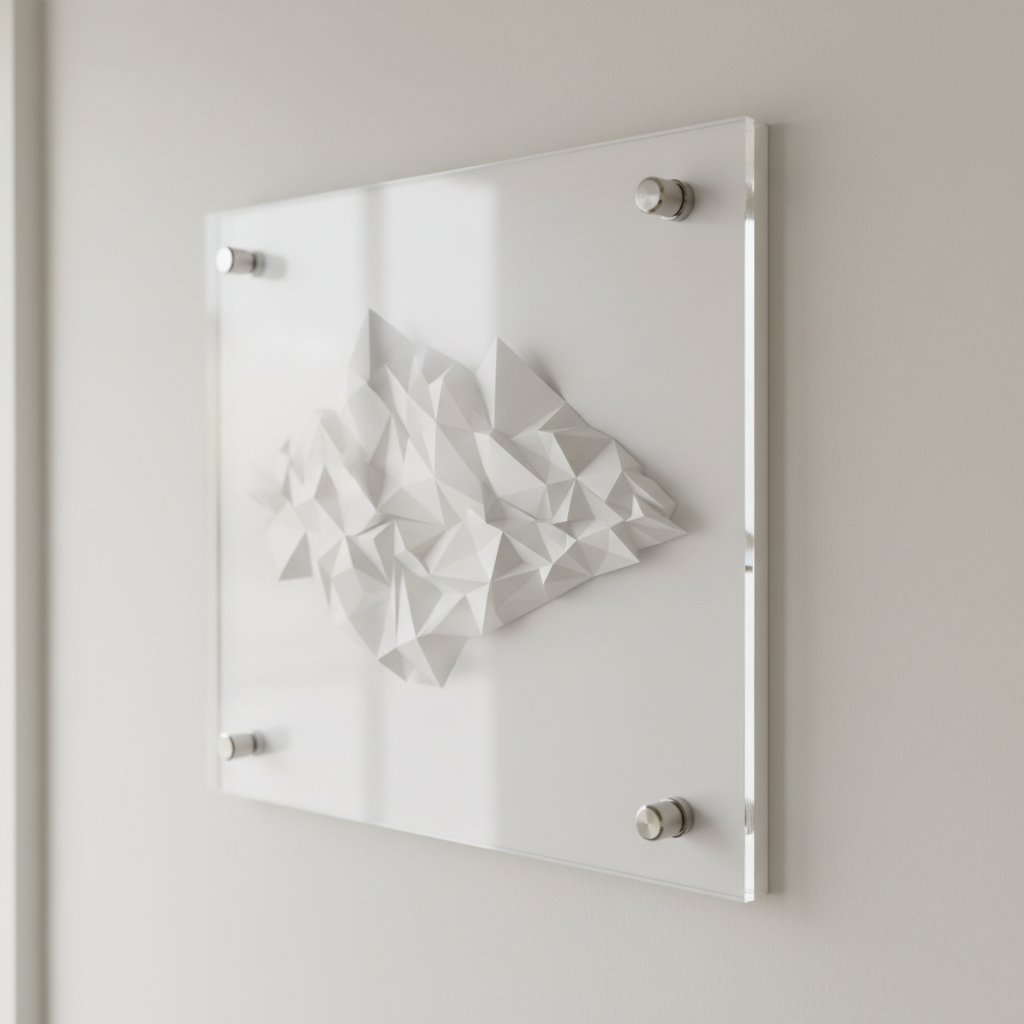
You can use acrylic sheets as a standalone protective cover without a traditional frame. Sandwich the artwork between an acrylic front panel and a rigid backing board, then hold the sandwich together with archival clips, standoffs, or edge frames. This creates a clean, modern look with physical protection but no heavy frame.

For display tips on framed and unframed pieces, see our guide to DIY stencil art on canvas for creative mounting inspiration.

Method 5: Archival Mounting

Archival mounting is the method professional framers use for valuable or irreplaceable paper art. It prioritizes long-term preservation above all else and uses only acid-free, reversible materials that will not damage the artwork over time.

While archival mounting is often combined with glass (museum-quality framing uses UV glass or acrylic), the mounting techniques themselves work perfectly in glassless frames. The key difference is that archival mounting uses conservation-grade materials and fully reversible attachment methods.

Archival Materials

  • Acid-free mat board (100% cotton rag, pH neutral)
  • Archival foam board (acid-free, lignin-free)
  • Wheat starch paste — the gold standard for reversible adhesion
  • Japanese tissue hinges — thin, strong, and fully removable
  • Archival mounting corners — Mylar corners that hold artwork without adhesive contact
  • UV-protective spray — applied to the artwork surface before framing

Hinge Mounting Technique

Hinge mounting is the professional standard for attaching paper art to a backing board without adhesive touching the artwork:

  1. Cut two strips of Japanese tissue about 1 inch wide and 3 inches long.
  2. Apply wheat starch paste to one end of each strip and attach it to the back top edge of your artwork (about 1/3 of the way in from each side). The pasted portion should extend about 1/2 inch onto the back of the art.
  3. Let the paste dry completely (about 30 minutes).
  4. Apply paste to the exposed portion of each hinge and press it onto the backing board.
  5. Place a weight on the hinges while they dry to ensure a flat bond.

The artwork hangs from the hinges by its own weight, which prevents buckling. Because wheat starch paste is fully reversible with water, the artwork can be removed at any time without damage.

Best For

Original artwork, limited edition prints, vintage paper pieces, and any artwork with long-term value. Archival mounting is the safest method for pieces you want to preserve for decades.

For paper-specific preservation, see our guide on paper storage solutions to prevent warping — the storage principles apply equally to displayed work.

Protection Tips for Glassless Display

Framing without glass means your artwork is more exposed to environmental factors. Here is how to keep your paper art safe in a glassless frame.

UV Protection Without Glass

Ultraviolet light is the primary cause of paper fading and ink deterioration. Without glass (or UV-filtering acrylic) as a barrier, you need to manage light exposure directly:

  • Hang artwork away from direct sunlight. North-facing walls are ideal. If you must hang near a window, use UV-blocking window film or curtains.
  • Use UV-protective spray. Products like Krylon UV-Resistant Clear Coating can be applied to the surface of paper art. Test on a scrap piece first — some sprays alter the paper's sheen.
  • Rotate displayed pieces. If artwork is exposed to light regularly, swap it out every 3–6 months to limit cumulative exposure.

Dust Management

Without glass, dust settles directly on paper art. Regular maintenance keeps it looking clean:

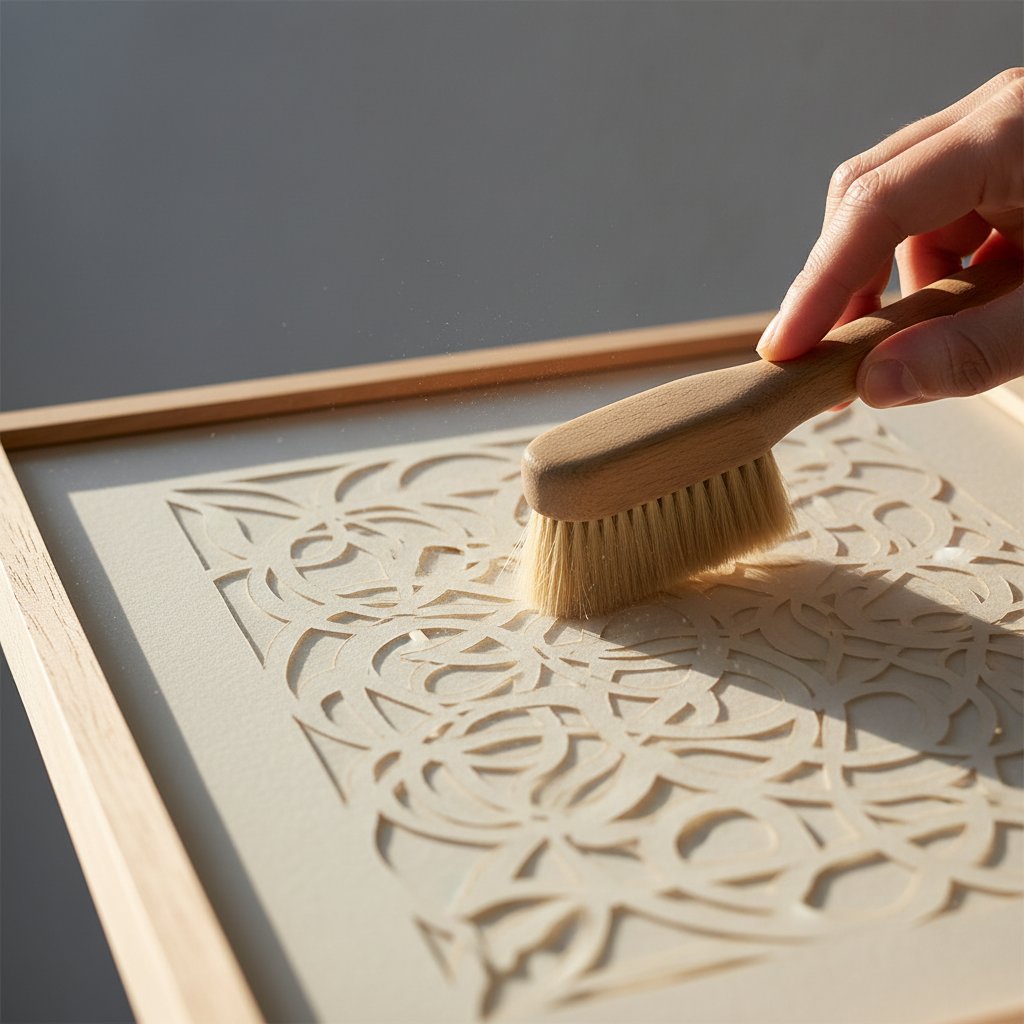
  • Use a soft, dry brush (like a clean makeup brush or a photographer's lens brush) to gently sweep dust off the surface. Work from the center outward with light strokes.
  • Compressed air held at a distance can blow dust out of intricate papercut details without touching the paper.
  • Avoid damp cloths — moisture damages paper. If you must clean a spot, use a barely damp cloth and dab, never rub.

Humidity Control

Paper art expands and contracts with humidity changes, which causes buckling and warping:

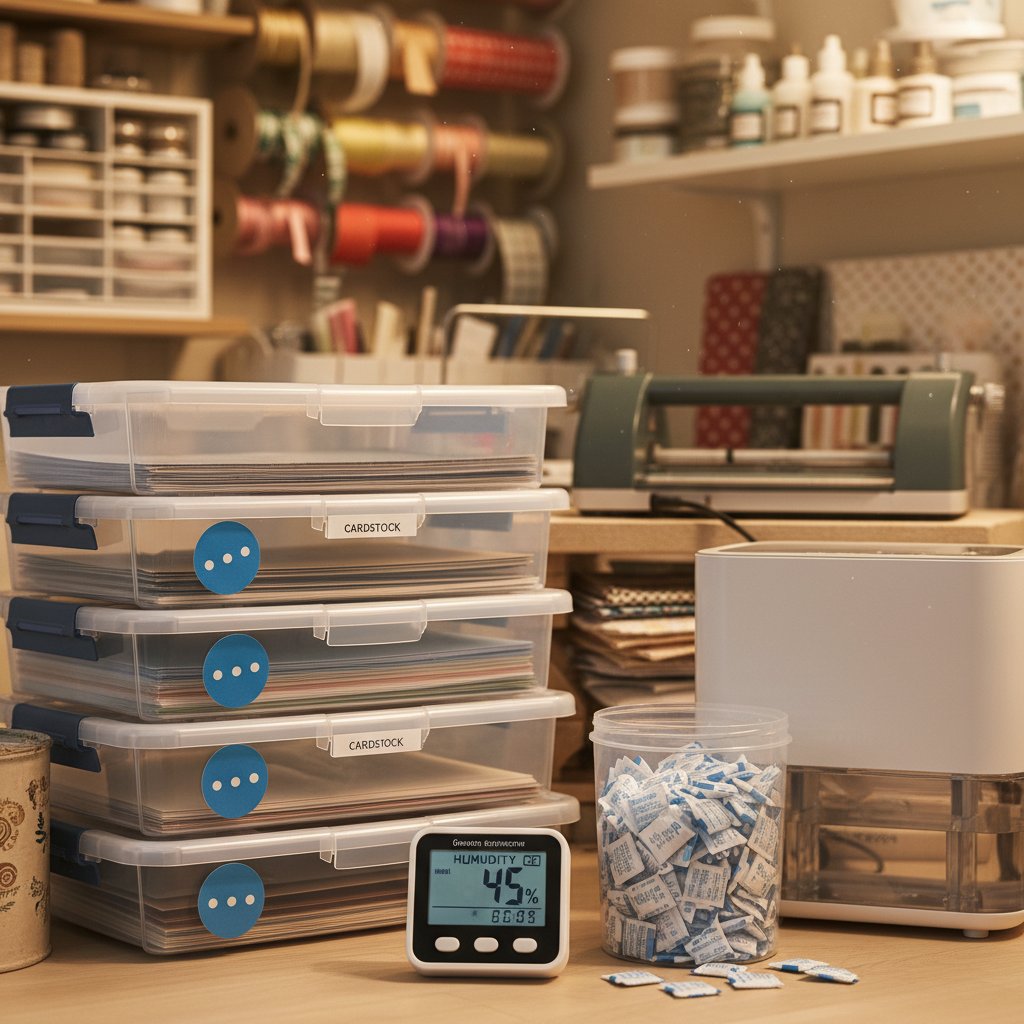
  • Maintain 40–50% relative humidity in the display area. A small hygrometer (available for under $15) monitors levels accurately.
  • Use a dehumidifier in damp spaces or a humidifier in dry climates. Rapid humidity swings are worse than consistently high or low levels.
  • Avoid hanging paper art in bathrooms, kitchens, or basements without environmental controls.

For detailed guidance on how humidity affects paper art, see our article on humidity and paper cutting — the environmental principles apply to displayed art as well as work-in-progress.

Handling Precautions

  • Always handle paper art with clean, dry hands or wear cotton gloves
  • Support the piece from underneath — never hold by one edge
  • Store artwork flat when not displayed, interleaved with acid-free tissue paper
  • Avoid touching the surface of papercuts and delicate pieces

Which Method Should You Choose?

Here is a quick reference to help you match the right glassless framing method to your specific situation:

MethodBest ForProtection LevelCost
Floating frameFlat papercuts, prints, photosMedium$20–60
Shadow box (no glass)Layered paper art, dimensional piecesMedium$15–50
Direct wall mountLarge prints, casual display, rotating galleriesLow$2–15
Acrylic alternativeAny artwork needing physical protectionHigh$30–100
Archival mountingValuable originals, limited editionsHigh$40–150

Decision Checklist

  • Is the artwork flat or dimensional? Flat pieces work with floating frames or archival mounts. Dimensional pieces need shadow boxes.
  • How valuable is the piece? Expensive or irreplaceable art deserves archival mounting. Casual pieces can use simpler methods.
  • Where will it hang? High-traffic areas benefit from acrylic protection. Quiet walls can use open floating frames.
  • What is your budget? Direct wall mounting costs almost nothing. Archival mounting requires specialty materials.
  • Do you need to change displays often? Magnetic mounts and washi tape make swapping easy. Hinged archival mounts are more permanent.
Shadow Box Frames That Showcase Paper Art Beautifully
These papercut designs are made specifically for shadow box frames — the depth between layers creates visual interest that flat framing cannot match. No glass needed with LED illumination.

Frequently Asked Questions

Can paper art be framed without glass?
Yes. Galleries and museums regularly display paper art without glass using float mounts, archival hinges, and controlled lighting. The key is choosing a method that balances protection with presentation.

Will paper art get damaged without glass?
Not necessarily. Without glass, paper art is more exposed to dust and humidity, but it is also free from the moisture-trapping and buckling issues that glass can cause. With proper placement (away from direct sunlight and humidity sources) and regular dusting, glassless framing can be perfectly safe.

What is the cheapest way to frame paper art without glass?
Direct wall mounting with magnetic strips or washi tape costs almost nothing. For a more finished look, a basic shadow box frame with the glass removed runs $15–25 at most craft stores.

How do I protect paper art from dust without glass?
Regular dusting with a soft brush, hanging artwork in low-dust areas, and using UV-protective spray (which also provides a mild dust barrier) all help. For high-dust environments, acrylic glazing is the best compromise.

Does framing without glass look professional?
Absolutely. Float mounting and archival framing without glass are standard gallery practices. Many collectors and curators actually prefer glassless display for paper art because it shows the work's texture and color without distortion.

Can I use these methods for papercut shadow box art?
Yes — shadow box frames with the glass removed are ideal for layered papercut art. The depth of the frame accommodates multiple layers, and removing the glass lets viewers appreciate the dimensional quality of each layer. For assembly guidance, see our how to make a layered shadow box tutorial.

Ready to Frame Your Paper Art?

You do not need glass to display paper art beautifully and safely. Whether you choose a floating frame for a clean gallery look, a shadow box for layered dimensional pieces, or archival mounting for valuable originals, glassless framing lets your artwork breathe, shine, and show its true character.

Start with the method that matches your artwork and environment. A simple shadow box frame with the glass removed is an excellent first project — affordable, easy, and the results look professional. For more framing guidance and paper art tutorials, explore our planning your first shadow box project guide.