10 Easy Paper Mache Projects for Beginners
These ten projects are ordered roughly from easiest to most challenging. Each one teaches core skills that build on the previous project. Pick one that matches your comfort level, or start at the top and work your way through all ten.
1. Decorative Bowl
Difficulty: Easy | Time: 2 days (including drying) | Base form: Balloon or bowl
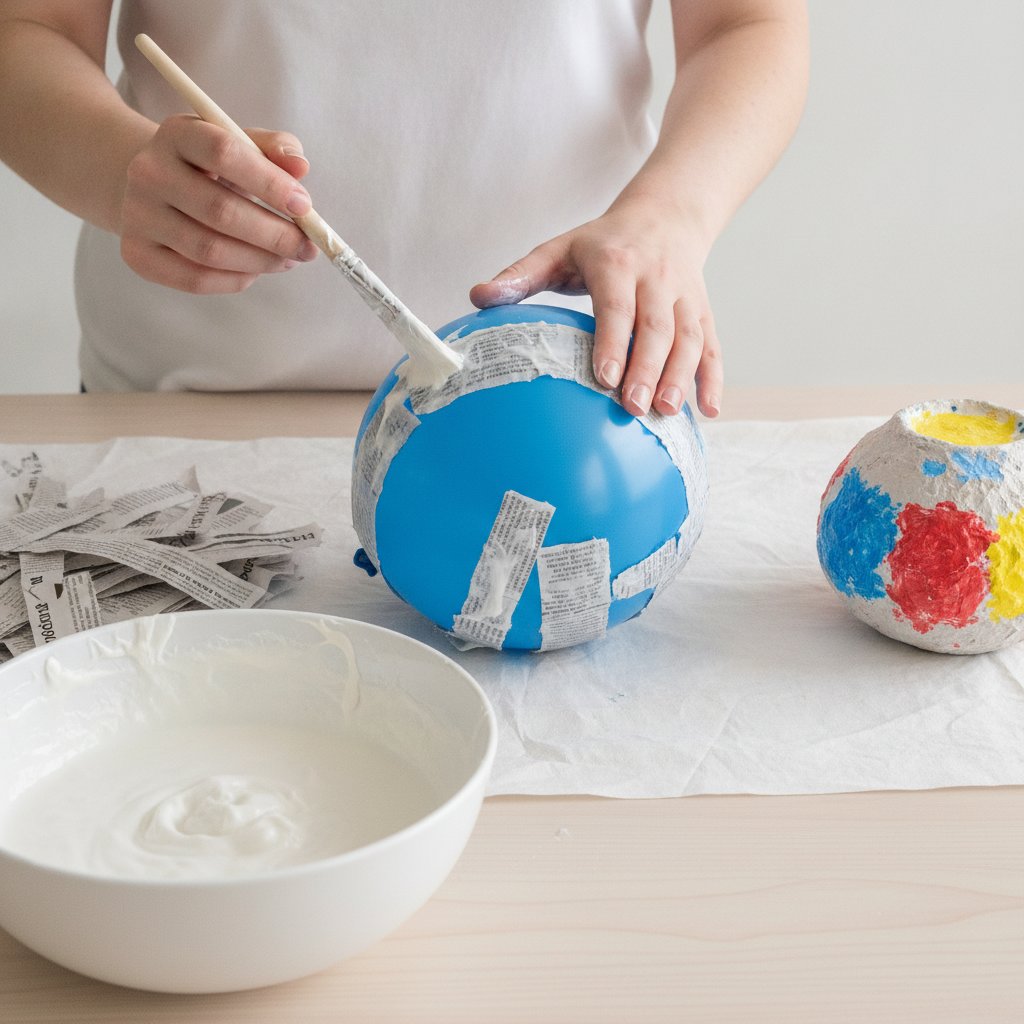
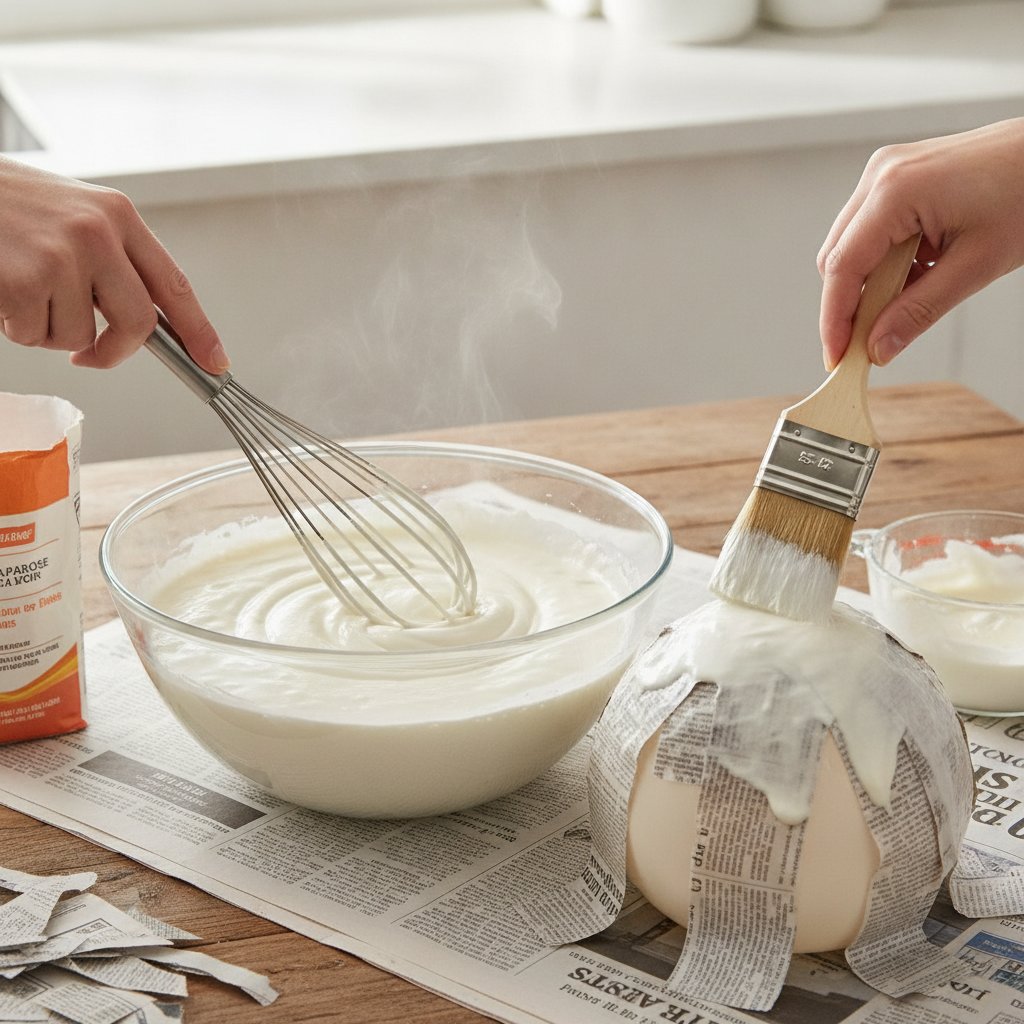
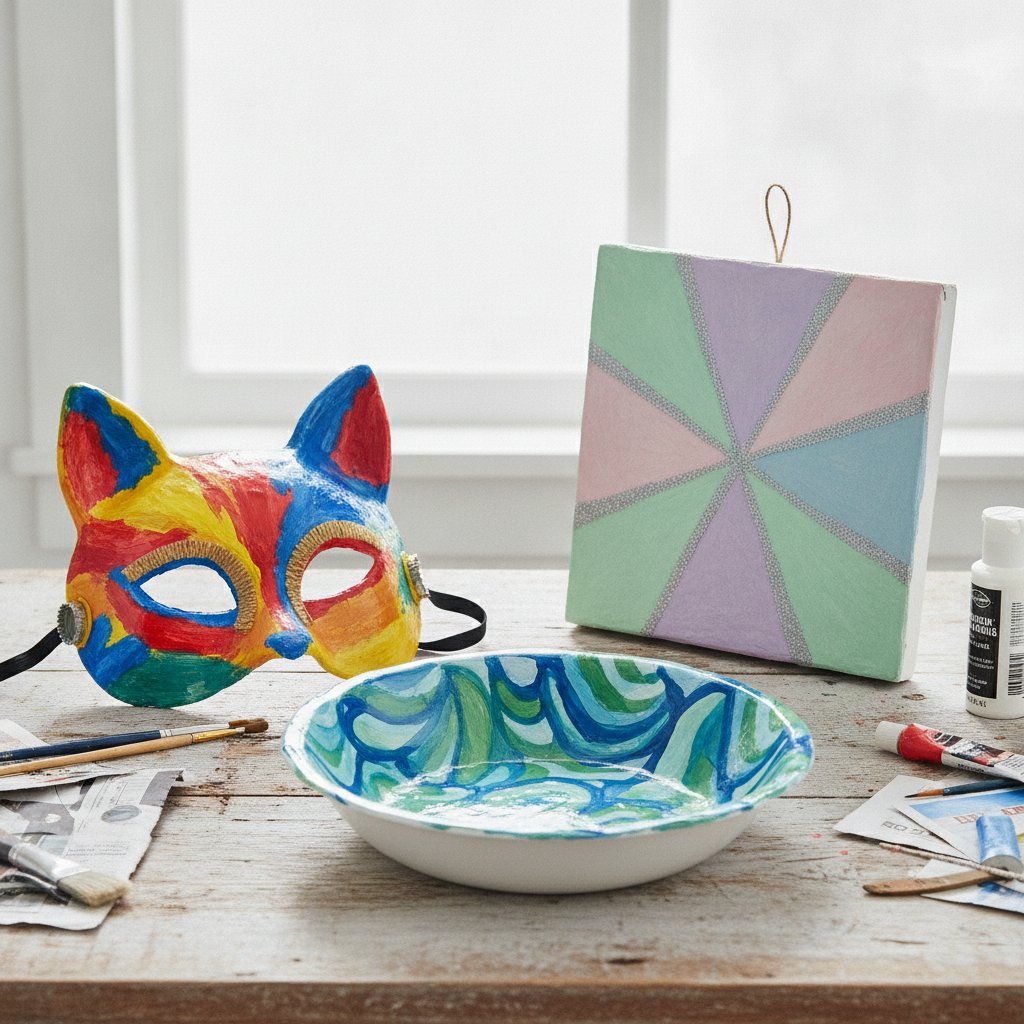
This is the classic first paper mache project for good reason. Inflate a balloon to the size you want your bowl to be. Set it in a cup or bowl to hold it steady. Apply 3–4 layers of paper mache over the lower half of the balloon. Let each layer dry completely. Once the final layer is dry, pop the balloon (or deflate it slowly). Trim the rim of the bowl with scissors for a clean edge.
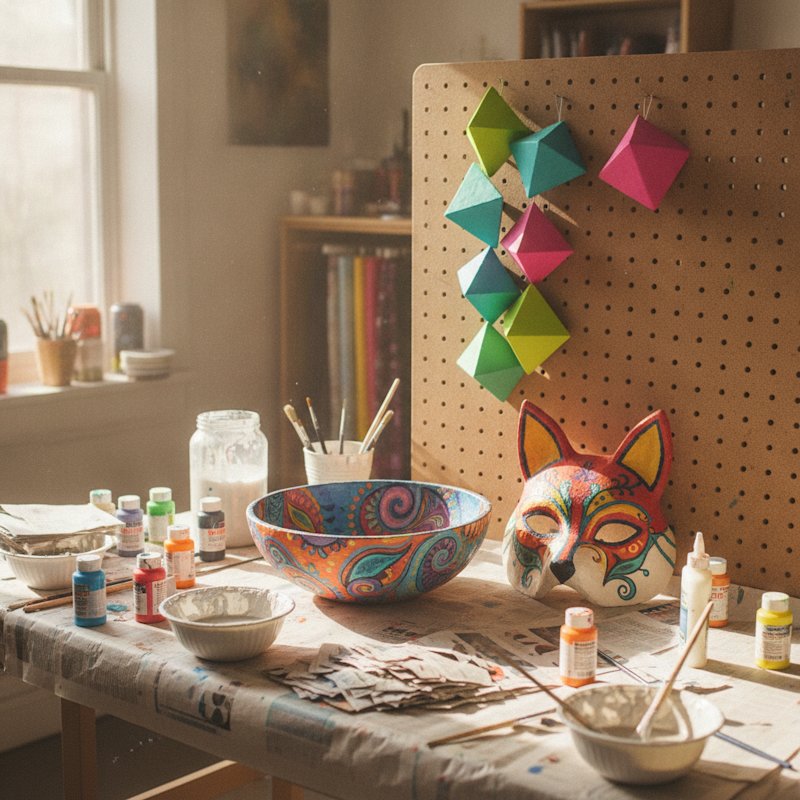
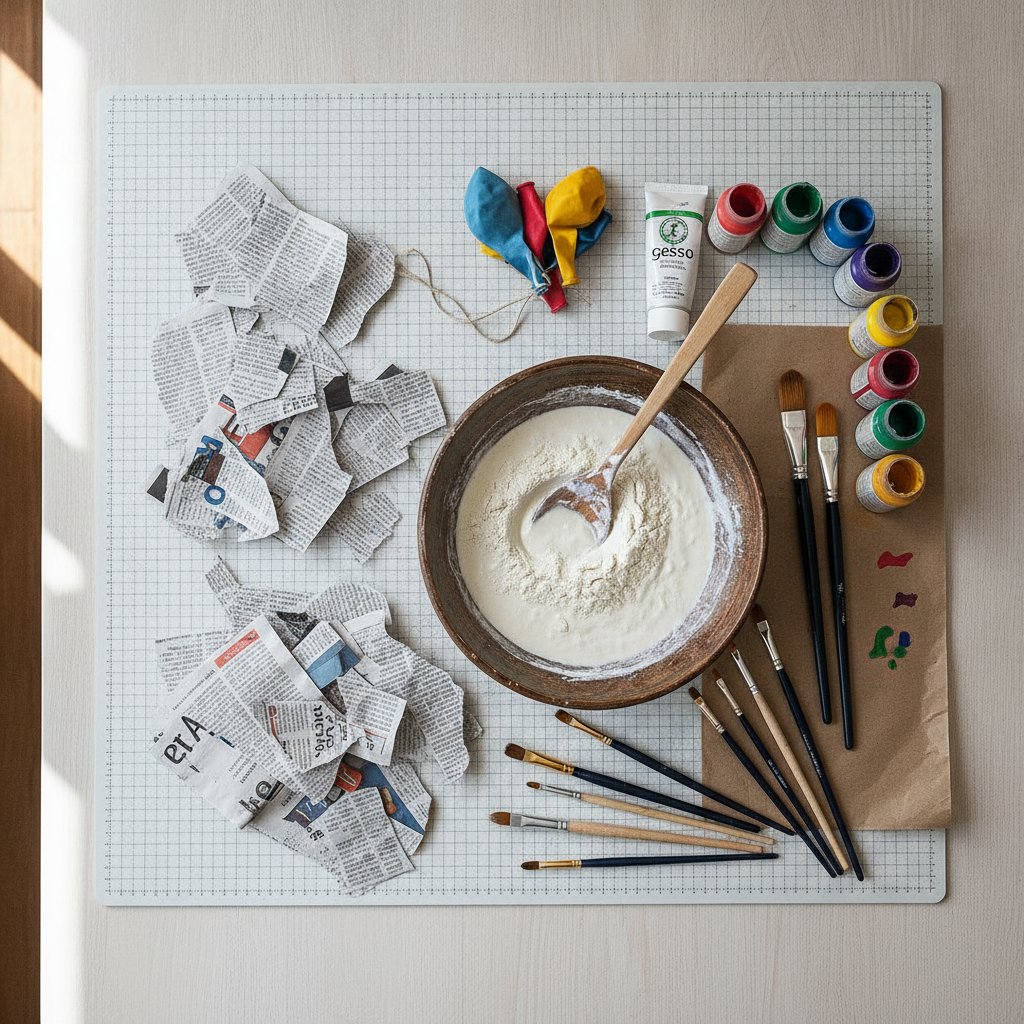
Sand the exterior smooth, apply gesso, then paint. A decoupage finish using decorative napkins looks stunning on these bowls — see our mixed media paper techniques guide for surface-application methods that integrate perfectly with paper mache surfaces. Seal with varnish or Mod Podge.
2. Animal Mask
Difficulty: Easy | Time: 2 days | Base form: Balloon + cardboard
Start with a balloon slightly larger than your face. Cover it with 3–4 layers of paper mache, leaving an opening at the bottom (the balloon's tied end). Once dry, remove the balloon and cut the shell into a mask shape. Cut eye holes. Add ears, horns, or a snout by taping cardboard pieces to the mask and covering them with additional paper mache layers.
Paint with acrylics. A fox mask in orange and white, a cat mask in black with gold details, or a rabbit mask in soft gray — each one makes a striking wall display when you are not wearing it.
3. Piñata
Difficulty: Easy | Time: 3 days | Base form: Large balloon
A piñata uses the same basic technique as a bowl, but at a larger scale. Use a large round balloon and apply 4–5 layers — you want the shell thick enough to hold candy but fragile enough to break open. Before your final layer, cut a small flap in the top, fill the cavity with candy and small toys, then tape the flap shut and cover it with your last layer of paper mache.
Decorate with tissue paper fringe (cut tissue paper into strips, fringe one edge with scissors, and glue the strips in overlapping rows). The fringe method produces the classic piñata look and is surprisingly satisfying to do.
4. Wall Art Sculpture
Difficulty: Moderate | Time: 3–4 days | Base form: Chicken wire armature
Shape chicken wire into a geometric form — a star, an abstract wave, a stylized letter, or a sunburst. Tape the edges with masking tape so the wire does not poke through the paper. Apply 4–5 layers of paper mache over the entire form. Sand, prime, and paint.
These sculptural wall pieces are lightweight enough to hang with Command strips, which makes them perfect for renters or anyone who does not want to put holes in their walls. Mount a trio of matching geometric shapes in graduated sizes for a gallery wall effect. For more wall art inspiration, browse our DIY paper wall art guide.
5. Decorative Letters
Difficulty: Moderate | Time: 3 days | Base form: Cardboard
Cut two identical letter shapes from corrugated cardboard. Cut 1-inch-wide strips of cardboard for the sides. Tape the side strips between the two letter faces to create a 3D letterform with depth. Cover the entire structure with 3–4 layers of paper mache.
Spell out a name, a word, or a seasonal greeting. These 3D letters are popular for nursery decor ("LOVE" or "DREAM" in pastel colors), wedding displays ("MR & MRS" in white and gold), and holiday mantelscapes ("JOY" or "NOEL" in red and green).
6. Decorative Flower Vase
Difficulty: Moderate | Time: 3 days | Base form: Plastic bottle
Use a clean plastic bottle (soda or water bottle) as the armature. Tape cardboard additions to create a wider base or a flared lip if you want a more complex silhouette. Apply 4–5 layers of paper mache, building up extra layers at the base for stability.
Paint with acrylics and seal with waterproof varnish. Note: paper mache vases are not waterproof inside. Either insert a glass jar or plastic liner to hold water for real flowers, or use them for dried flowers and artificial arrangements. The texture of painted paper mache pairs beautifully with dried eucalyptus, pampas grass, or a bundle of twigs.
7. Holiday Ornaments
Difficulty: Easy | Time: 2 days | Base form: Small balloons
Use water balloons or small round balloons. Apply 2–3 layers of paper mache — ornaments do not need as many layers because they are small and lightweight. Once dry, remove the balloon and paint with seasonal colors. Add glitter, ribbons, or decoupaged patterns.
Make a set of 6–12 in coordinating colors for a handmade tree decoration collection. These also make thoughtful, inexpensive gifts. Punch a small hole at the top with a needle and thread a ribbon through for hanging.
8. Storage Bins
Difficulty: Moderate | Time: 3–4 days | Base form: Cardboard box
Start with a sturdy cardboard box in your desired size. Reinforce the corners with tape. Apply 4–5 layers of paper mache over the entire exterior. The paper mache transforms a flimsy cardboard box into a rigid, attractive storage container.
Decorate with paint, decoupage, or patterned paper. These bins are ideal for desk organization, craft supply storage, or bathroom essentials. The paper mache shell makes them far more durable than plain cardboard.
9. Paper Mache Cactus
Difficulty: Moderate | Time: 3–4 days | Base form: Wire frame
Bend heavy-gauge craft wire into a cactus shape — a main trunk with 1–3 arms. Wrap the wire frame tightly with crumpled aluminum foil to build up volume and create an organic shape. Tape the foil in place with masking tape. Apply 4–5 layers of paper mache over the foil armature.
Paint in shades of green, adding lighter highlights on one side for a sunlit effect. Plant the cactus in a small terra-cotta pot with real gravel or sand. A paper mache cactus makes an excellent shelf display for anyone who loves the look of succulents but cannot keep real plants alive.
10. Miniature Diorama
Difficulty: Moderate to Advanced | Time: 4–5 days | Base form: Cardboard box
Use a small cardboard box (a shoebox or cereal box cut to size) as the diorama base. Build miniature terrain features — hills, trees, buildings — from crumpled paper and cardboard, then cover everything with paper mache. Once dry, paint the scene and add details with mixed media: moss for ground cover, small pebbles for pathways, toothpicks for fence posts.
Dioramas are where paper mache becomes genuinely artistic. They combine sculpture, painting, and model-building into a single project. If you enjoy working across multiple media, our mixed media paper techniques guide explores ways to blend paper mache with collage, painting, and other techniques.