Articles12 min read

Paper Flower Wall Art: From Paper Cutting to Framed Masterpieces

A field-tested walk through making paper flower wall art that reads as real botanical decor — petal shaping, depth techniques, and shadow-box framing, with free SVG templates included.

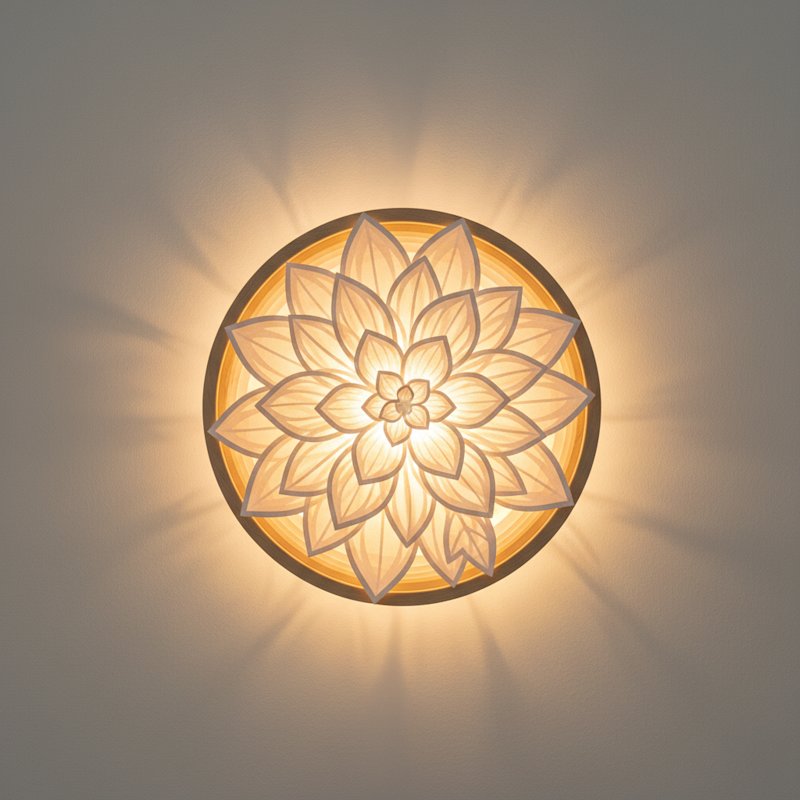
Glowing backlit layered paper-cut flower shadow box hanging on a wall

Search "paper flower wall art" and almost every top result is the same thing: a giant backdrop
flower hot-glued to a nursery or wedding wall. Useful, but temporary. What's missing from the
SERP is the version you actually want to live with long-term — a flower built with paper-cutting
technique, given real depth, and framed so it becomes permanent botanical art rather than
party decor that gets taken down on Monday.

That gap is what this guide closes. We start from cut petals (hand-cut or Cricut/Silhouette) and
take you all the way to a finished, framed piece you'd hang in a living room — covering the
techniques competitors skip: how petal shape changes the flower's character, how to build depth
that survives being behind glass, and how to choose a frame that protects delicate paper instead
of crushing it.

I spent six weekends on this before the result was worth framing. The first version — flat petals
glued straight to card — looked like a coloured photocopy and went into a drawer. The version that
now hangs in my hallway used curled petals, a vellum back layer, 3 mm foam spacers, and a 30 mm
deep shadow box. Same flower. Completely different object. This article is the short version of
that six-weekend learning curve.

New to the cutting machine side of this? Start with our Cricut paper cutting for
beginners
guide first, then come back here for
the floral-specific technique. Looking specifically at bedroom projects? Our paper flower wall
art for bedroom
guide covers colour schemes and
renter-friendly mounting.
The Materials That Actually Matter

The single biggest decision in paper flower wall art is paper weight, and most tutorials get it
backwards. Backdrop flowers use lightweight paper (65 lb / 176 gsm) because they're large and
don't need to hold fine detail. Framed wall art is the opposite — you want weight, because weight
is what lets a petal hold a curl, resist humidity, and keep its shape behind glass for years.

For framed botanical pieces I standardise on 80 lb (216 gsm) cardstock for petals and 100–110
lb
for any layer carrying fine bridges or a cut centre. The one exception is the back glow layer:
a single sheet of vellum behind the flower turns rear lighting from "harsh" to "lantern-like,"
and it's the cheapest upgrade you can make. Cotton cardstock (around 118 lb) is lovely for single
statement flowers but overkill and hard to cut cleanly for multi-layer work — save it for hero
pieces.

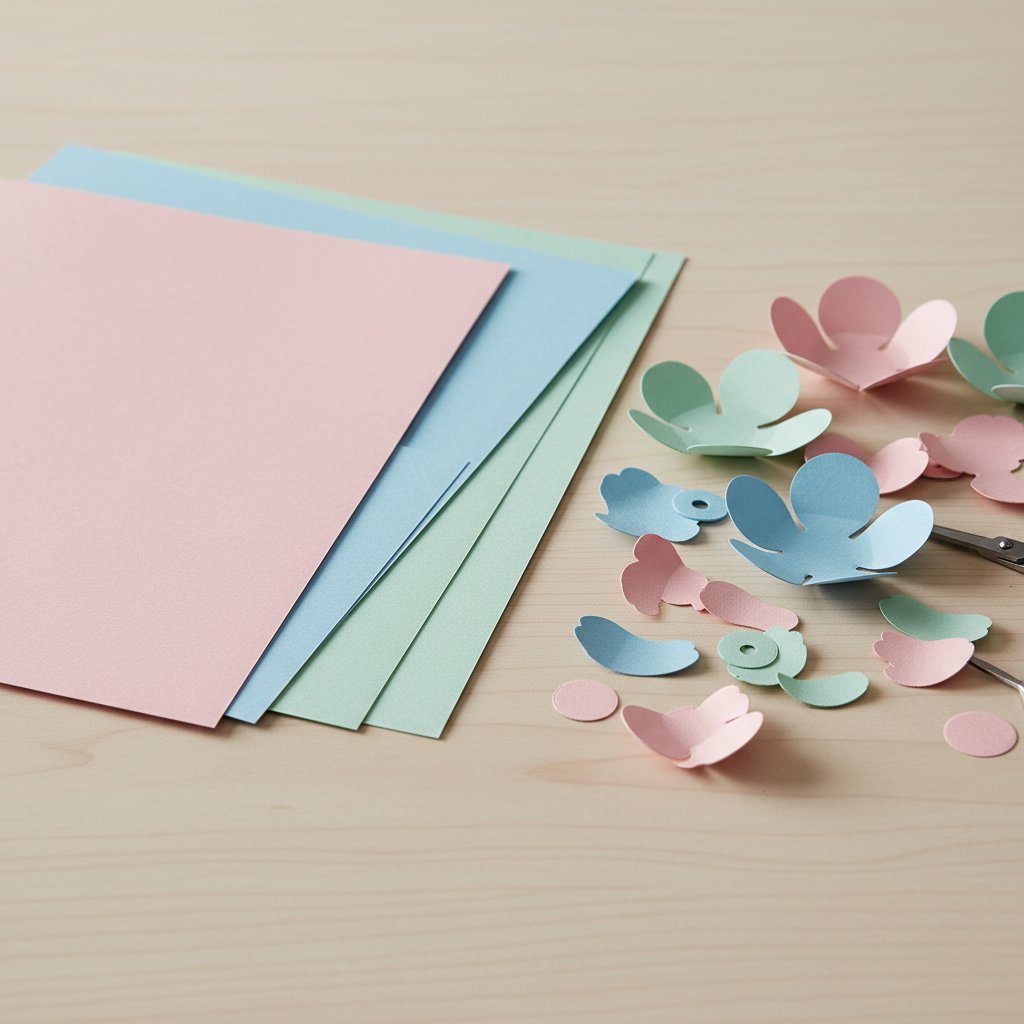
Fanned stack of coloured cardstock sheets beside cut paper flower petals

Your tool list is short and none of it is exotic:

  • Cutting: a Cricut or Silhouette for consistency across a multi-petal flower; sharp precision
    scissors and a fresh craft knife for hand-cutting and cleanup. A dull blade tears 80 lb
    cardstock — replace every 20–30 full-size cuts.
  • Shaping: a bone folder or the edge of a scissor for curling petals; a small foam mat (or a
    folded towel) for cupping. This is the step most tutorials skip and it's where "flat" becomes
    "flower."
  • Adhesive: hot glue for fast structural bonds on thick cardstock; precision craft glue for
    visible joins where hot-glue stringing would show. Our best glue for paper shadow box
    layers
    breaks down which adhesive
    wins for which joint.
  • Framing: a 25–40 mm deep shadow box (the flower needs the depth), float frame, or gallery
    frame with mat. See our frame size and depth for paper cut shadow
    boxes
    guide before you buy —
    depth is the dimension that ruins more framed flowers than any other.
Start with a flower built for framing
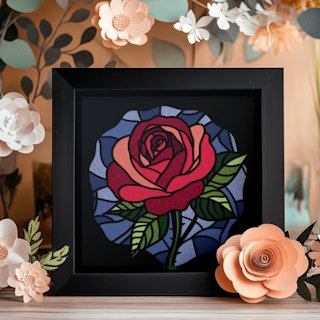
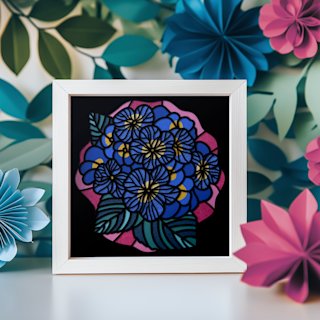
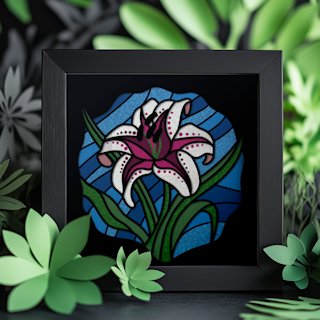
Rather than designing petals from scratch, begin with a layered floral SVG engineered for the depth and cut tolerance a framed piece demands. These three are cut-clean, scale-tested, and ship with commercial-use licensing — pick the bloom that matches your room and follow the tutorial below.

Petal Shape Decides the Flower's Character

Before depth, before framing, before anything: petal shape is what makes a paper flower read as a
specific bloom rather than a generic "flower shape." Four petal families cover almost everything:

  • Teardrop (rounded) — roses, peonies, camellias. Soft, romantic, the safest starting point.
  • Pointed — lilies, daisies, anemones. Graphic and architectural; reads modern in a frame.
  • Heart/notched — begonias, some roses at the outer ring. Adds visual rhythm.
  • Serrated or ruffled — chrysanthemums, marigolds. High impact, high effort — save for when
    you've got one confident flower under your belt.

Pick the shape to match the room, not just the bloom you like. A pointed-petal lily in a single
colour reads minimalist and contemporary; the same wall in ruffled chrysanthemum reads maximalist
and cosy. Our minimalist paper wall art guide is good
pairing reading if you're leaning modern.

Depth Is Not Optional — It's the Whole Point

A flat flower is a sticker. Depth is what turns cut paper into something you'd frame, and it comes
from three techniques used together:

  1. Curling. Draw each petal across the edge of a bone folder (or a closed scissor) to curve it
    outward. Curl the outer ring gently and the inner ring aggressively — real flowers cup tighter
    toward the centre.
  2. Cupping. Press the centre of a petal into a soft foam mat with a rounded tool (the wrong end
    of a paintbrush works) so the edges lift. This is what makes a rose petal look alive instead of
    stamped.
  3. Layering with spacers. Stack petals concentrically, reducing size ~15% per ring, and separate
    each ring with 3 mm adhesive foam squares spaced every 10–15 cm. Without spacers the stack
    compresses under glass and the depth disappears — this is the exact mistake my first drawer-bound
    attempt made.
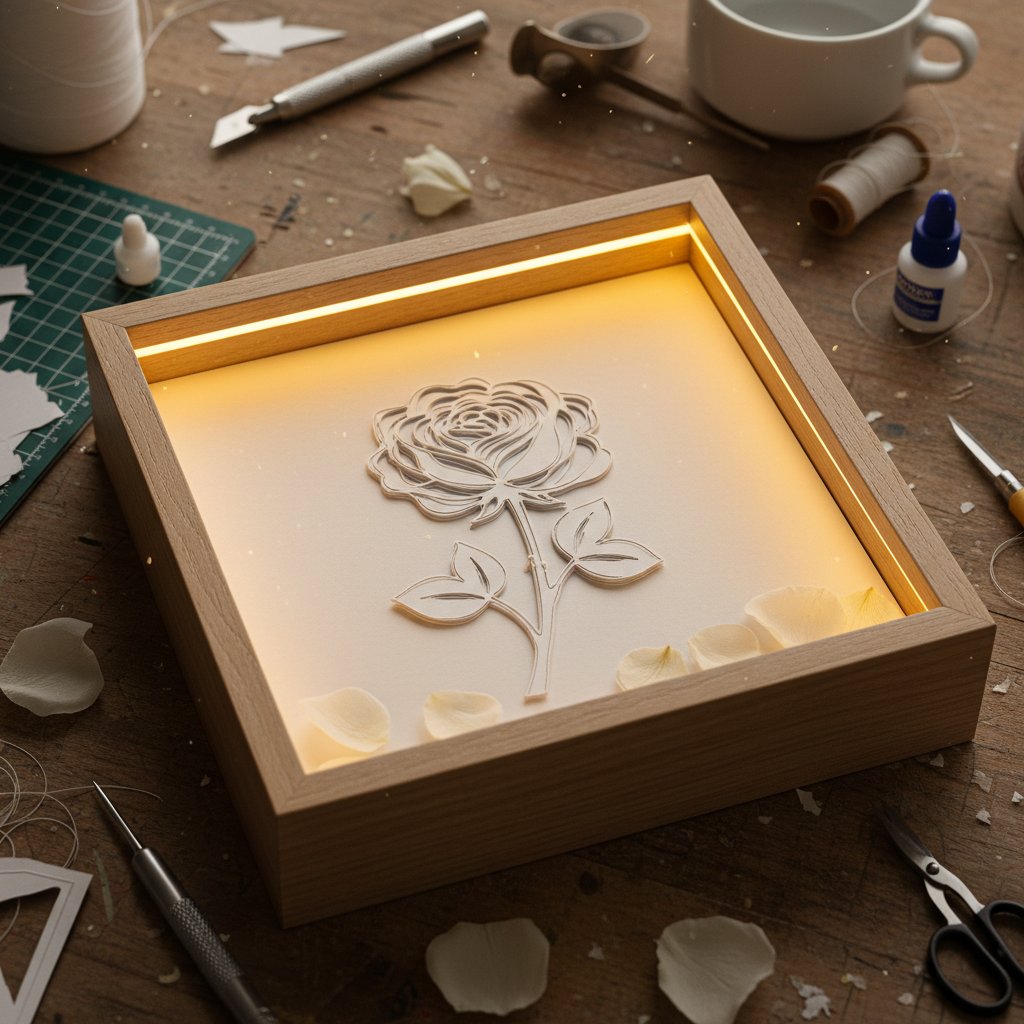
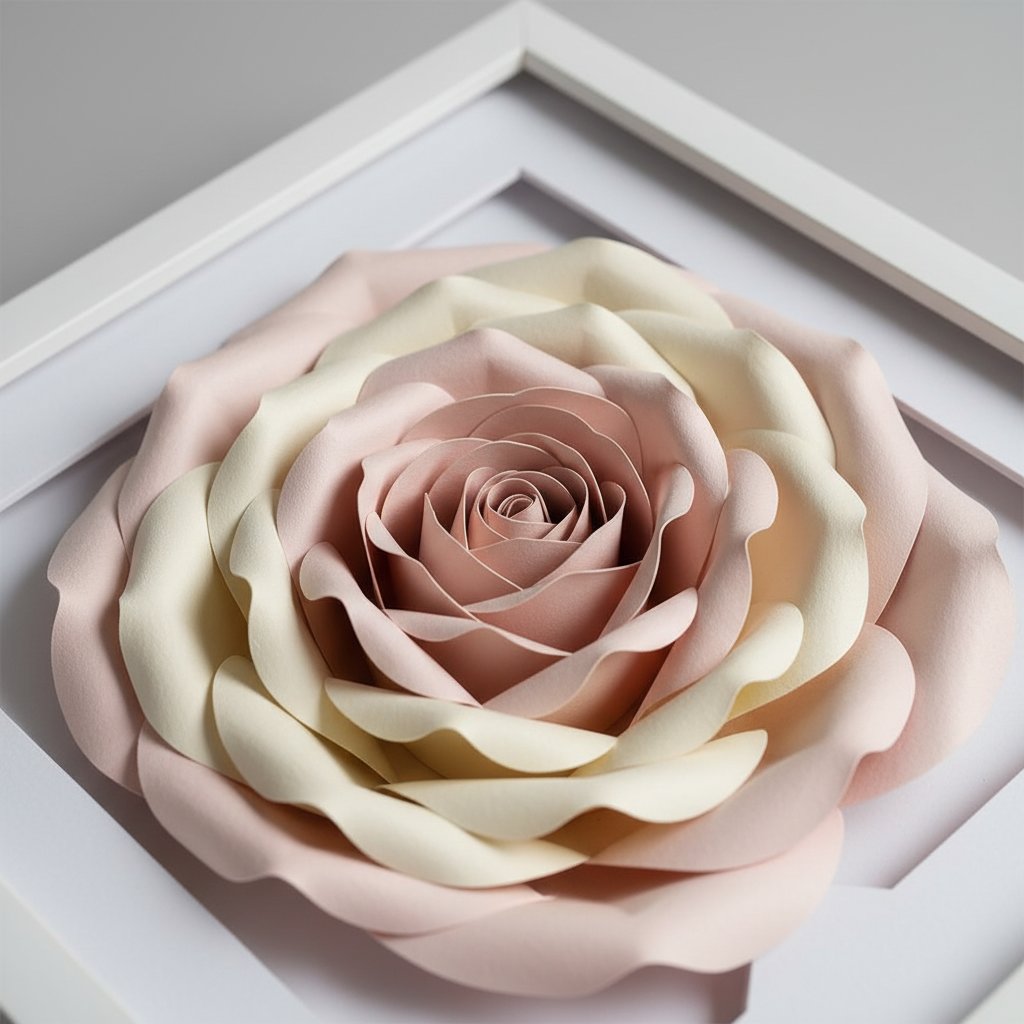
Simple floral silhouette shadow box with layered rose petals creating depth through backlighting

The image above is the look you're after: each petal ring sitting at a slightly different height, so
light raking across the surface throws a small shadow under every edge. That shadow gradient is the
difference between "paper flower" and "framed paper flower wall art."

Templates: Start From a File, Not a Freehand Guess

Freehand cutting gives you organic, one-of-a-kind petals — wonderful for a single handmade flower,
painful when you need 24 matching petals across six rings. For framed work where symmetry reads as
"finished," start from an SVG and customise from there.

Our floral SVG collection (the same files in the starter block above) is built for this: each layer
is a separate named group, bridges are 1–2 mm at cut scale, and the files are tested on 80 lb
cardstock on both Cricut and Silhouette. Three blooms cover most rooms:

  • Rose — the classic framed flower; teardrop petals, tight curl at the centre.
  • Hydrangea — dense cluster of small petals; reads as a full wall piece even at 8×8 inches.
  • Lily — pointed, architectural; the most "modern art" of the three in a float frame.
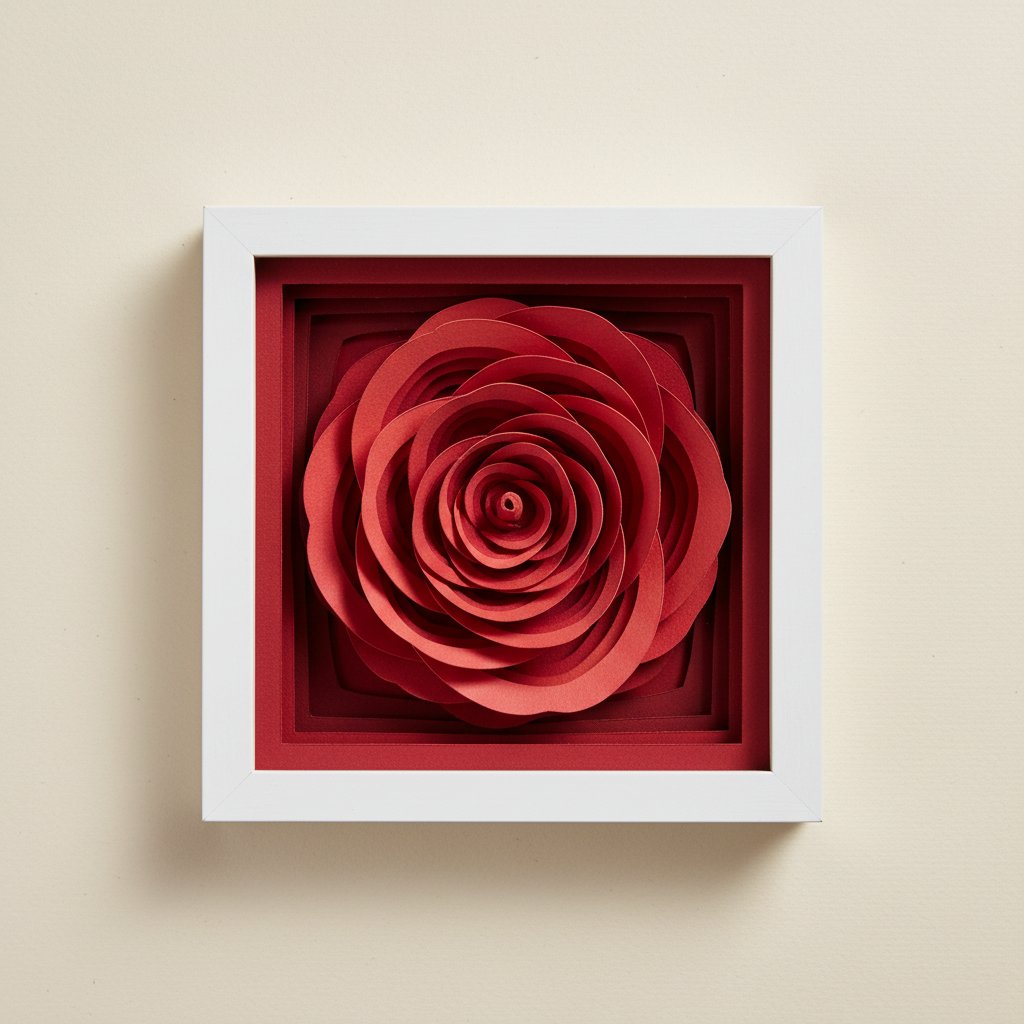
Single layered paper-cut red rose silhouette shadow box in a square frame

Scaling for Frame Size

The same SVG cuts cleanly from a 4-inch ornament up to a 16-inch statement piece because SVG paths
are math, not pixels. The constraint isn't the file — it's your paper and frame:

  • 6–8 inch flower → 8×8 or 10×10 frame, 25 mm depth. The most forgiving starter size.
  • 10–12 inch flower → 12×12 frame, 30 mm depth. Needs foam spacers between every ring.
  • 14+ inch flower → consider going frameless or using a deep box frame (40 mm+); at this size
    the flower's own weight becomes an assembly problem.

In Cricut Design Space or Silhouette Studio, group each petal ring, lock the relative sizing, then
scale the whole group to your frame's inner mat dimension minus a 10 mm margin. Always run a
single test cut of the most detailed (smallest-bridge) layer first, on the freshest part of your
mat. Our free shadow box SVG templates
article walks through the import and test-cut loop in detail.

Framed Paper Flower Wall Art: The Assembly

This is the build that replaced my drawer-bound failure. Eight-layer rose, 8×8 inch frame, 30 mm
deep shadow box, finished in an afternoon once the petals were cut.

1. Cut and sort by ring. Cut all petals, then immediately sort into labelled piles by ring
(outer, mid-outer, centre). Mixed piles are how you end up with a lopsided flower — ask me how I
know.

2. Shape every petal before gluing anything. Curl the outer-ring petals gently, cup the
mid-ring petals, and aggressively curl the centre petals into near-tubes. Shaping after assembly is
impossible without crushing the flower; shape first, every time.

3. Build the centre outward. Start with the tightest centre cluster, glue it, let it set. Add
the next ring under it, offset so each petal sits above the gap between two inner petals (the
"pinwheel" rotation). Repeat ring by ring.

Close-up of layered paper-cut flower shadow box showing depth between rose petal layers

4. Add foam spacers between rings. This is the step that creates the depth you can see in the
close-up above. A 3 mm foam square at the top, bottom, and each side of every ring. Without it the
flower compresses flat the moment it goes behind glass.

5. Mount on a vellum-backed board. Cut your backing board to frame size, layer a sheet of vellum
over it, then fix the assembled flower at the centre. The vellum softens any rear light into a glow
instead of a glare.

6. Frame with depth, not pressure. Seat the assembly in a 30 mm shadow box so nothing touches
the petals. If you're skipping glass entirely (a legit choice for dimensional pieces), our how to
frame paper art without glass
guide covers
float-mounting and dust protection. Adding rear lighting? Wire it before sealing the back, and
follow the safety steps in our add LED lights
safely
guide — never put heat-generating LEDs in a sealed
shallow frame.

Florals engineered for shadow-box depth
These layered floral templates are cut-toleranced for exactly the framed, backlit build above — enough rings for real dimension, bridges that hold at 80 lb cardstock, and licensing that lets you sell the finished piece. Match the bloom to the room and follow steps 1–6.

Making Paper Flowers Look Real

Once the basic build is reliable, four techniques push a paper flower from "craft project" toward
"botanical art." None are hard; all are rare in online tutorials.

Ink edging. Run a matching or slightly darker ink pad along the curled edge of each petal. This
mimics the natural colour gradient where a real petal is thinner at the edge and the vein colour
shows through. It's a five-minute step that adds more realism than any other single technique.

Watercolour wash. Dilute watercolour and brush a soft gradient from petal base to tip before
shaping. Let it dry fully (overnight is safest) so the paper doesn't warp when you curl it. This is
how you escape the all-white-on-white look that dominates the SERP — a single ombré rose in dusty
pink reads as fine art where a flat white one reads as wedding decor.

Texturing. Lightly crumple then flatten outer petals for a "lived-in" peony; score parallel lines
down lily petals with a dull point to suggest veining. Texture catches raking light and is what
makes a piece interesting up close, not just across a room.

Mixed-media foliage. A flower alone is a specimen; a flower with cut leaves, a stem, or a
trailing vine is a composition. Add 2–3 cut leaves in a darker green behind the bloom and the whole
piece gains context. For depth fundamentals behind all of this, our advanced vellum paper
cutting
guide covers translucency and layering
in more depth.

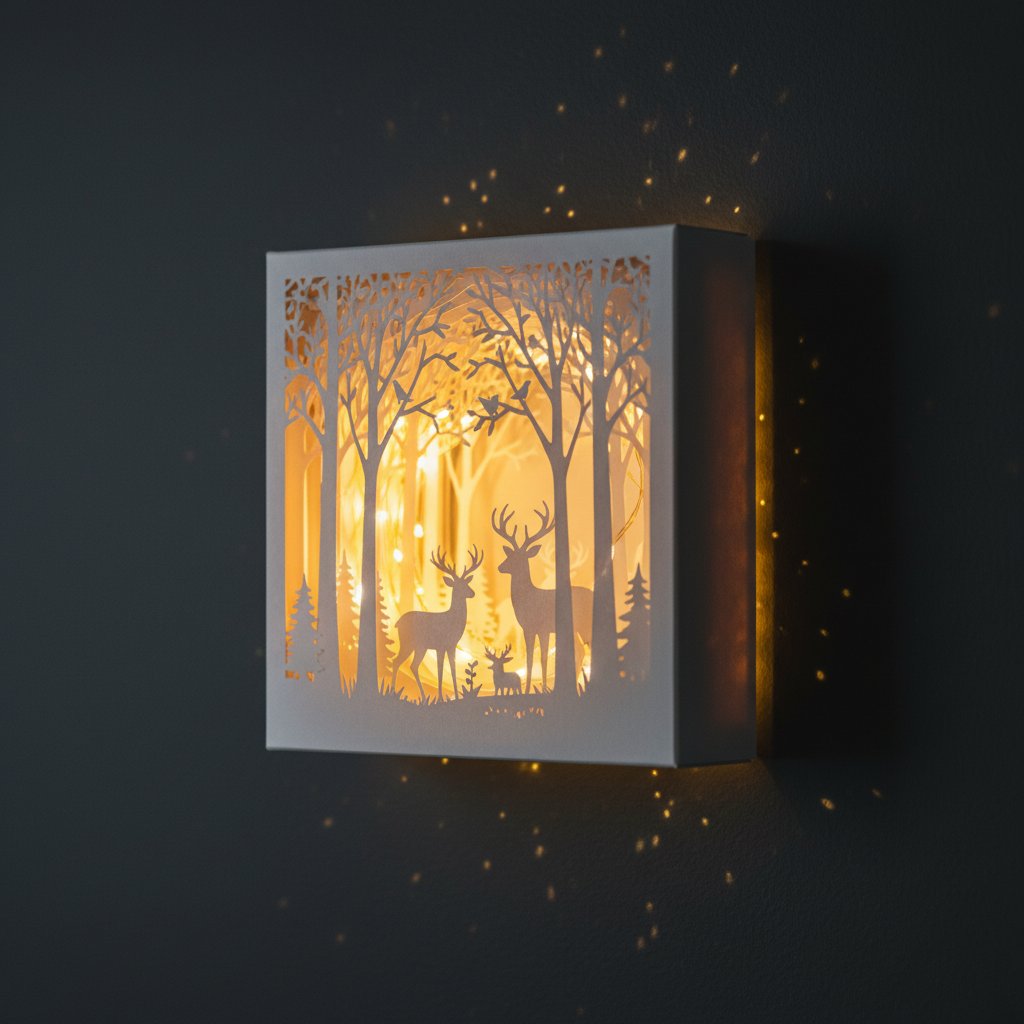
Illuminated layered paper-cut shadow box glowing warmly on a wall with fairy lights behind the cut paper layers

Displaying Framed Paper Flowers on the Wall

How you hang the finished piece changes how it reads as much as the flower itself. Three
arrangements cover most rooms:

  • Single statement piece. One 12-inch framed flower over a console, bed, or sofa. The boldest
    option and the easiest — let one strong bloom carry the wall.
  • Symmetrical pair or triptych. Two or three matching 8×8 frames in a row. Reads as a
    considered gallery wall; ideal above a sideboard or along a hallway.
  • Organic cluster. A mix of sizes (one 12-inch, two 8-inch, three 6-inch) arranged loosely,
    intercut with our giant paper flowers
    for scale contrast or flower shadow box projects
    for variety. The most expressive — and the most forgiving of slight imperfections.
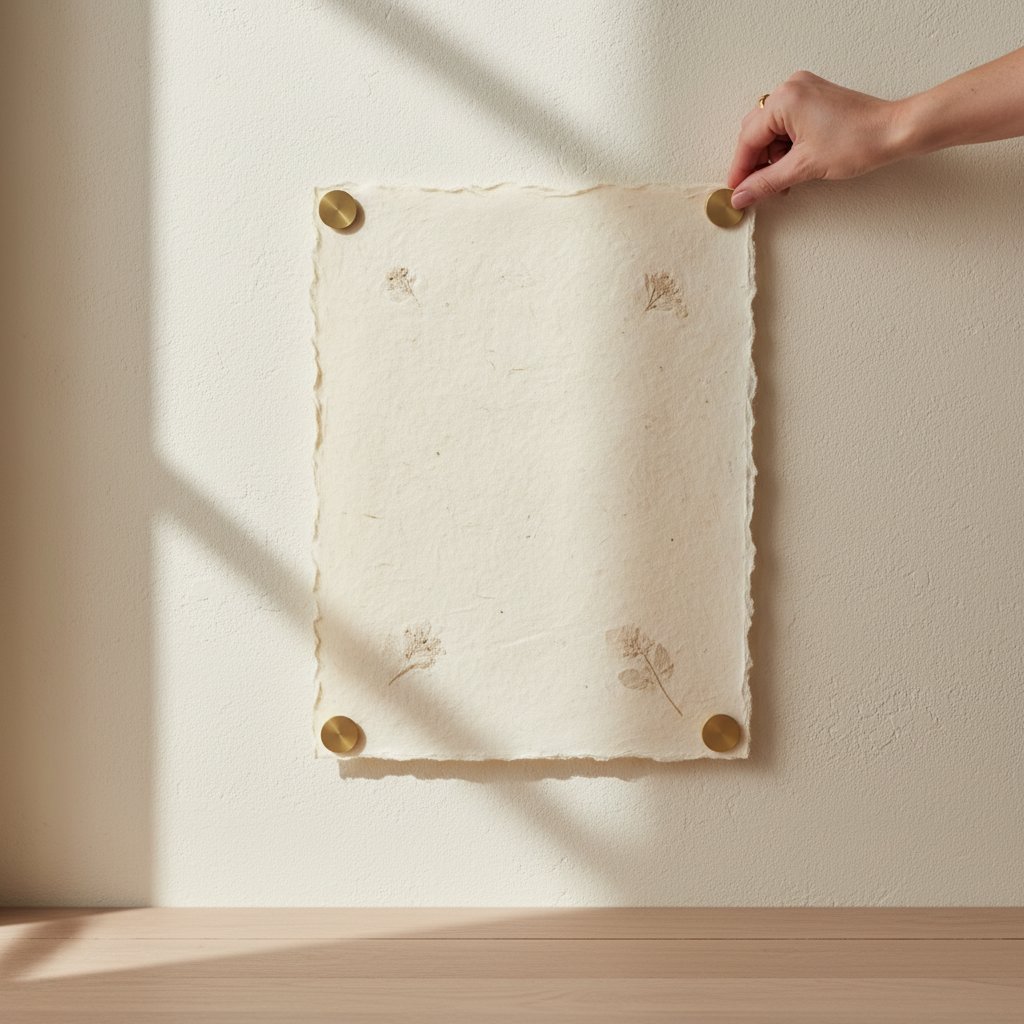
Sheet of paper art mounted directly on a wall held flat at the corners by small magnetic mounts

For hanging, 3M Command strips hold framed paper flowers reliably (the original Maison de Pax
reference cited 2.5-year durability, and that matches my experience on painted drywall). For heavier
deep-box frames, use a single wall screw into a stud or anchor — a 30 mm deep frame full of cardstock
is heavier than it looks. Rotate seasonally if you like: spring blossoms, summer brights, autumn
ambers. A small set of interchangeable frames lets one wall refresh four times a year without new
hardware.

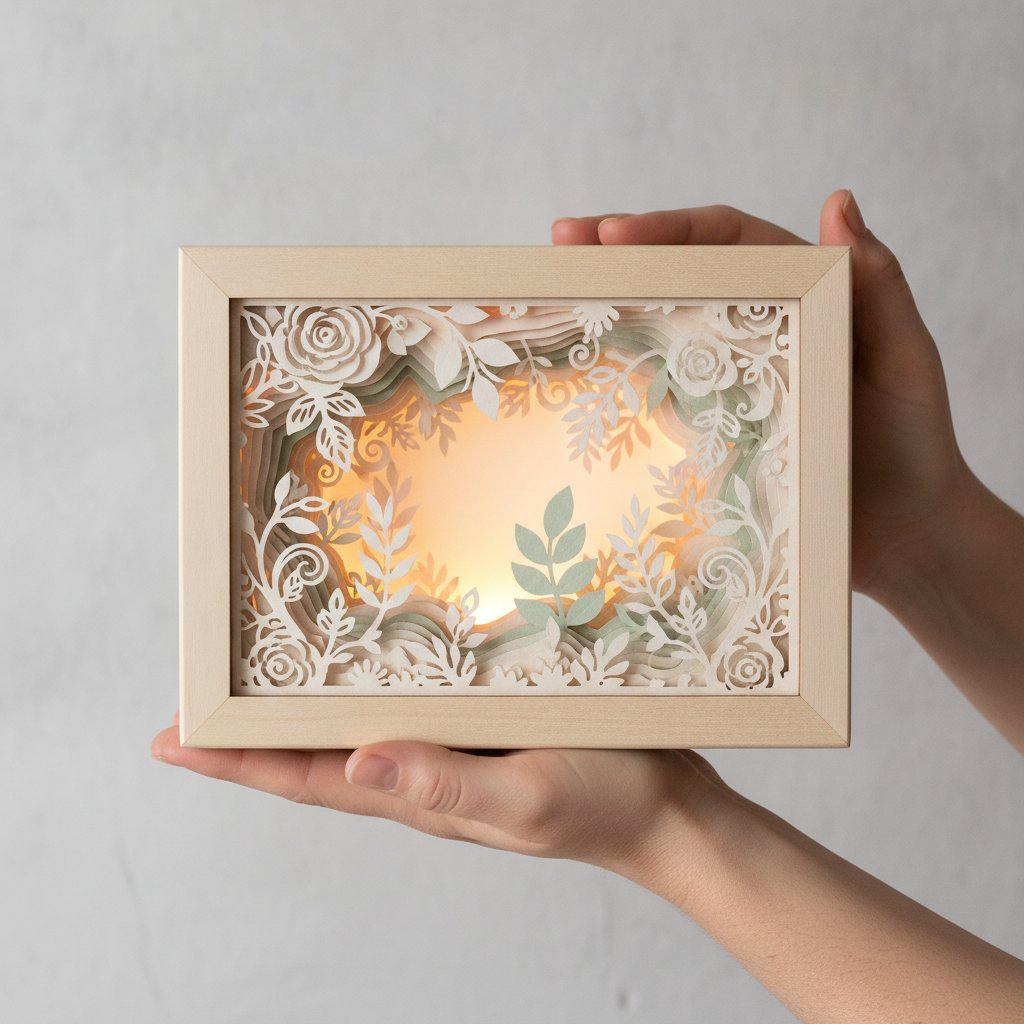
Hands holding up a finished first illuminated layered papercut shadow box with a softly glowing floral scene

What Usually Goes Wrong (and the Fix)

Most framed-paper-flower failures cluster into four problems. I hit all four on early attempts,
so here's the short version of each fix.

Petals won't hold their curl. The paper is too light or the shaping happened after gluing.
Move to 80 lb cardstock minimum and shape every petal before assembly, then let shaped petals
rest 10 minutes so the curl sets. Cupping a petal and immediately gluing it under tension just
pulls the curl back out.

The flower looks 2D once framed. Missing spacers. Add 3 mm foam squares between every ring
and make sure the frame has at least 25 mm of internal depth. If the glass is touching the petals,
the frame is too shallow — swap it before you seal the back, because a crushed flower doesn't
recover.
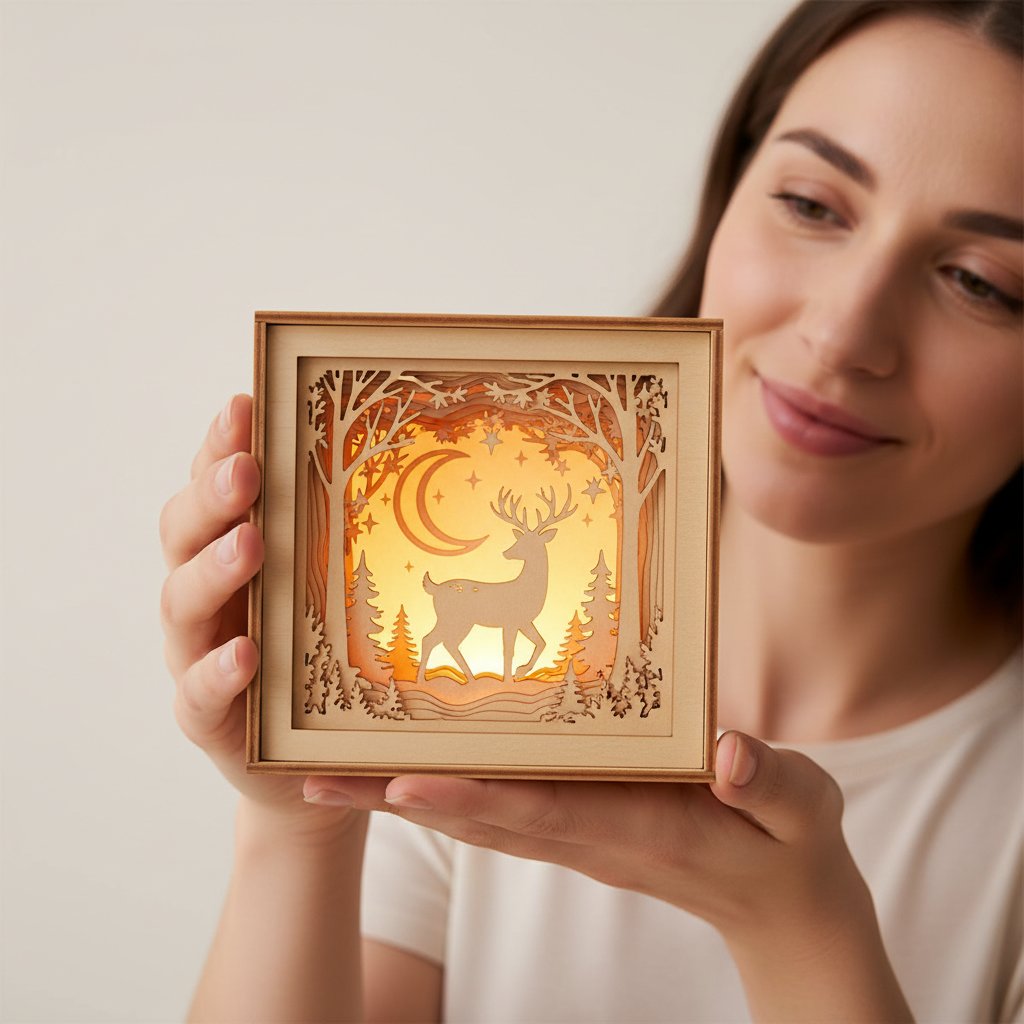
Crafter holding and admiring a finished glowing layered papercut shadow box in warm light

Visible glue or stringing. Hot glue was used on a visible join. Switch to precision craft glue
for any join you can see from the front, and apply it sparingly with a toothpick. For structural
ring-to-ring bonds that stay hidden, hot glue is still the right call — speed and strength matter
where looks don't.

Colours fading or paper warping within months. The piece is in direct sun or a humid room.
Relocate it to a north-facing or shaded wall, keep it out of kitchens and bathrooms, and seal the
frame backing with archival tape so humidity can't cycle in and out. Properly hung, a framed paper
flower should look the same in year five as it did in week one.

One last note on expectations: your first framed flower will take a full afternoon and probably a
re-cut or two. By the third one you'll cut, shape, and assemble in under three hours, and you'll
start seeing flowers everywhere — a neighbour's peony, a market lily — as a petal-count and a
curl direction. That's the craft clicking, and it's worth the slow start. For the foundational
cutting technique underneath all of this, our how to make paper cut art
beginner guide is the companion read.

Finish it, frame it, hang it
The rose remains the most rewarding first framed flower — enough rings to teach depth, classic enough to live in any room. Pair it with a layered anniversary piece for a two-frame gallery wall, or add a hydrangea cluster if you want dense botanical impact from a single 8×8.
1.What paper weight is best for paper flower wall art?
For framed wall art, 80 lb (216 gsm) cardstock is the reliable default for petals and 100–110 lb for any layer with fine bridges or a cut centre. Heavier paper holds a curl, resists humidity, and keeps its shape behind glass. Use 118 lb cotton cardstock only for single hero flowers — it's hard to cut cleanly across the multiple rings of a layered piece. Avoid 65 lb paper; that weight is for large temporary backdrop flowers, not permanent framed art.
2.Can I use a Cricut or Silhouette instead of cutting paper flowers by hand?
Yes, and for framed work a cutting machine is usually the better choice because it gives consistent petal shapes across every ring — consistency is what reads as "finished" behind glass. The floral SVG templates in our collection are designed for both Cricut and Silhouette, with each ring as a separate named layer. Import the file, ungroup, scale to your frame, and cut ring by ring.
3.How do I choose between a shadow box, float frame, and gallery frame for paper flowers?
A shadow box (25–40 mm deep) is the safest choice because it gives dimensional petals room without touching the glass — depth is the whole point of the piece, so don't crush it. A float frame showcases petal edges when you want a glass-fronted, gallery look but works best for flatter flowers. A gallery frame with matting gives a clean presentation for simpler, lower-relief blooms. If in doubt, go shadow box.
4.Why does my paper flower look flat even after I layered the petals?
Almost always missing spacers. Gluing rings directly on top of each other looks fine until the piece goes behind glass, at which point the stack compresses and the depth vanishes. Separate every ring with 3 mm adhesive foam squares spaced every 10–15 cm, shape (curl and cup) every petal before assembly, and stack darkest at the back to lightest at the front so light raking across the surface throws a shadow under each edge.
5.What's the best adhesive for paper flower wall art?
Hot glue gives a fast, strong structural bond on 80 lb cardstock — ideal for assembling rings. For visible joins where hot-glue stringing would show, use a precision craft glue applicator. Avoid glue sticks and school glue; neither holds a curl under humidity. Our best glue for paper shadow box layers guide breaks down the right adhesive for each joint type.
6.How long does framed paper flower wall art last?
Properly framed paper flowers last 5–10 years or longer. The enemies are direct sunlight (fades the colour), high humidity (warps and relaxes curls), and dust. Hang out of direct sun, keep the frame sealed, and dust gently with compressed air rather than wiping — wiping crushes the petal relief that gives the piece its depth.
7.Can I sell wall art made from these paper flower templates?
Yes. The floral SVG templates in our collection ship with commercial-use licensing, so you can cut, assemble, frame, and sell the finished pieces. For files from anywhere else, check the licence before selling — personal-use licences do not allow resale. The finished physical piece is yours to sell; redistributing the digital file itself is not.
8.What's the difference between backdrop paper flowers and framed paper flower wall art?
Backdrop flowers are large (12 inches and up), built from lightweight paper, and designed for temporary event walls — weddings, baby showers, parties. Framed wall art is smaller (typically 6–12 inches), built from heavier cardstock for durability, given real depth with spacers, and mounted in a protective frame for permanent home display. This guide focuses on the framed, permanent version.