Articles14 min read

Advanced Vellum Paper Cutting with Cricut

Expert blade and pressure settings for tear-free cuts, adhesives that disappear on translucent paper, and backlit layering techniques — from real builds, including the mistakes I made first.

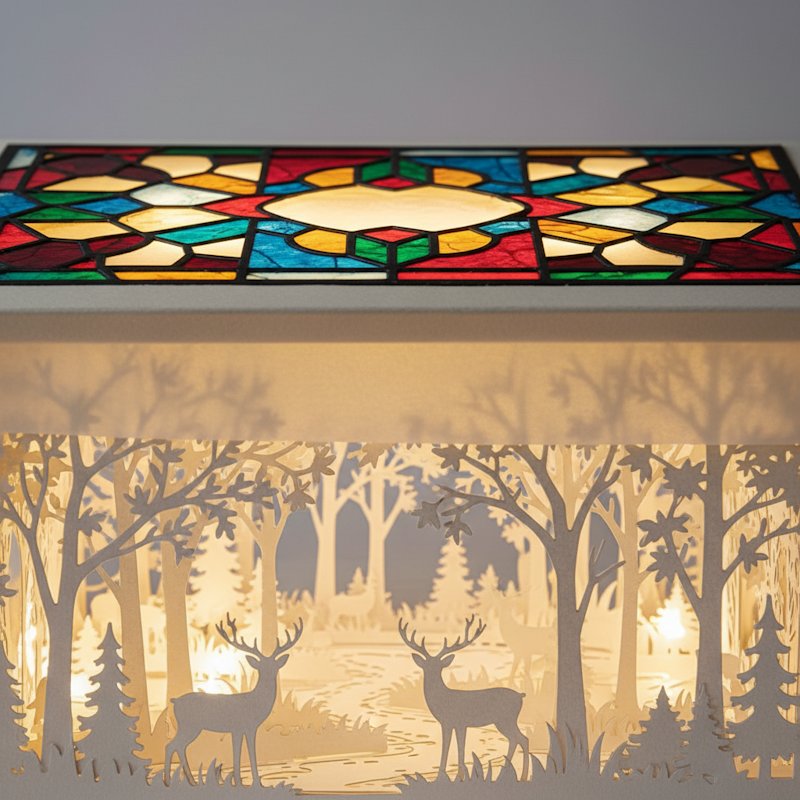
A layered paper shadow box with a translucent colored acetate stained-glass top and warm vellum-diffused backlight

Vellum is the material that turns a flat paper cut into something that glows. It is a translucent, slightly toothy paper — not the animal-skin parchment of old documents, but a cotton-and-cellulose "paper vellum" made to mimic that look. Light passes through it. Stack two layers and the colours blend. Backlight it and every cut edge becomes a soft halo.

This guide is not an introduction to paper cutting. It is the next step up: how to cut vellum cleanly on a Cricut without tearing it, how to glue a material that shows every adhesive mark through its surface, and how to use that translucency on purpose in layered, backlit, and luminous projects. If you are new to the machine itself, run through our beginner paper cut art guide first and come back here.

I want to be honest about the learning curve. My first vellum cut was a small rose layer for a backlit shadow box. I used the same settings I run for 80 lb cardstock — medium pressure, a StandardGrip mat, a blade I had not changed in weeks. The machine shredded it. The mat ripped the corners off when I peeled it up. By the third attempt, with the right mat, a fresh blade, and the pressure dialed down, the same file cut so cleanly I could not feel the edges with my fingertip. Vellum rewards setup and punishes shortcuts. That is the whole game, and the rest of this article is the setup.

Why Vellum Behaves Differently (and Which to Buy)

Vellum's translucency comes from how it is refined and pressed — the fibres are beaten until the sheet is dense and even, so light scatters through it instead of passing straight. That density is also why it cuts nothing like standard cardstock: it is crisp but brittle, and it holds a crease so aggressively that folding it without scoring cracks the surface.

The Four Finishes You Will Actually See

| Finish | Look | Best Use | |--------|------|----------| | Clear / smooth vellum | Clean, glassy translucency | Layering, colour-blending stacks, diffusers | | Parchment vellum | Antique, slightly mottled | Wedding and memorial pieces, vintage cards | | Metallic vellum | Shimmer with a reflective sheen | Premium accents, toppers, gift cards | | Pearlescent vellum | Subtle colour-shift in the light | Floating art, decorative overlays |

Weight Matters More Than Finish

Paper vellum runs lighter than the cardstock you are probably used to, and weight changes everything about how it cuts and what it can do structurally.

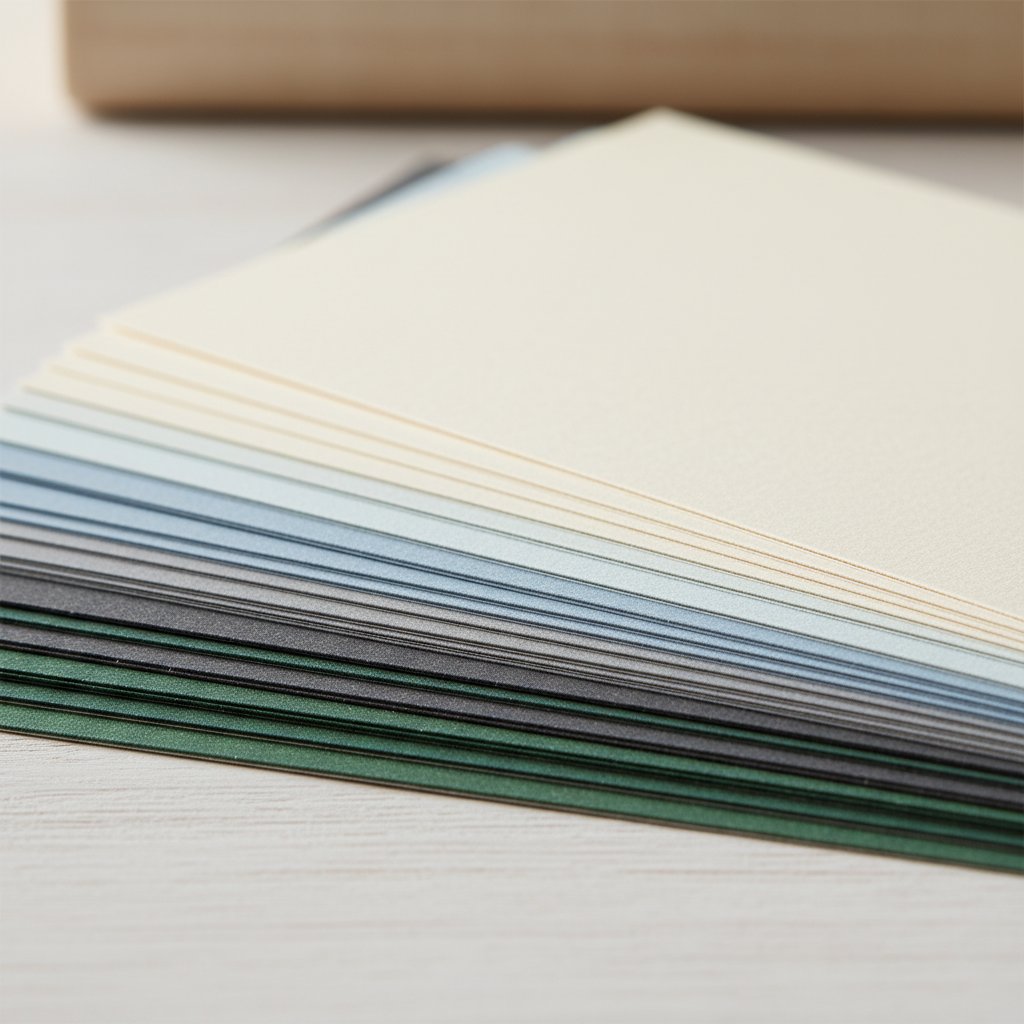
  • 17–21 lb (≈55–80 gsm): the delicate overlay weight. Beautiful for diffusing light, but it tears easily and cannot hold a shape on its own. Use it layered over cardstock, never as a standalone layer. - 24–29 lb (≈90–110 gsm): the sweet spot for machine cutting. Cuts cleanly, holds a bridge, and still glows. Start here. - 30+ lb (≈115 gsm and up): "cover vellum." Cuts like light cardstock, holds its own in a frame, but loses some translucency with every added layer.
Fanned stack of cardstock sheets in graduated weights and colors showing varying thickness

The rule that saved my projects: buy two weights and test both before committing to a design. A rose that glows on 21 lb goes muddy on 30 lb; a card front that flops on 24 lb stands crisp on cover vellum. For a full breakdown of paper weights and how they behave in the machine, our best cardstock guide covers the same principles across every paper type.

Start With a Single-Layer Vellum Cut
Vellum shines on bold, single-layer silhouettes where translucency does all the work. Cut the Mind Tree or Crazy Dog SVG once on 24 lb vellum and hold it up to a window — that is the effect this whole article is building toward.

Blade Selection for Vellum

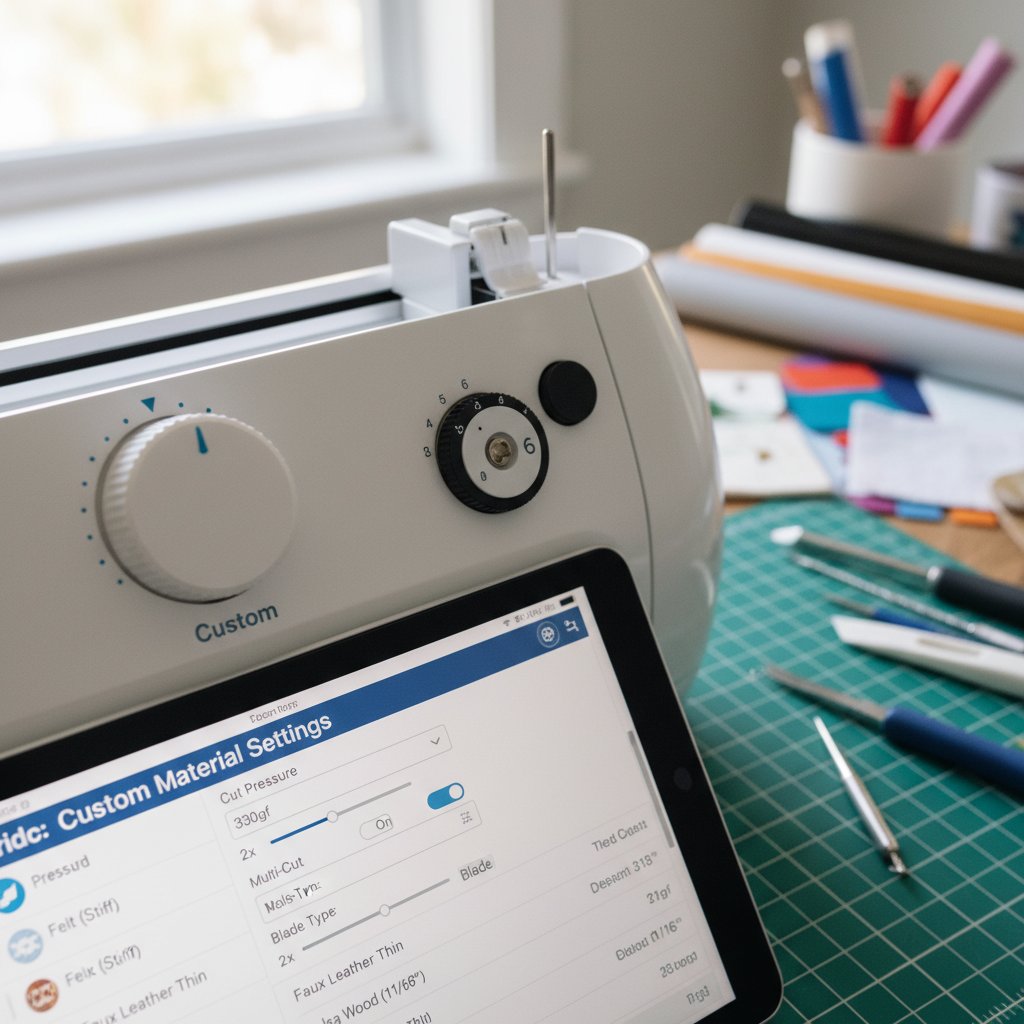
Cricut pressure dial and blade depth adjustment settings for custom cardstock material configuration

Vellum dulls blades faster than cardstock because of how dense and finely pressed it is. The single most common cause of tearing is a blade that cut cardstock fine last week but is now too blunt for vellum. Plan to swap more often.

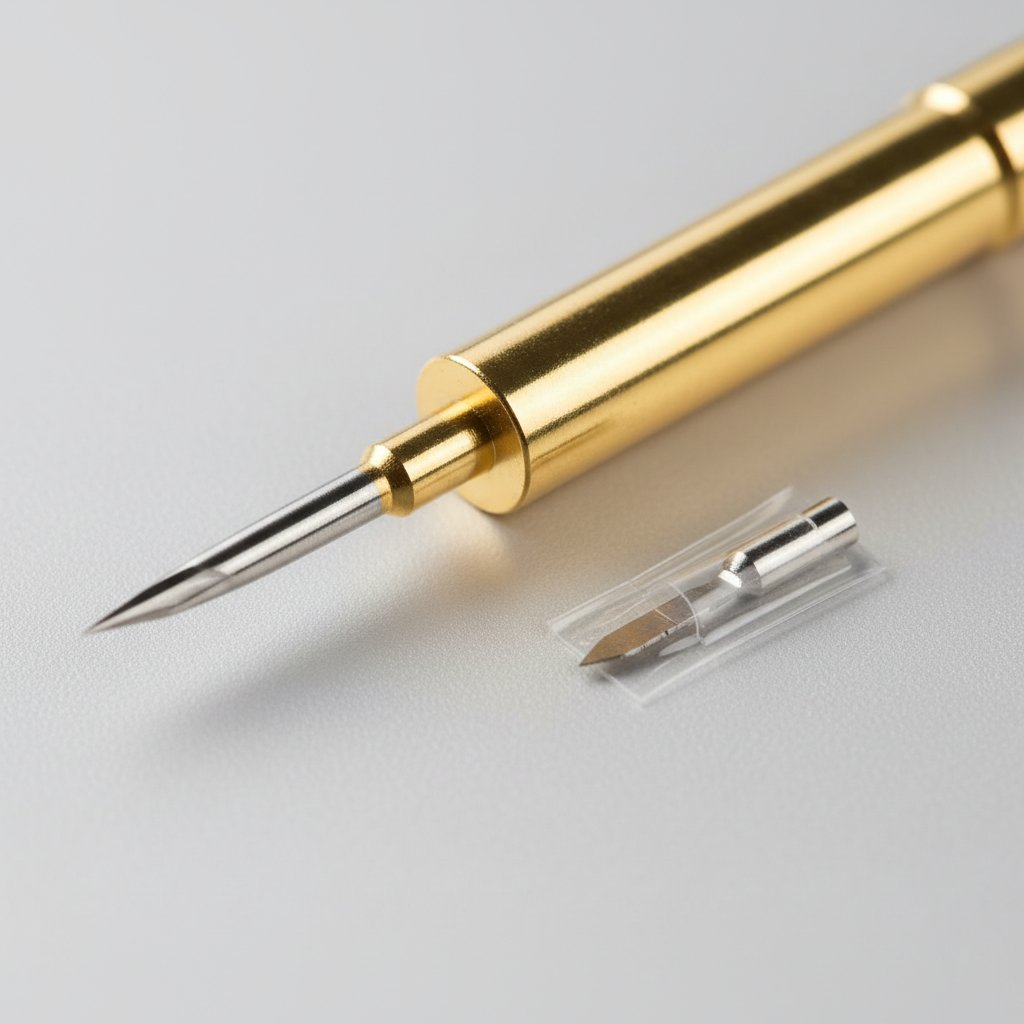
| Blade | Use It For | Notes | |-------|------------|-------| | Fine-point (gold housing) | 17–29 lb vellum, most designs | The default. Keep a fresh one for vellum only. | | Deep-point / deep cut | 30+ lb cover vellum, thick stacks | Only when vellum will not cut through. | | Rotary blade (Maker) | Tight curves, long organic lines | No dragging, no tearing on curves. | | Scoring stylus / wheel | Clean folds | Fold vellum without it, and it cracks. |

Close-up of a fine-point cutting blade and gold housing beside a replacement blade

Keep a dedicated vellum blade. I label a fine-point housing with a small piece of tape and reserve it for vellum and light cardstock only. The instant a cut starts dragging, tearing, or leaving fluffy edges, the blade is telling you it is done — do not push through a project with it. For a full comparison of blade types and when each earns its place, see our best Cricut blade guide.

Cricut Settings for Tear-Free Vellum Cuts

The settings below are what I settled on after ruining roughly a dozen sheets. Treat them as a starting line, not a guarantee — every brand of vellum and every individual machine varies, so the test-cut step is non-negotiable.

The Setup That Works for Me

  • Mat: LightGrip (blue). Vellum is light; a green StrongGrip mat grips it so hard it curls and tears on removal. A slightly-used blue mat is better than a fresh one. - Material setting: "Washi Sheet" or a custom setting based on "Light Cardstock, 50 lb." - Pressure: dial it down from default. If a setting tears, drop pressure one notch before changing anything else. - MultiCut: 2×. Vellum often needs a second pass for a clean edge, but 3× starts to fray the cut line. - Blade: fresh fine-point.

Pressure by Weight (Starting Points)

| Vellum weight | Mat | Pressure | MultiCut | |---------------|-----|----------|----------| | 17–21 lb | LightGrip (blue) | Light | 2× | | 24–29 lb | LightGrip (blue) | Light–Medium | 2× | | 30+ lb | LightGrip or StandardGrip | Medium | 2× |

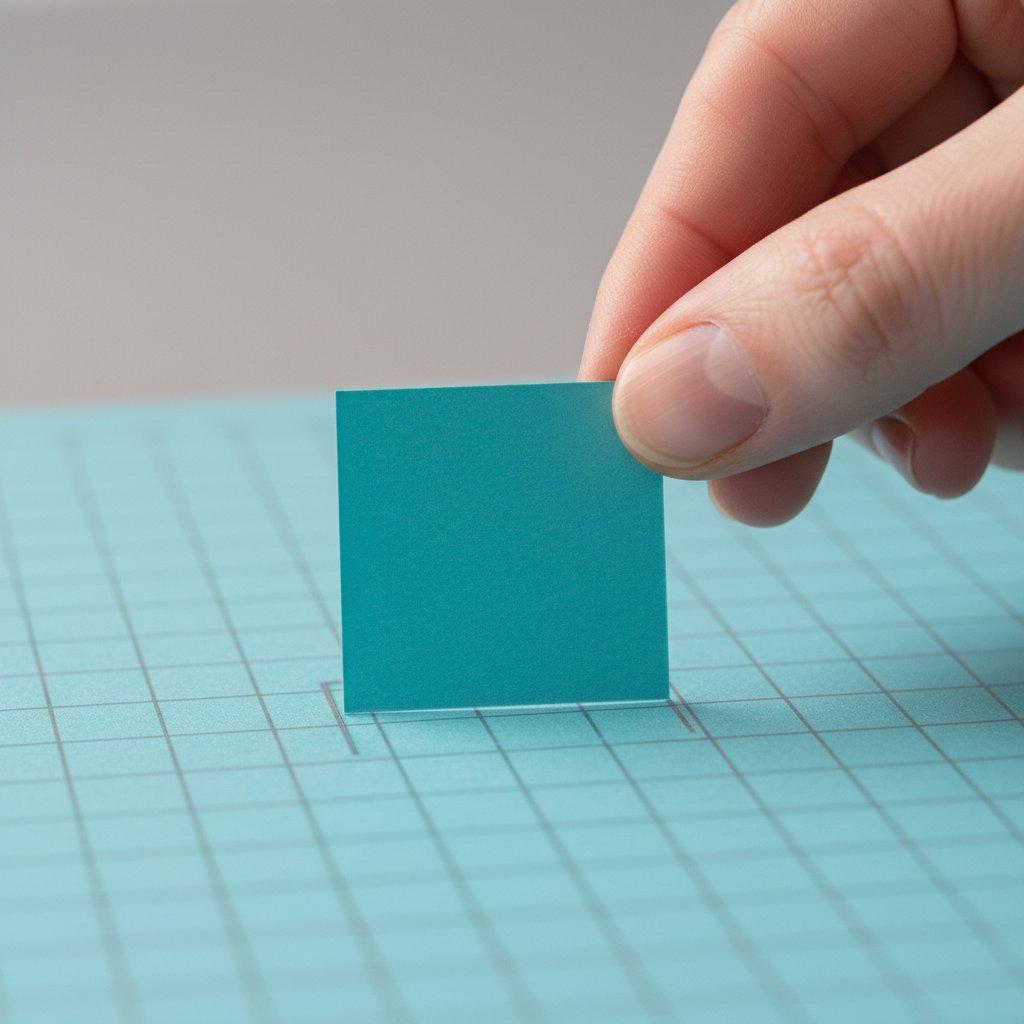
A test-cut square of cardstock being peeled from a Cricut cutting mat showing clean edges

Always Test Cut First

Before any real run, cut a small corner square from the same sheet using your chosen setting. You are checking three things: does it cut all the way through, do the edges stay crisp, and — this is the vellum-specific one — does the sheet peel off the mat without curling or tearing? If the test curls, move to a less-tacky mat or "de-stick" a fresh blue mat by pressing a clean cotton t-shirt to it once. For the wider settings reference, our Cricut settings mastery guide has per-paper-type breakdowns.

Common Vellum Cutting Issues and Fixes

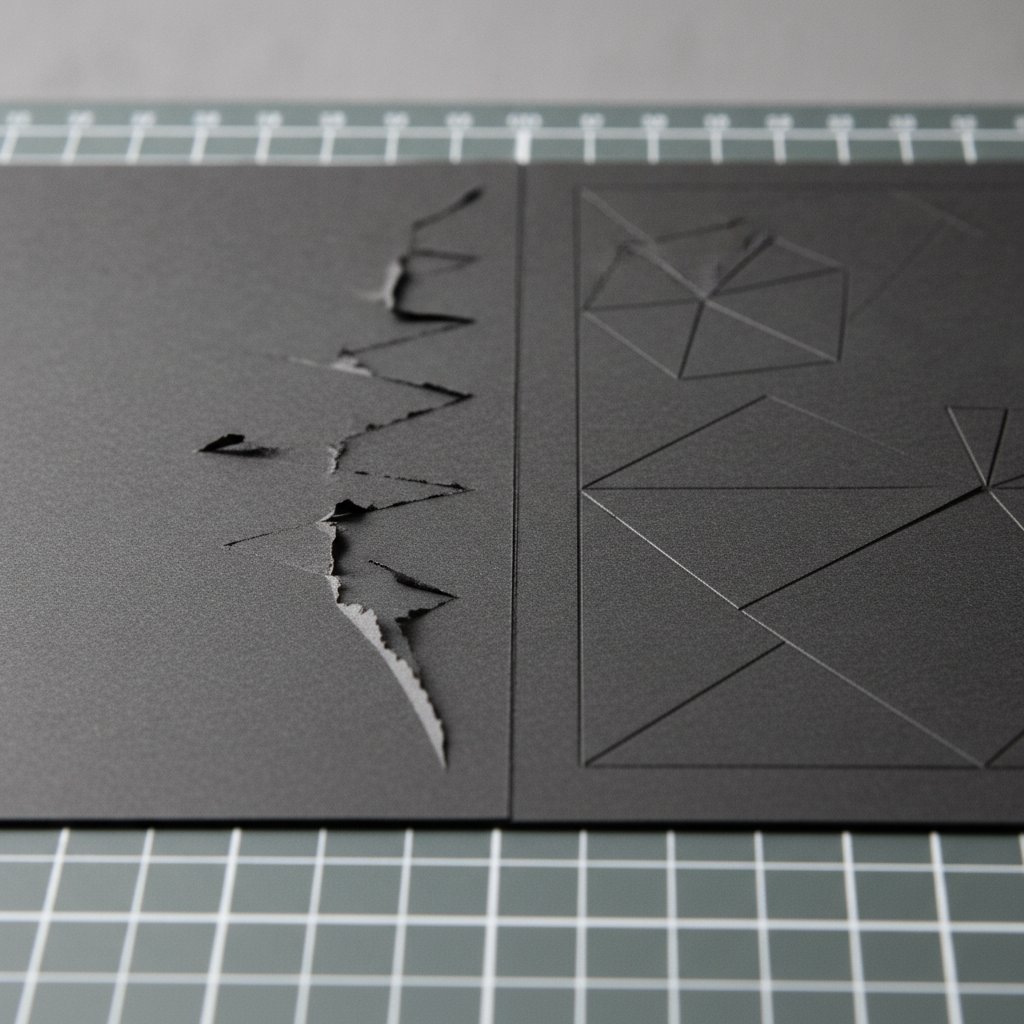
Close-up comparison of torn ragged paper edges versus clean precise cuts on dark cardstock on a cutting mat

Almost every vellum failure falls into one of five patterns. Here is what causes each and how to stop it.

Tearing on Intricate Cuts

Too much pressure, a dull blade, or a mat that is too sticky. Fix in this order: drop pressure one notch, fit a fresh fine-point blade, and confirm you are on a LightGrip mat. On very delicate filigree, slow the cut or switch to the rotary blade if your machine has one — it slices rather than drags.

Incomplete Cuts (Not Cutting Through)

Usually under-pressure or an old blade. Increase pressure a little, enable MultiCut 2×, or move up one vellum weight. Do not just crank pressure to maximum — that swings you straight into tearing. For the full decision tree on cut-through problems, our cardstock troubleshooting bible applies to vellum too.

Shifting Mid-Cut

The sheet is sliding because the mat lost tack in one area, or because the sheet is wider than the mat edge. Re-stick or replace the mat (our mat restoration guide covers this), and tape the corners down with low-tack washi tape so the rollers do not catch a loose edge.

Fuzzy / Scuffed Edges

A sign the blade is dragging through the dense fibres instead of slicing. Replace the blade and reduce pressure. If the fuzz persists on metallic or pearlescent vellum, the coating itself is the culprit — clean the blade with a ball of crumpled aluminium foil between cuts.

Curling on Removal

The mat is too tacky for the weight, or you pulled too fast. Peel the mat away from the vellum (flip the mat and bend it back), not the vellum off the mat. Flat-store the cut immediately under a book if it has started to curl.

Adhesive Challenges: The Vellum Show-Through Problem

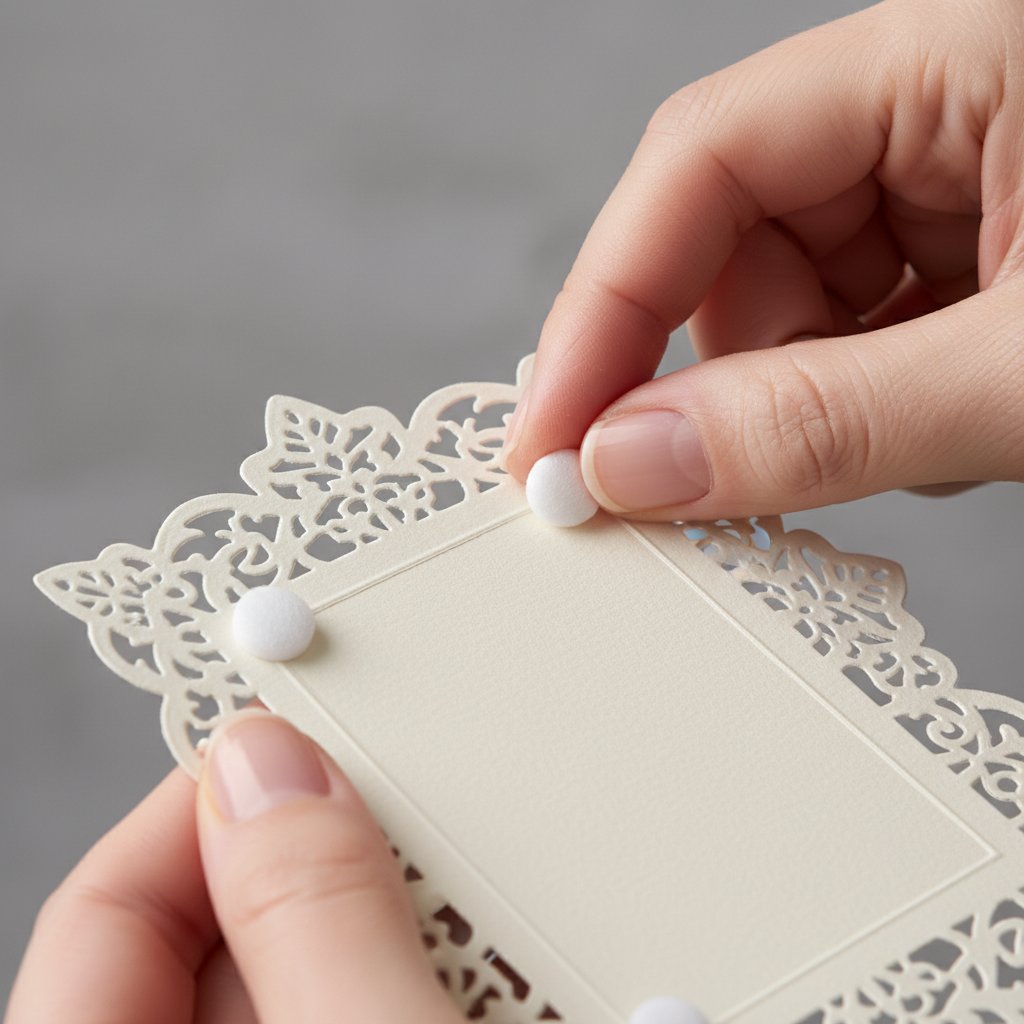
Close-up of fingers applying small white foam adhesive dots to the back of a cut cardstock layer

Here is the thing nobody warns you about: vellum is translucent, which means every drop of glue you put on it is visible from the front. A glue line that disappears on cardstock shows up on vellum as a dark, greasy streak. This single problem is why vellum has a reputation for being fiddly. The fixes are mechanical, not magical.

Adhesives Ranked by Visibility

| Method | Show-through | Best For | |--------|--------------|----------| | Repositionable spray adhesive (light, even coat) | Very low | Full-sheet overlays | | Vellum / invisible tape runner | Low | Edge work on cards | | Mini glue dots | Medium (hide under a detail) | Small contact points | | Liquid craft glue | High | Avoid on visible vellum | | Double-sided tape | High (clear band) | Avoid |

Five Tactics That Actually Hide the Glue

  1. Edge-only adhesion. Run a thin line of tape runner or a single glue dot along a border that will be covered by a frame, another layer, or a mat. Nothing shows because nothing is exposed. 2. Anchor points behind details. Place glue dots only behind petals, letters, or solid shapes — anywhere the design itself will sit on top of the adhesive. 3. Spray, then settle. A light, even mist of repositionable spray adhesive on the back of a full vellum sheet is nearly invisible and lets you reposition. Always spray outdoors on newspaper. 4. Mechanical fasteners. Brads, eyelets, stitching, and tiny foam tape squares at the corners read as design choices, not glue. 5. Diffuse on purpose. If the vellum is going behind glass and will be backlit, a soft spray-adhesive coat across the whole sheet becomes part of the glow rather than a flaw.

Stop the Warping

Wet glue and heavy adhesive make vellum buckle because it is thin and absorbs moisture. If you must use a wet adhesive, apply the thinnest possible line, press flat under a weight for a minute, and let it cure fully before layering. For the full bonding reference across all paper crafts, our glue and adhesive guide covers which bond suits which material.

Pair Vellum With a Stained-Glass Floral
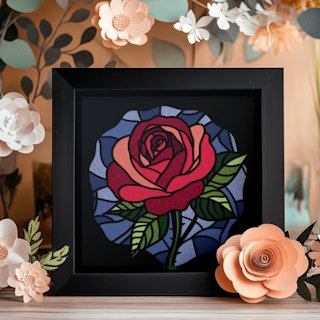
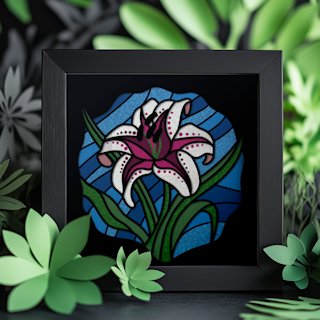
Stained-glass-style SVGs are built for vellum. Cut the Rose or Lily on 24 lb vellum, layer it over a coloured backing, and the cut cells glow like real leaded glass — no actual glass required.

Layering Vellum for Colour-Blending Effects

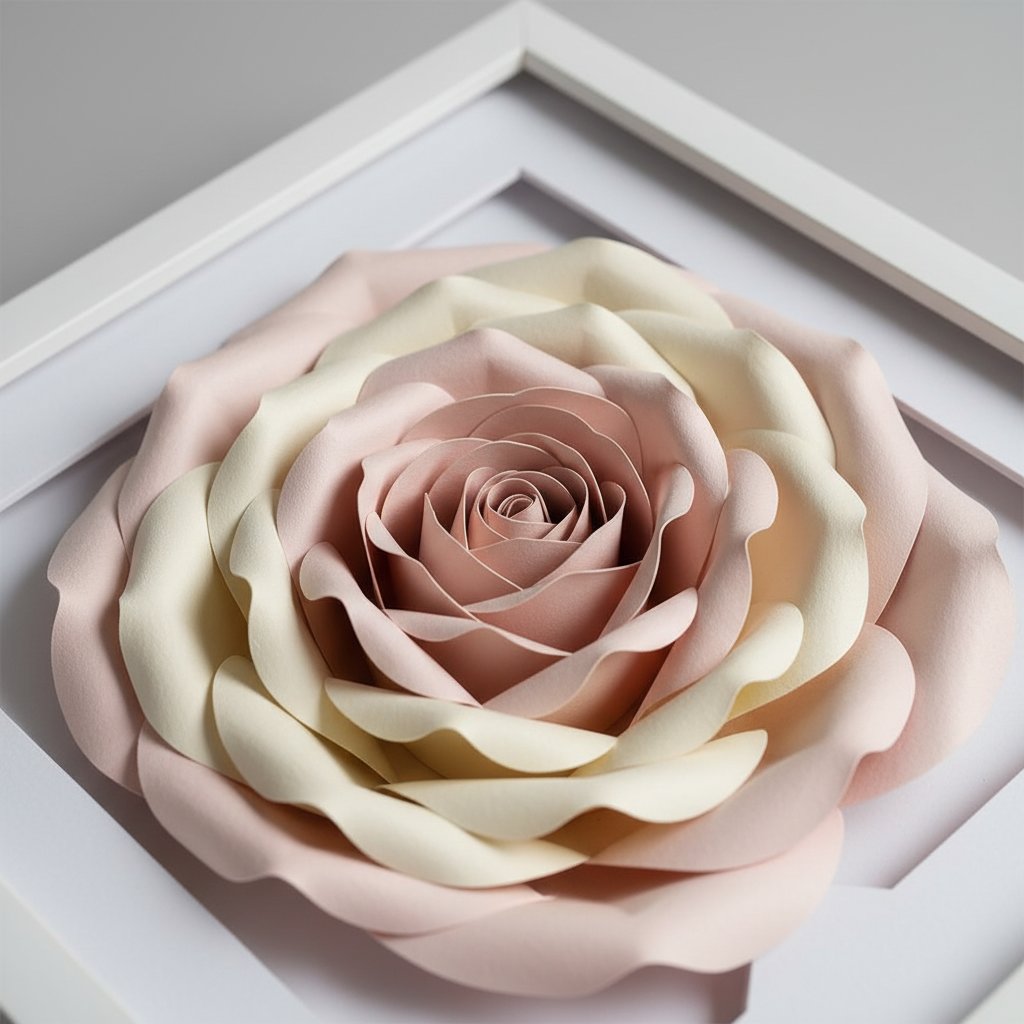
Close-up of layered paper-cut flower shadow box showing depth between rose petal layers with soft shadows

Because vellum is translucent, stacking it does something cardstock cannot: the colours mix. A pale-blue sheet over a warm-yellow one reads green where they overlap. Two layers of the same hue deepen the saturation instead of hiding the layer beneath. This is where vellum stops being a fancy accent and becomes a design medium.

Layering Principles That Work

  • Two to three layers max. Each sheet adds opacity. Past three, you lose the glow and the stack just looks milky. - Order matters. Put the lightest tint on top and the most saturated underneath — light passes through every layer down to the backing colour. - Monochrome stacks for depth. Three shades of the same colour (say, blush, rose, wine) give you a gradient with no ink. - Complementary overlaps for energy. A cool layer over a warm one vibrates in a way a single sheet never can.

The Build I Keep Coming Back To

My most-used vellum trick is a three-layer rose: a 24 lb clear-vellum top cut, a 21 lb tinted middle, and a solid cardstock base. Foam dots between layers hold a 3 mm gap so light pools in the petal valleys. Held up to a window, the depth reads as sculptural rather than printed. For more ideas on stacking paper for depth, our how to assemble layered shadow boxes guide walks through spacers and alignment in detail.

Backlighting Vellum for Luminous Effects

Glowing backlit layered paper-cut flower shadow box hanging on a wall

Translucency is wasted without a light source. Backlighting is what turns a vellum cut into a lamp, a nightlight, or a wall piece that reads completely differently after dark.

Light Sources, Ranked

  • Warm-white LED strips (2700K): the workhorse. Thin, low-heat, dimmable, and they tuck behind any frame. Run them along the inner back edge of a shadow box. - Copper-wire fairy lights: best for soft, scattered glow inside lanterns and luminaries. Cheap, battery-powered, and they stay cool. - Natural window light: free and beautiful, but UV will yellow vellum over time. Rotate pieces or keep them out of direct sun (see our preserving paper art guide). - Never use incandescent or halogen in an enclosed vellum piece. Vellum is paper. Paper plus heat plus no airflow is a fire hazard.

Diffusing the Light

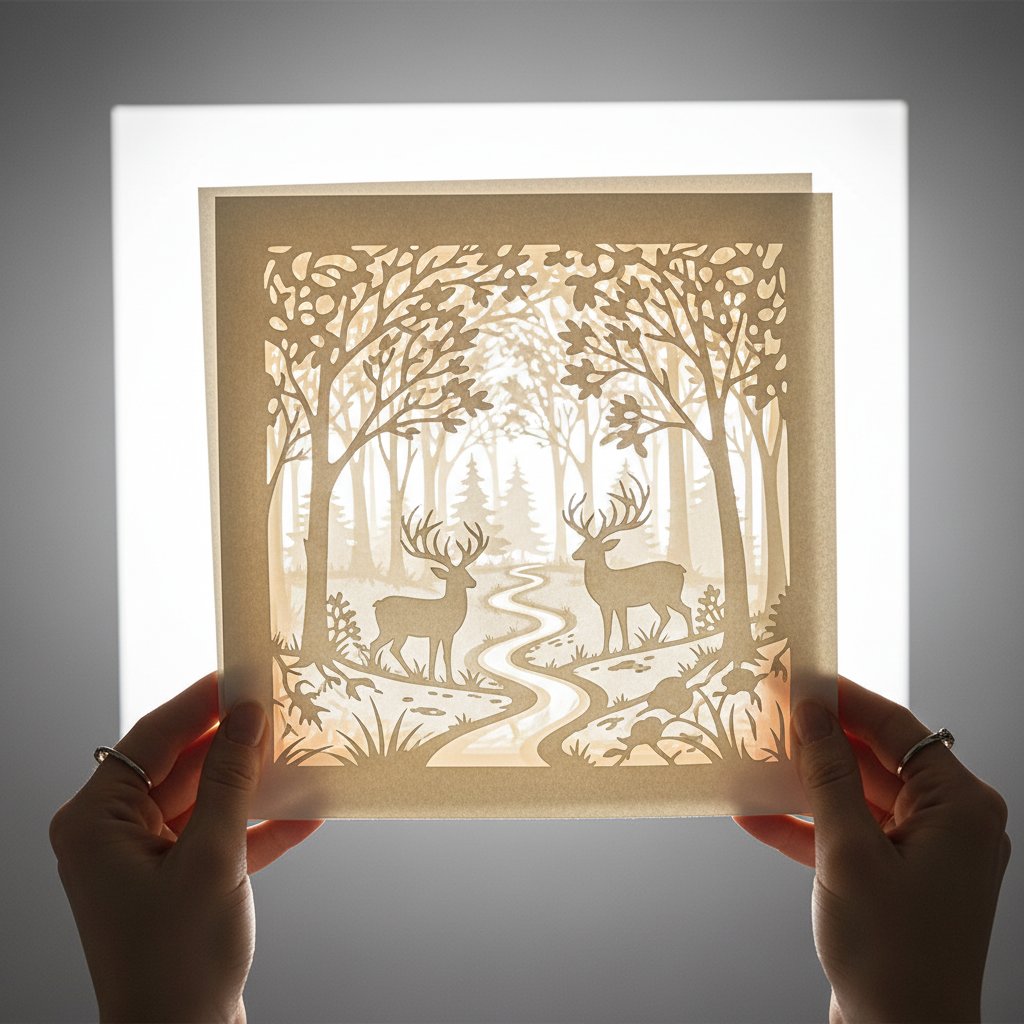
Bare LEDs show as harsh dots through vellum. A single full sheet of clear vellum between the LEDs and the cut layer softens those dots into an even glow — this is the "vellum diffuser" trick, and it is the single biggest upgrade you can make to a backlit piece.

Heat and Safety

LEDs are cool enough to touch, which is what makes enclosed vellum pieces safe. Even so, leave a small air gap at the top of any fully enclosed piece so warm air can rise out. For the full wiring-and-safety walkthrough, our LED lighting guide covers strip placement, battery packs, and heat management step by step.

Six Vellum Projects That Use These Techniques

Wax paper lantern with pressed flowers glowing like stained glass around a jar

Once the cutting and gluing are under control, here is where vellum earns its price. These are the six categories I keep returning to, each leaning on a different strength of the material.

1. Shadow Box Accent Layers

Drop a single vellum layer into an existing cardstock shadow box — over the top layer as a diffuser, or behind a cut-out window so the backing colour glows through. One vellum sheet transforms a piece you already know how to build. Our shadow box ideas are a strong starting set to modify.

2. Luminous Greeting Cards

A vellum card front over a coloured insert reveals the colour through the cut design and hides it everywhere else. Add a flat LED behind a window cutout and the card glows when opened. This is where the adhesive tactics pay off — edge-only glue keeps the front clean.

3. Window Decor and Suncatchers

Cut vellum shapes hung with thread in a window catch light all day. The translucency means they look good from both sides, unlike opaque cardstock. Use temporary washi or static-cling for mounting so you can swap designs with the seasons.

4. Vellum Luminaries and Lanterns

Wrap a cut vellum sleeve around a glass jar with a battery tea light inside and the cut pattern throws soft shadows across the table. For anything enclosed, use LED or flameless candles only — never a real flame near paper.

5. Layered Framed Art

Float two or three vellum layers between the glass of a deep frame, each separated by foam tape, so the design reads as three-dimensional. The space between layers is what creates the shadow depth.

6. Backlit Wall Panels

A framed vellum cut with an LED strip behind it becomes a wall sconce that is also art. Dimmable strips let one piece shift from a daytime silhouette to a night-time glow.

Build a Backlit Vellum Display Piece
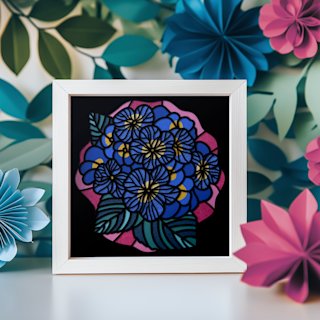
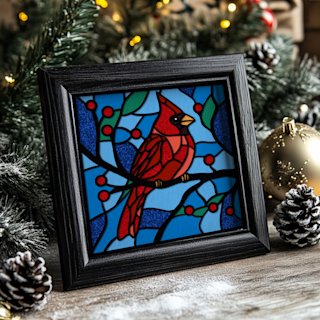
The Hydrangea and Red Cardinal SVGs are built for this: dense petals and stained-glass cells that glow beautifully behind a vellum diffuser and a warm LED strip. Cut, layer, light.

Storage, Handling, and Keeping Vellum Flat

Assembled layered paper-cut design held up against a bright light to check layer alignment through the cutouts

Vellum is hygroscopic — it absorbs moisture from the air and warps. A perfectly flat sheet pulled from a humid room will curl at the edges within an hour. Storage is not optional; it is half the craft.

Keep It Flat and Dry

Store cut and uncut vellum between two pieces of stiff board (the backing board from a paper pack works), laid flat in a dry spot. A packet of silica gel in the storage folder holds humidity steady. If a sheet has already warped, flatten it under heavy books for 24 hours — our paper storage guide covers long-term solutions across all paper types.

Handle by the Edges

Fingerprints and skin oils show on vellum more than on cardstock because the translucency makes any mark a shadow. Handle cut pieces by their outer border, and wear clean cotton gloves for the final assembly of a framed piece. Cotton gloves feel excessive until you ruin one layer with a thumbprint at the last step.

Transport Finished Pieces Safely

Carry assembled vellum art sandwiched between rigid boards and inside a clear sleeve. Never lay a finished piece loose in a bag — one crease and the translucency amplifies it across the whole panel.

Where to Take Vellum Next

Vellum is an intermediate-to-advanced material, and the techniques here stack with the rest of the craft. A few directions worth exploring once your cuts are clean and your glue is invisible:

Go deeper on the machine. The mat, blade, and settings choices that make vellum behave are the same ones that govern every paper. Our Cricut mat guide and settings mastery guide cover the full range.

Build the lighting into the design. Backlighting vellum is just the start. The same LED and diffuser thinking applies to any shadow box — start with our safe LED guide and our layered shadow box walkthrough.

Expand your design library. Stained-glass florals, dense mandalas, and single-layer silhouettes all translate well to vellum. Browse our free SVG templates and flower shadow box ideas for files that suit translucent layering.

Protect what you make. Vellum yellows in UV and warps in humidity, so display and storage matter as much as the cut. Our guides on preserving paper art and framing without glass close that loop.

The short version: vellum asks for a fresh blade, a gentle mat, hidden glue, and a light source. Give it those four things and it will give you a glow no cardstock ever can.

Elegant Vellum for Weddings and Anniversaries
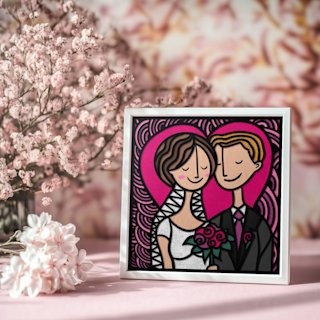
Parchment-finish vellum and wedding stationery were made for each other. Cut the Wedding Anniversary layered SVG on vellum, edge-glue it over a tinted insert, and you have a card or framed gift that looks far harder than it is.
1.Why does my vellum tear when I cut it on the Cricut?
Almost always too much pressure, a dull blade, or a mat that is too sticky. Switch to a LightGrip (blue) mat, drop the pressure one notch from your current setting, fit a fresh fine-point blade, and run a small test cut first. On intricate filigree, enable MultiCut 2× rather than raising pressure.
2.What Cricut setting should I use for vellum?
Start with the "Washi Sheet" material setting, or a custom setting based on "Light Cardstock, 50 lb," on a LightGrip mat with a fine-point blade and MultiCut at 2×. For 30+ lb cover vellum, move pressure up to medium. Always run a corner test cut on the same sheet first and adjust from there.
3.How do I hide adhesive on vellum?
Vellum is translucent, so glue shows straight through. Use a light, even coat of repositionable spray adhesive for full sheets, run an invisible tape runner only along edges that will be covered, or place glue dots solely behind solid design details. Mechanical fasteners like brads, stitching, or corner foam tape read as design, not glue.
4.Can I layer multiple sheets of vellum?
Yes, and it is one of vellum's best tricks — overlapping translucent sheets blend colour the way paint does. Keep it to two or three layers; past that the stack goes opaque and loses its glow. Put the lightest tint on top and the most saturated underneath, and leave a small gap between layers so light pools in the depth.
5.What weight of vellum is best for cutting?
For most machine-cut projects, 24–29 lb (around 90–110 gsm) is the sweet spot — it cuts cleanly, holds its shape, and still glows. Use 17–21 lb only as an overlay or diffuser layered over something sturdier, and reach for 30+ lb cover vellum only when the piece must stand on its own in a frame.
6.Is it safe to backlight vellum?
Yes, as long as the light source is LED or a flameless candle. Vellum is paper, so never use incandescent, halogen, or real flames in an enclosed piece. Warm-white LED strips and copper-wire fairy lights stay cool to the touch; add a full clear-vellum diffuser sheet between the LEDs and the cut layer to turn harsh LED dots into an even glow.